For laboratory and research use only. Not for human consumption.
What Is 5-Amino-1MQ?
Forget mitochondrial uncouplers. 5-Amino-1MQ plays an entirely different game.
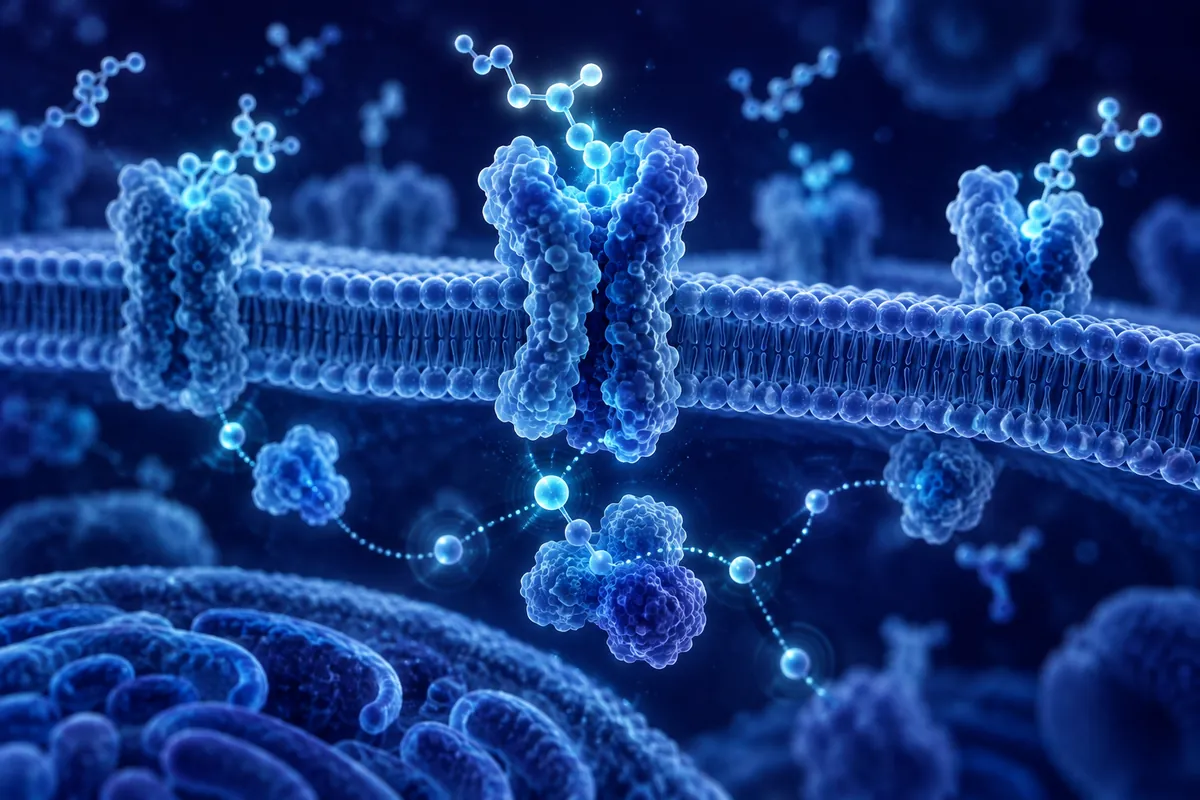
Not a peptide. A small molecule. About 159 g/mol. It crosses cell membranes, gets swallowed orally, and rewires how adipocytes manage their cofactor pools. Block NNMT with 5-Amino-1MQ? Nicotinamide stays in play. NAD+ climbs.
Below: how it works at the molecular level, what the mouse and cell data actually show, and where it fits next to SLU-PP-332 and BAM15.
Chemical Identity and Classification
5-Amino-1MQ sits in the quinolinium family of small molecules. Simple structure. Big pharmacological punch.
- IUPAC Name: 1-Methyl-5-aminoquinolinium
- Molecular Formula: C10H11N2+
- Molecular Weight: ~159.21 g/mol (cation); usually supplied as a salt
- CAS Number: 42536-97-0
- Classification: Small-molecule NNMT inhibitor
- Solubility: Water-soluble, cell membrane-permeable
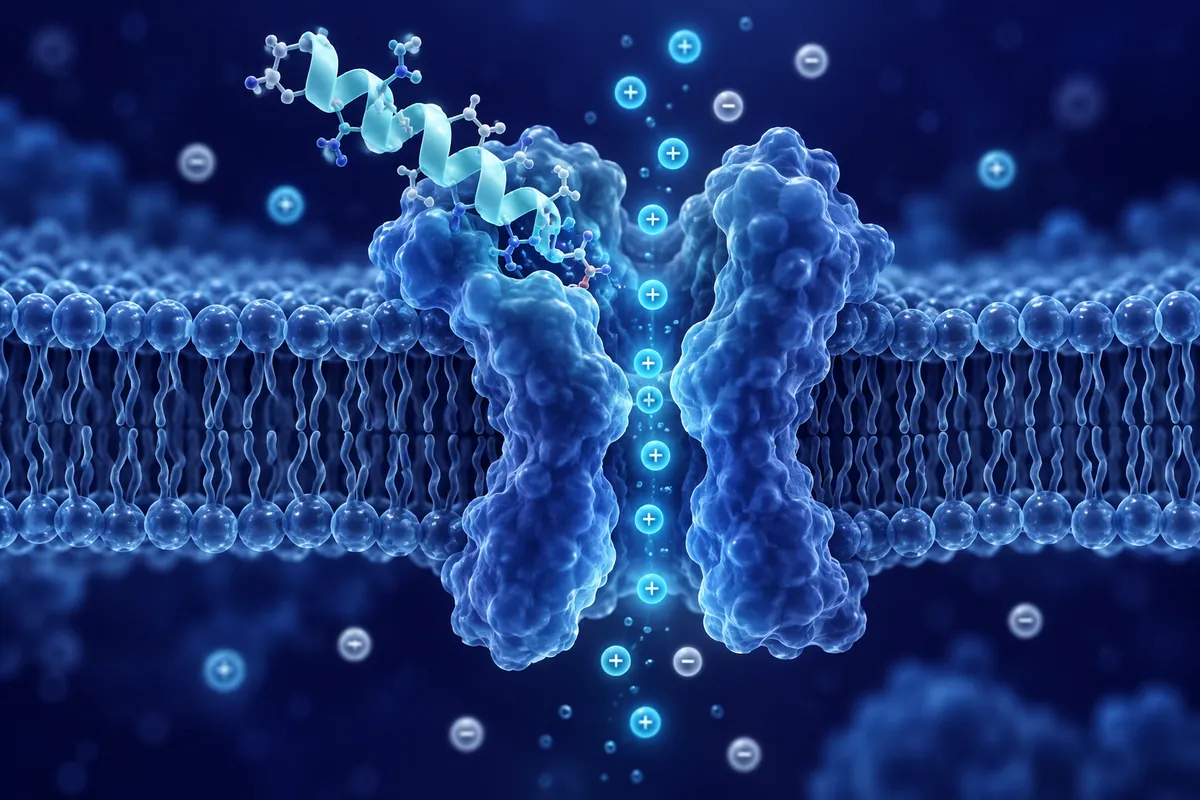
That last point : membrane permeability : is actually the whole ballgame. Earlier NNMT inhibitors like 1,2,4,8-tetramethylquinolinium couldn’t get into cells efficiently. Great at inhibiting NNMT in a test tube. Useless inside a living adipocyte. 5-Amino-1MQ crosses membranes with ease, which is why it became the go-to tool for NNMT research (Neelakantan et al., 2017).
How 5-Amino-1MQ Was Developed
This compound came out of structure-activity relationship work at the University of Texas at Austin. The backstory: researchers had noticed something odd about obese adipose tissue. NNMT levels were through the roof. The enzyme was way more active in fat tissue from obese animals compared to lean ones : and that hyperactivity correlated with metabolic dysfunction across the board.
So they went hunting for molecules that could block it.
Neelakantan and colleagues published the defining study in the Journal of Medicinal Chemistry in 2017. They screened quinolinium compounds, characterized binding properties, tested membrane penetration, and landed on 5-Amino-1MQ as the standout. It potently inhibited NNMT. It got inside cells. And it drove down 1-methylnicotinamide (1-MNA) : the direct product of NNMT activity : confirming on-target engagement (PMID: 29059531).
Since that paper, 5-Amino-1MQ has become the most widely used pharmacological tool for studying what NNMT actually does in fat cells and energy metabolism.
Here’s the core problem that 5-Amino-1MQ solves. NNMT takes nicotinamide : a critical precursor your cells need to make NAD+ : and wastes it. The enzyme slaps a methyl group on nicotinamide (borrowed from SAM, the cell’s universal methyl donor), converting it to 1-methylnicotinamide. That 1-MNA is essentially a dead end. The nicotinamide is gone. Can’t be recycled back into NAD+.
Two things happen when NNMT runs too hot:
- NAD+ tanks. Nicotinamide is the main substrate that NAMPT uses to build NMN, which then becomes NAD+. When NNMT diverts nicotinamide into 1-MNA, less raw material reaches the salvage pathway.
- SAM gets burned through. Every NNMT reaction eats one SAM molecule as a methyl donor. That leaves less SAM available for histone methylation, polyamine synthesis, and dozens of other critical methylation reactions the cell depends on.
5-Amino-1MQ blocks NNMT with an IC50 around 1 µM in biochemical assays. In living adipocytes, the EC50 comes in at 2.3 ± 1.1 µM for reducing intracellular 1-MNA. When you shut NNMT down, several things shift:
- NAD+ goes up inside adipocytes : more nicotinamide feeds the salvage pathway
- SAM goes up : less gets consumed by NNMT reactions
- Nicotinamide stays in circulation within the salvage cycle instead of getting funneled into a dead-end metabolite
5-Amino-1MQ takes the opposite approach: stop the leak. Keep what you’ve already got from being wasted. That’s a fundamentally different strategy, and for researchers studying adipocyte energy metabolism, it opens doors that precursor supplementation can’t. Loti Labs carries NAD+ 500mg for investigators exploring both sides of this equation.
Preclinical Research Findings
Two data sources matter here. Cell culture : 3T3-L1 adipocytes, the workhorse of fat cell research. And diet-induced obese mice. Real animals. Real obesity.
In Vitro: What Happens in Fat Cells
Researchers dosed differentiated 3T3-L1 adipocytes with 30 µM of 5-Amino-1MQ. 1-MNA levels cratered. In pre-adipocytes, the drop hit P < 0.01 vs. untreated controls. Mature fat cells: P < 0.05. That’s not subtle. That’s NNMT getting shut down in exactly the cell type you care about.
The deeper molecular readouts:
- Strongest NNMT inhibition at 10-30 µM : the curve looks exactly how you’d want it to
- NAD+ and SAM climbed. LC-MS/MS confirmed both cofactors rose. Real measurements, not assumptions
- Selective. Other methyltransferases? Untouched at these concentrations. On-target pharmacology
- Fat cells shrank. Treated adipocytes stored less lipid. Period
In Vivo: Obese Mice on a High-Fat Diet
C57BL/6 mice. Eleven weeks on a high-fat diet. Genuinely obese : not “lab chubby.” Researchers gave them 5-Amino-1MQ subcutaneously at 20 mg/kg, three times a day, for 11 days.
Body weight dropped. Progressively, measurably, compared to vehicle controls. Liver enzymes? Normal. Kidney markers? Clean.
But here’s the line that makes this study stand out: the mice ate exactly the same amount of food.
Same calories in. Less body fat. 5-Amino-1MQ bypasses that entirely. Different lever. Different implications.
What Else Changes When You Block NNMT
NAD+ and SAM going up is the headline. But the ripple effects go further than most people expect.
Sirtuins Switch On, Fat Cells Shift Gears
Higher NAD+ wakes up the sirtuin family : SIRT1 and SIRT3 in particular. Preclinical models show a genuine phenotype shift.
Fat Cell Identity Gets Disrupted
SAM surplus drives histone methylation up, especially H3K4me3. Gene expression patterns shift. Adipogenic markers drop. De novo lipogenesis falls. What’s that mean? NNMT inhibition might not just shrink fat cells : it might mess with the program that makes cells commit to being fat cells in the first place. That’s a provocative finding, and it’s still being explored.
Polyamines
Speculative territory, but worth mentioning. SAM is also the raw material for decarboxylated SAM, which feeds polyamine synthesis. More SAM available could mean altered polyamine flux : cell proliferation, differentiation, all of it. Researchers are looking into it. No conclusions yet.
5-Amino-1MQ vs. SLU-PP-332 vs. BAM15
Three compounds. Three completely different molecular targets.
| Parameter | 5-Amino-1MQ | SLU-PP-332 | BAM15 |
|---|---|---|---|
| Target | NNMT enzyme | ERRα/ERRγ receptors | Mitochondrial inner membrane |
| What It Does | Blocks nicotinamide methylation; preserves NAD+ and SAM | Turns on exercise-mimetic gene programs | |
| Compound Type | Small-molecule enzyme inhibitor | Nuclear receptor agonist | Mitochondrial uncoupler |
| Administration | Oral / subcutaneous | Oral | |
| Primary Tissue | White adipose tissue | Skeletal muscle, adipose | Mitochondria (systemic) |
| None observed | None observed | None observed | |
| Key Model | DIO mice, 3T3-L1 adipocytes | Murine exercise physiology | DIO mice |
Here’s why this matters for study design: these mechanisms don’t overlap. 5-Amino-1MQ rewires the cofactor math inside fat cells. BAM15 punches holes in the mitochondrial proton gradient : raw thermogenesis. For labs running multi-compound protocols, that’s a feature, not a complication. See the SLU-PP-332 vs 5-Amino-1MQ comparison and BAM15 + SLU-PP-332 comparison for deeper dives.
Safety Profile and Research Considerations
Limited data : but what exists is encouraging. The sub-chronic mouse study (11 days, 20 mg/kg three times daily, subcutaneous) showed:
- Liver enzymes (ALT, AST): normal. No hepatotoxicity signal
- Kidney markers: clean
- Behavior: no distress, no abnormalities
- Food intake: stable : no GI aversion effects
The selectivity profile helps here. At concentrations that hammer NNMT, 5-Amino-1MQ largely leaves other methyltransferases alone. That matters : nonselective methyltransferase inhibition could theoretically cause epigenetic chaos. But nobody has published long-term exposure data yet. Eleven days in mice tells you it’s not acutely toxic. It doesn’t tell you what happens at six months. Researchers designing extended protocols should keep that gap in mind.
5-Amino-1MQ is an investigational research compound. No FDA approval. No regulatory approval anywhere. All data comes from preclinical studies.
Legal and Regulatory Status
Straightforward: 5-Amino-1MQ is a research compound sold for lab use only. No FDA approval. No regulatory approval anywhere in the world. It’s not a controlled substance in the United States, so researchers can purchase it legally for legitimate investigations. Institutional review and compliance rules still apply : same as any other research compound in your lab.
Available Research Formats
Loti Labs supplies two options:
- 5-Amino-1MQ Capsules (50mg, 30 count) : $79.99: Pre-dosed oral format for standardized protocols
- 5-Amino-1MQ 10mg : $49.99: Bulk powder for custom preparations
Third-party purity testing on every batch. More on evaluating compound quality here.
Conclusion
NAD+ goes up. SAM goes up. Adipocytes shrink. Body weight drops : without any change in food intake.
That’s what makes it interesting. Not that it works (lots of compounds “work” in mice). But that it works through a pathway nobody else is targeting at the pharmacological level.
For laboratory and research use only. Not for human consumption.
References
- Neelakantan H, et al. Selective and membrane-permeable small molecule inhibitors of nicotinamide N-methyltransferase reverse high-fat diet-induced obesity in mice. Biochemical Pharmacology. 2018;147:141-152. doi:10.1016/j.bcp.2017.11.007 (PMID: 29155145)
- Neelakantan H, et al. Structure-activity relationship for small molecule inhibitors of nicotinamide N-methyltransferase. Journal of Medicinal Chemistry. 2017;60(12):5015-5028. doi:10.1021/acs.jmedchem.7b00389 (PMID: 28493686)
- Kraus D, et al. Nicotinamide N-methyltransferase knockdown protects against diet-induced obesity. Nature. 2014;508(7495):258-262. doi:10.1038/nature13198 (PMID: 24717514)
- Ulanovskaya OA, et al. Nature Chemical Biology. 2013;9(5):300-306. doi:10.1038/nchembio.1204 (PMID: 23455543)
- Hong S, et al. Nature Medicine. 2015;21(8):887-894. doi:10.1038/nm.3882 (PMID: 26168293)
- Cantó C, et al. Cell Metabolism. 2015;22(1):31-53. doi:10.1016/j.cmet.2015.05.023 (PMID: 26118927)
This educational material discusses laboratory research concepts only. Loti Labs products are intended strictly for research and development use and are not for human consumption.