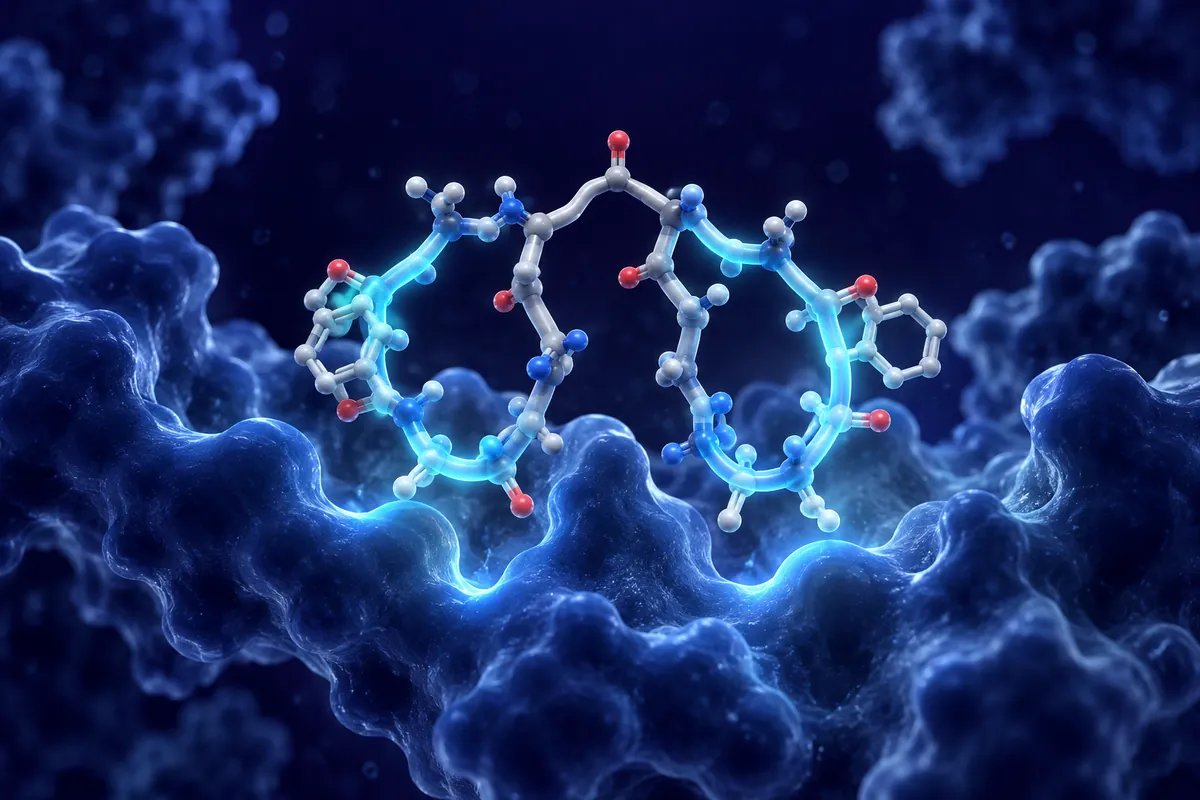
FOXO4-DRI is one of the most studied synthetic peptides to emerge from this space : a cell-penetrating molecule designed to interfere with a protein interaction that keeps senescent cells alive when, by most biological logic, they should be cleared. The research surrounding it raises some of the most compelling questions in modern cellular aging science.
What Is Cellular Senescence : and Why Does It Matter?
Cellular senescence is a state of stable, irreversible growth arrest. Cells enter this state in response to various stressors : telomere shortening, DNA damage, oncogenic signaling : and while the initial arrest serves a protective function, the long-term accumulation of these cells tells a different story. Senescent cells remain metabolically active. They don’t simply sit quietly.
What makes them particularly interesting to researchers is their secretory phenotype. Senescent cells emit a complex mixture of cytokines, chemokines, proteases, and growth factors collectively referred to as the senescence-associated secretory phenotype, or SASP. This output has been shown in numerous models to promote chronic low-grade inflammation, disrupt tissue homeostasis, and impair the function of neighboring healthy cells. The SASP essentially transforms a localized cellular event into a systemic problem.
Why do senescent cells persist at all? That question gets to the heart of FOXO4-DRI research. One key mechanism involves the upregulation of pro-survival pathways in senescent cells : pathways that, in younger or healthier tissue contexts, would normally be suppressed.
The FOXO4-p53 Axis: A Survival Mechanism Unique to Senescent Cells
The transcription factor FOXO4 plays an unexpected role in the survival of senescent cells. Under normal conditions, p53 : one of the most studied tumor suppressor proteins in biology : mediates apoptosis when cells are too damaged to repair themselves. In senescent cells, however, FOXO4 physically interacts with p53 and sequesters it within the nucleus, preventing it from signaling apoptosis. The damaged cell, in effect, is kept alive against what might otherwise be its programmed fate.
This discovery opened a conceptually elegant research avenue. What would happen if that interaction were disrupted?
Engineering a Peptide to Interfere with the Interaction
FOXO4-DRI is a retro-inverso peptide : a modified form of a FOXO4 fragment in which the amino acid sequence is reversed and composed of D-amino acids rather than the naturally occurring L-form. This structural modification confers resistance to proteolytic degradation, a common obstacle in peptide research, while preserving the molecule’s ability to compete with endogenous FOXO4 for p53 binding.
Because FOXO4-DRI retains cell-penetrating properties, it can reach intracellular targets that most larger biologics cannot. The peptide’s proposed mechanism in research models is competitive inhibition: by occupying the FOXO4 binding interface on p53, it frees p53 to resume its apoptotic signaling : but selectively in senescent cells where FOXO4 is overexpressed. Normal proliferating cells, which do not show the same FOXO4 upregulation, appear comparatively unaffected.
Murine Aging Model Results: What the Research Has Shown
The most widely cited FOXO4-DRI study was published in Cell in 2017 by Baar et al. Using naturally aged mice, chemotherapy-induced senescence models, and a fast-aging mouse strain (XPF-ERCC1 deficient), the researchers administered FOXO4-DRI and observed several outcomes that have since shaped the direction of senolytic peptide research.
These were not subtle shifts in biomarkers. They were measurable, visible changes in aging phenotypes.
The Chemotherapy Model
A separate arm of the Baar et al. study examined mice subjected to cytotoxic agent-induced senescence : a model relevant to understanding treatment-protocol-related accelerated aging in tissue biology. This model offers researchers a controlled, reproducible system for studying senolytic activity without the longer timelines required in natural aging studies.
One of the more important observations from the murine work concerned selectivity. Apoptotic signaling was observed preferentially in senescent cells rather than proliferating ones : a distinction that has significant implications for how researchers interpret FOXO4-DRI’s potential mechanism. The fast-aging mouse model, which shows pronounced premature senescence across multiple tissues, showed particularly pronounced responses.
Restoration of Aging Phenotypes: Reading the Evidence Carefully
The concept of “restoring” aging phenotypes is one researchers approach with appropriate caution. Correlation between reduced senescent cell burden and improved tissue function in mouse models is compelling : but mechanism attribution is not always straightforward. Because it modulates the SASP? Because of downstream p53 pathway effects unrelated to FOXO4? These are open questions.
What the murine data does establish with reasonable confidence is that targeted disruption of the FOXO4-p53 interaction produces measurable, multi-organ changes in aged research subjects. That level of systemic impact from a single peptide mechanism is unusual, and it’s part of what makes this line of inquiry so active in the preclinical literature.
The field is still in early comparative stages.
Open Questions and the Road Ahead in Senolytic Peptide Research
What remains to be characterized is substantial. Most FOXO4-DRI data comes from rodent models, and the relationship between murine senescence biology and human cellular aging is complex. Differences in telomere biology, lifespan scaling, and baseline senescent cell burden between mice and other species mean that researchers must be careful about the conclusions they draw from even well-designed murine studies.
Researchers are currently exploring several directions: understanding tissue-specific distribution of the peptide, characterizing how FOXO4 expression varies across senescent cell subtypes, and investigating whether combination approaches : pairing FOXO4-DRI with senomorphics that suppress SASP without clearing cells : might offer additive insights in model systems.
Beyond the mechanistic work, there is growing interest in developing better senescent cell detection tools : biomarkers that could allow researchers to more precisely quantify senolytic activity in vivo. Without those tools, interpreting outcomes from complex aging models remains partially indirect. FOXO4-DRI, in this sense, is not just a molecule of interest : it’s a useful research probe for understanding senescence biology more broadly.
For researchers working in cellular aging, geroscience, or peptide pharmacology, FOXO4-DRI represents a genuinely novel mechanistic approach. The published preclinical evidence is intriguing enough to drive ongoing investigation, and the conceptual framework it operates within : targeting a pro-survival interaction specific to senescent cells : has already influenced how the field thinks about selective senolytic design.
Disclaimer: This content is intended for research purposes only and is not meant to constitute medical advice.
This educational material discusses laboratory research concepts only. Loti Labs products are intended strictly for research and development use and are not for human consumption.