It’s a type of AEDG peptide, meaning it has a special sequence of amino acids that lets it connect with certain parts of cells.
Both of these effects help cells stay healthy and could delay the aging process.
Animal Studies and Cancer Prevention
Animal studies typically give one group Epitalon and leave a matched control group untreated. Researchers then watch for differences in aging markers and overall health. Some studies also use Epitalon to explore cancer prevention, and the results so far show it lowers the risk of spontaneous tumors.
What is Epitalon: The Pineal Gland Peptide
Epitalon:sometimes spelled Epithalon or Epithalamine:is a small synthetic peptide made up of four amino acids: alanine, glutamic acid, aspartic acid, and glycine. Its sequence is Ala-Glu-Asp-Gly (often shortened to AEDG), and it has the chemical formula C14H22N4O9. The structure of Epitalon matches that of a natural peptide called Epithalamin, which the pineal gland produces.
In the body, Epitalon helps the pineal gland run smoothly.
Telomeres are protective caps at the ends of our DNA strands. They guard our genetic information and keep chromosomes from fraying. Each time a cell divides, telomeres get a little shorter. This shortening is normal, but too much of it is linked to age-related diseases like heart problems and to an earlier death, especially among older people. The shortening happens because of the Hayflick limit, which is the built-in limit on how many times a cell can successfully divide. When the limit is reached, the cell either stops dividing or becomes faulty. On top of that, Epitalon helps keep the mitochondrial membrane potential stable.
When telomerase is turned back on, cells can break free from their built-in limit on how many times they can divide, which may let them keep replacing themselves and even start to roll back signs of aging. Longer telomeres mean healthier, more vigorous cells, so the payoff is huge.
On top of that, Epitalon zaps excess free radicals and guards cells from the damage that bad oxygen can cause, giving yet another nudge to keep aging at bay.
Telomere Elongation and Telomerase Activation
Telomere elongation and telomerase activation are key steps that help cells live longer. Telomeres are the small protective caps on the ends of chromosomes. Each time a cell divides, these caps get a little shorter, and that shorting is one of the things that makes cells age. Epitalon, a synthetic peptide, has shown that it may help be reverse that process and give cells extra youthful years. Epitalon turns on telomerase, the enzyme that keeps telomeres long, so cells can keep dividing without losing their youthful function. This is big news because, when telomeres get too short, cells can no longer divide and start to malfunction, speeding up aging. By encouraging telomerase to keep working, Epitalon helps keep telomere length steady and slows down aging at the cell level.
In lab studies, cells treated with Epitalon divided up to ten times more than those left untreated. That evidence suggests that Epitalon can give cells longer lives. If cells can live longer, it may mean that entire organisms could live longer too.
Early studies also indicate that Epitalon can help shield DNA by preserving telomere length, keeping chromosomes intact. This protective role is vital for lowering the likelihood of diseases that are often associated with aging, like cancer and neurodegenerative conditions.
When mitochondria work better, they produce less oxidative stress:the other big player in aging.
To sum it up: Epitalon kick-starts telomerase, helping telomeres grow longer. It’s a vital piece for scientists trying to slow down cellular aging and the decline that comes with getting older.
Keeping cells young comes down to lengthening telomeres and activating telomerase. Telomeres, the caps on chromosome ends, get shorter every time cells divide and help drive aging. Epitalon, a lab-engineered peptide, can step in and change that picture.
By turning on telomerase, Epitalon helps maintain telomere length, letting cells divide more without losing their youthful vigor. This effect matters because once telomeres are too short, cells can’t divide properly and they push the aging clock forward. By keeping telomerase pumping, Epitalon fights telomere shortening and buys more healthy cellular time.
In several studies, cells treated with Epitalon were able to divide up to ten times more than those that were not treated. This finding hints that Epitalon might help cells live longer. The result was longer telomeres and a slowdown in the signs of aging.
Scientists don’t yet fully understand how Epitalon achieves telomere growth and telomerase activation. It is thought the compound impacts gene expression and directly stimulates telomerase.
How Epitalon Fights Aging in Animal Studies
A number of animal studies tell the same story: Epitalon appears to slow down the aging process. In one set of tests, scientists engineered a gene so they could watch aging in mice get partially reversed. When mice got Epitalon, researchers noticed younger-looking oocytes. In these mice, the number of messed-up chromosomes and the rate of tumors both dropped.
Similar results came from studies with rats.
What is Aging and its Effects
Every cell in our body comes in with a job that is written in its DNA. Over time, those cells hit a limit on how long they can work, and they start to leak small amounts of toxins into the places around them. Aging happens to everyone, but when something goes wrong inside the cell, it can start to fall apart long before it should. As a safety measure, the body tells the old cell to shut itself down in a process called apoptosis. However, sometimes the cell ignores the cue and instead spreads its problems, making tissues like the heart, liver, kidneys, and brain start to age faster. Researchers think these stubborn cells are a big part of why we all get older.
In women, the ability of eggs to develop into embryos starts to drop as time goes on, whether they are still inside the body or growing in a lab dish. When cells begin to age too soon, the eggs can lose quality and become less likely to succeed in forming a healthy embryo. A lab-made peptide called Epitalon might slow down this process by making older eggs work better. Epitalon may also fine-tune a set of tiny proteins that manage how cells grow and how genes that control aging are switched on or off.
What is Cellular Aging and its Effects
Scientists have learned a lot about cellular aging by studying mice that were genetically altered to age 10 times faster than normal. When these mice were about 6 months old:equivalent to an 80-year-old human:they showed many signs of old age. Their telomeres, the protective ends of chromosomes, were short and dysfunctional, and the mice had small, weak spleens, damaged intestines, a dulled sense of smell, and smaller brains. When telomeres shorten, the risk of DNA damage goes up, which causes tissues to stop working properly and leads to age-related diseases.
One compound, Epitalon, helped by both activating telomerase and doing other things. This led to healthier eggs in fertility treatments. Studies on human cells, where scientists looked at how fast cells divide, which genes are active, and other markers of aging, also showed that Epitalon and related substances could help slow down cellular aging.Researchers gave epitalon to mice and, a month later, the treated mice surprised everyone by looking and acting younger. Their telomeres got longer and telomerase levels rose. Organ systems began to work better.
When the study was over, the treated mice had the physiology of young adults and lived longer. Epitalon also shrank the number and size of unplanned tumors in several animal tests, suggesting it might help stop cancer before it starts.
Human trials with epitalon showed better function in several organs. The positive results in mice and in human cells make researchers excited about using epitalon to slow aging and treat age-related diseases.
Epitalon is a helpful peptide made for the pineal gland. The pineal gland is a tiny gland deep in the brain; it steps up melatonin at night and slows it down in the day. The result?
Your circadian rhythm is the body’s internal clock, and it’s controlled by the suprachiasmatic nucleus (SCN) in your brain.
All of this adds up to cells that age more slowly.
When our circadian rhythm ticks well, we not only feel good today; we also lay the groundwork for a happier, longer tomorrow.
Epitalon, Reactive Oxygen Species, and Cellular Protection
Reactive oxygen species (ROS) are unstable, oxygen-containing molecules that can cause serious cellular damage and speed up aging and age-related diseases.
By preserving telomere length, Epitalon prevents the damage and dysfunction that typically arise from telomere shortening, a major hallmark of cellular aging.
By triggering telomerase, epitalon helps somatic cells sidestep the usual division limit, allowing more divisions without the risk of senescence. Because telomere shortening is the root driver of cellular aging, this effect is especially promising.
The thymus plays an important role in the immune system and in regulating reproductive health.
Good sleep is vital for healthy aging.
Epitalon Therapy: Applications and Treatment Approaches
By attacking aging right inside our cells, Epitalon may slow the outward signs of getting older and help our bodies fend off age-related illnesses.
While research is ongoing, Epitalon therapy could soon offer a new way to encourage longer, healthier lives by tackling the root causes of aging.
Researchers have observed that Epitalon noticeably spurs telomerase, the enzyme that helps keep telomeres intact.
Future Directions: The Next Frontier in Epitalon Research
Another key focus is engineering better ways to deliver Epitalon.
At the same time, researchers are diligently mapping how Epitalon influences telomerase activity, gene expression, and overall cellular health.
Epitalon and Human Health: Moving Beyond Animal Research
The next step is to see how well these results carry over to humans.
Scientists are particularly keen to see how Epitalon might aid older adults and those with age-related diseases. They are also looking at how it might foster healthy aging in diverse population groups.
As research continues, clearer insights about Epitalon’s role in human health will emerge. This will pave the way for new ways to prevent age-related diseases and to encourage healthy aging for everyone.
In the growing field of healthy aging, Epitalon is special because it works directly on the aging process itself. It gently activates telomerase, the enzyme that helps protect telomeres, the tiny caps on the ends of chromosomes. Keeping telomeres intact addresses one of the earliest signs of aging and can lead to longer-lasting results.
Epitalon doesn’t just mask symptoms; it fine-tunes gene activity and fortifies the entire cellular environment.
Epitalon vs.
| Peptide | Primary Mechanism | Primary Research Focus |
|---|---|---|
| Epitalon | Activates telomerase, lengthens telomeres; pineal gland regulation; epigenetic modulation | |
| GHK-Cu | ||
| BPC-157 | ||
| Thymosin Alpha-1 | ||
| Pinealon | Neurological & Brain Health Research |
Frequently Asked Questions
Epitalon is currently used for research purposes only, and conclusions about direct human lifespan extension cannot yet be drawn.
Is Epitalon FDA approved?
No. Epitalon is not approved by the FDA for human therapeutic use in the United States. It is classified as a research chemical and is intended strictly for laboratory research purposes, not for human consumption or clinical application outside of authorized research trials.
How does Epitalon differ from Epithalamin?
Epitalon is a synthetic tetrapeptide (Ala-Glu-Asp-Gly) isolated as the active component of Epithalamin, a natural polypeptide extract derived from the bovine pineal gland. Epitalon is considered the purified, synthetic version that replicates Epithalamin’s core biological effects, particularly its influence on pineal gland function, melatonin secretion, and telomerase activation. Its synthetic nature allows for greater reproducibility and purity in research applications.
It fine-tunes telomerase activity, helping to keep telomeres longer and healthier, which in turn safeguards our body’s somatic cells and lowers the risk of age-related illnesses. Until those studies are complete, Epitalon stands out as a cutting-edge ally in our quest to slow aging.
The content of this post is informative only.
Where to Buy Peptides
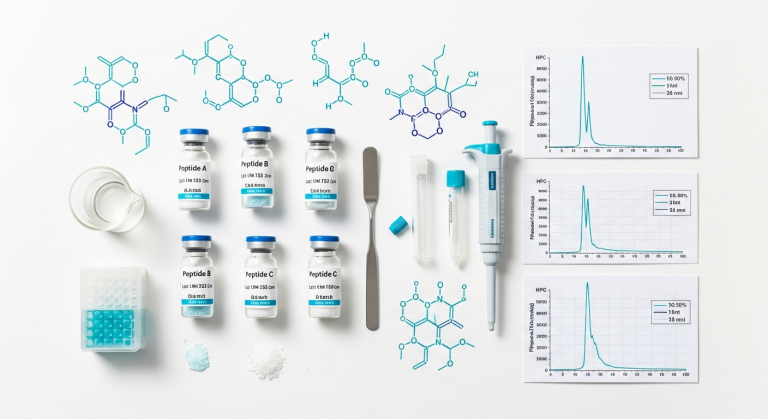
Choose peptides made in the USA to ensure the highest quality. Each batch is analyzed using HPLC and mass spectrometry. Epitalon comes in 10 mg glass vials as a lyophilized powder. For lab use, it is mixed with ultra-pure 18MΩ-cm water to create a sterile solution that keeps the peptide active and stable.
References
Callaway, E. Telomerase reverses aging process. Nature (2010). https://doi.org/10.1038/news.2010.635
Khavinson, V.K., Bondarev, I.E., & Butyugov, A.A. Peptide regulation of aging and life span. Bulletin of Experimental Biology and Medicine 2003; 135(5):590. https://doi.org/10.1023/A:1025493705728
Anisimov, V.N., Khavinson, V.Kh., Alimova, I.N., Semchenko, A.V., & Yashin, A.I. Epithalon decelerates aging and suppresses the development of breast adenocarcinomas in transgenic her-2/neu mice. Bulletin of Experimental Biology and Medicine 2002; 134(2):187-190. https://doi.org/10.1023/a:10211048191704. Khavinson
/wp:htmlThis educational material discusses laboratory research concepts only. Loti Labs products are intended strictly for research and development use and are not for human consumption.