
What Is MK-677 (Ibutamoren)? A Non-Peptide Ghrelin Mimetic
It is an unapproved investigational compound designated strictly for Research Use Only (RUO). For Research Use Only. Not for Human Consumption.
Nomenclature: Ibutamoren, MK-0677, and L-163,191
The chemical entity now commonly referred to as MK-677 was originally developed by Merck & Co. under the developmental codes MK-0677 and L-163,191. The designation “MK” reflects its origin within the Merck research pipeline. Throughout the late 1990s and early 2000s, it transitioned into clinical trials under the name Ibutamoren (often formulated as Ibutamoren mesylate). In current 2026 research environments, the compound is categorized strictly as an investigational chemical. It is a non-peptide, spiroindoline compound, a classification that distinguishes it from the earlier generation of GH-releasing peptides (GHRPs) like GHRP-2 or GHRP-6, which lacked significant oral bioavailability and required parenteral administration.
Why MK-677 Is Neither a SARM nor a Traditional Peptide
A common misclassification in non-scientific literature is the grouping of MK-677 with Selective Androgen Receptor Modulators (SARMs). Chemically and pharmacologically, this is incorrect. MK-677 has no affinity for the androgen receptor and does not influence testosterone or estrogen pathways directly. Critically, MK-677 does not suppress the Hypothalamic-Pituitary-Testicular Axis (HPTA), meaning it does not cause the hormonal suppression associated with SARMs or anabolic steroids. It is a small-molecule mimetic. This distinction is critical for researchers; its small-molecule nature allows it to bypass the proteolytic degradation that renders most peptides inactive when ingested orally.
Chemical Identity and Molecular Properties
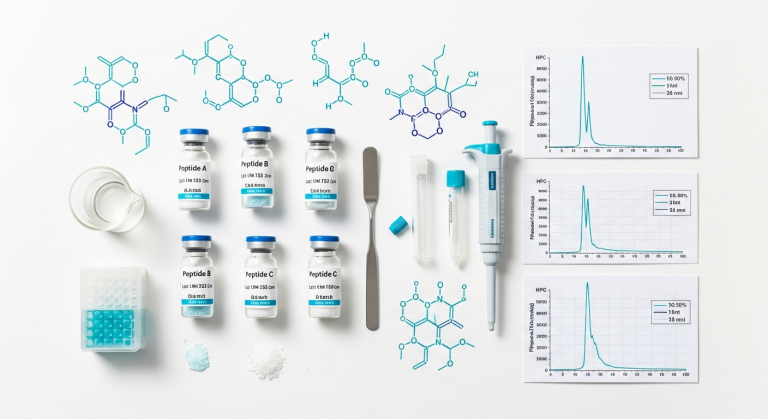
The rigorous characterization of MK-677 is essential for laboratory validation. According to PubChem (CID 9912089), the IUPAC name for Ibutamoren is 2-amino-2-methyl-N-[(2R)-1-(methylsulfonyl)hex-1-en-2-yl]-N-[1-(1-benzyl-4-piperidinyl)-2-(1H-indol-3-yl)ethyl]propanamide. The molecular formula is C27H36N4O5S, with a molecular weight of 528.66 g/mol. As a spiroindoline-derived ghrelin agonist, its structure is engineered to fit the binding pocket of the GHSR-1a receptor with high affinity (Ki ~0.4 nM). In its research-grade form, as provided by RUO vendors like Loti Labs, it is typically encountered as a white to off-white powder. High-Performance Liquid Chromatography (HPLC) and Nuclear Magnetic Resonance (NMR) spectroscopy are the gold standards for verifying its identity and purity. Research materials must maintain a purity threshold of ≥98% to ensure the validity of experimental data in vivo or in vitro.
Research Use Only: MK-677 (Ibutamoren) is an unapproved investigational compound. All data referenced here derives from preclinical and clinical research. Not for human consumption.
Mechanism of Action: GHSR-1a Agonism and Pulsatile GH Release
The primary pharmacological mechanism of MK-677 is its potent agonism of the growth hormone secretagogue receptor (GHSR), specifically the 1a isoform. This receptor is primarily expressed in the hypothalamus (arcuate nucleus) and the anterior pituitary gland. The GHSR-1a is a G-protein coupled receptor (GPCR) that, when activated, initiates a signaling cascade involving the Gq/11 protein. This leads to the activation of phospholipase C (PLC), the generation of inositol trisphosphate (IP3), and the subsequent mobilization of intracellular calcium (Ca2+).
Binding to the Growth Hormone Secretagogue Receptor (GHSR-1a)
MK-677 mimics the action of ghrelin, the “hunger hormone” produced in the stomach, which is the endogenous ligand for GHSR-1a. However, MK-677 is engineered for significantly higher stability and potency. This dual-site action is what makes MK-677 a more efficient secretagogue than compounds that only target the pituitary.
Amplifying Pulsatile GH Release vs. Exogenous HGH Suppression
One of the most critical aspects of MK-677 research is the preservation of the pulsatile GH rhythm. Endogenous GH release is not constant; it occurs in approximately 10 to 12 bursts throughout a 24-hour cycle, with the largest pulse typically occurring during deep sleep. Exogenous rhGH therapy provides a “supraphysiological” surge that bypasses this rhythm and eventually leads to the suppression of endogenous production via negative feedback at the hypothalamus and pituitary. In contrast, MK-677 amplifies the amplitude of these existing pulses. This mechanism is often referred to as “physiological augmentation.”
Downstream IGF-1 Axis Activation
Pulsatile Preservation: Unlike exogenous HGH, MK-677 acts upstream at GHSR-1a to amplify the body’s natural pulsatile GH rhythm without suppressing endogenous pituitary production via negative feedback.
Pharmacokinetics: Oral Bioavailability and 24-Hour IGF-1 Elevation
The pharmacokinetic profile of MK-677 is what distinguishes it from most other GHS candidates. It demonstrates an oral bioavailability estimated between 60% and 70% in human subjects. Upon oral administration, peak plasma concentrations (Cmax) are typically reached within 1 to 3 hours. The elimination half-life of the MK-677 molecule itself is relatively short, approximately 4 to 6 hours. However, the pharmacodynamic response:the elevation of IGF-1:is significantly more durable. This suggests that the downstream biological effects of the compound persist long after the parent molecule has been cleared from systemic circulation.

Despite being discontinued for clinical use, MK-677 has a robust history of Phase I, II, and III clinical trials. These studies provide the foundational data for current RUO investigations.
Diet-Induced Catabolism Reversal (Chapman 1996, Murphy 2001)
In a landmark study by Chapman et al. (1996) (PMID: 8855504), published in the Journal of Clinical Endocrinology & Metabolism, healthy young adults were subjected to a calorie-restricted diet to induce a catabolic (nitrogen-wasting) state. This was further corroborated by Murphy et al. (2001), who demonstrated that MK-677 could induce a positive nitrogen balance in subjects even when in a significant caloric deficit.
Perhaps the most cited long-term study is that of Nass et al. (2008) (PMID: 18981485), published in the Annals of Internal Medicine. However, the study also noted metabolic trade-offs, including a persistent increase in fasting blood glucose by an average of 0.3 mmol/L and an increase in insulin resistance, highlighting the complex metabolic profile of the GHSR-1a agonist.
The clinical development of MK-677 faced significant hurdles when it moved into specialized efficacy trials. However, the study failed to meet its primary cognitive endpoints, and no significant difference was found between the MK-677 and placebo groups.
Merck Clinical Program Discontinuation
The cumulative results of the failed Phase II and III trials led Merck & Co. to discontinue the development of MK-677 for therapeutic use. As of 2026, MK-677 remains an “unapproved investigational drug,” available only for laboratory research purposes.
Failed Clinical Endpoints: Merck discontinued MK-677’s clinical development program after Phase III trials failed to meet primary efficacy endpoints in Alzheimer’s and hip fracture populations.
Safety Profile and Documented Metabolic Trade-Offs
The safety profile of MK-677 is well-documented through nearly three decades of clinical literature. For Research Use Only. Not for Human Consumption.
Insulin Resistance and Elevated Fasting Blood Glucose
The most prominent metabolic effect of MK-677 is its impact on glucose metabolism. Growth hormone is inherently “diabetogenic,” meaning it opposes the action of insulin in peripheral tissues. By increasing GH and IGF-1 levels, MK-677 has been shown to reduce insulin sensitivity. In the Nass et al. (2008) study, subjects experienced a sustained rise in fasting blood glucose levels and a decrease in insulin sensitivity that persisted for the duration of the 2-year trial. Researchers utilizing MK-677 in metabolic studies must monitor fasting blood glucose, fasting insulin, and glycated hemoglobin (HbA1c) at regular intervals, as prolonged GHSR-1a agonism can mimic the early glycemic signature of Type 2 diabetes in certain animal models. Long-term protocols (>12 weeks) should incorporate HbA1c monitoring checkpoints.
Congestive Heart Failure Risk in Predisposed Subjects
A critical safety observation occurred during the CLASS trial (hip fracture study). While the absolute number of events was small, it was statistically significant enough to halt the trial. Increased sodium and water retention can increase the workload on the heart, which may exacerbate underlying cardiac insufficiency. This finding has led to the exclusion of cardiac-compromised subjects from most subsequent GH secretagogue research.
Additional Reported Observations in Clinical Literature
- Hyperphagia (Extreme Hunger): Due to its agonism of the ghrelin receptor : the primary hunger-signaling hormone : MK-677 consistently induces hyperphagia (pathologically increased appetite) in research models. This behavioral effect can significantly confound caloric control in body composition studies and must be accounted for in protocol design.
- Edema: Transient swelling of the extremities is common during the initial weeks of administration.
- Arthralgia and Myalgia: Joint and muscle pain are frequently reported, likely due to fluid shifts and increased IGF-1 activity.
- Vivid Dreaming: Many subjects report changes in sleep architecture, specifically an increase in REM sleep duration.
HPLC Purity Standards and COA Evaluation for Research Procurement
For researchers, the validity of experimental data is entirely dependent on the quality of the chemical material. RUO (Research Use Only) grade MK-677 must meet stringent purity requirements. Loti Labs provides materials that are verified to be ≥98% pure via High-Performance Liquid Chromatography (HPLC). A Certificate of Analysis (COA) should always accompany the material, providing documentation of the following:
- Identity Verification: Confirmed through Mass Spectrometry (MS) and H-NMR.
- Purity Level: The percentage of the target molecule relative to impurities, determined by the area under the curve in an HPLC chromatogram.
- Appearance: Physical state and color.
- Solubility: MK-677 is freely soluble in Dimethyl Sulfoxide (DMSO) and Ethanol. Stock solution preparation at 10mM in DMSO is standard; for aqueous-based in vitro models requiring further dilution, ethanol-based stocks are often preferred to minimize DMSO-associated cytotoxicity at high concentrations.
Research conducted with sub-standard or unverified material risks introducing contaminants that could skew metabolic data or induce toxicological responses not inherent to the Ibutamoren molecule itself.

Regulatory and Compliance Status in 2026
The regulatory landscape for MK-677 is complex and strictly enforced in 2026. Because it is not an FDA-approved drug, its use is confined to the laboratory. Researchers must be aware of the following classifications.
WADA Classification (S2.2 Peptide Hormones, GH Secretagogues)
The World Anti-Doping Agency (WADA) classifies MK-677 under section S2.2 as a “Peptide Hormone and Growth Factor Mimetic.” It is prohibited at all times (both in-competition and out-of-competition). Despite not being a peptide, its function as a GH secretagogue places it in the same category as GHRHs and GHRPs. Sophisticated mass spectrometry testing can detect MK-677 and its metabolites in urine and blood for extended periods after administration, making it a high-priority target in athletic drug testing protocols.
FDA Status: Unapproved Investigational Drug
In the United States, the Food and Drug Administration (FDA) classifies MK-677 as an unapproved investigational drug. It cannot be legally marketed as a dietary supplement or for human consumption. The FDA has issued multiple formal warning letters (2024-2026) to supplement manufacturers illegally marketing products containing MK-677 as “muscle builders” or dietary aids, citing adulteration and misbranding violations under the Federal Food, Drug, and Cosmetic Act. In 2026, the only legal pathway for procuring MK-677 is for bona fide laboratory research purposes through specialized RUO chemical vendors operating with appropriate documentation.
DoD Prohibited List and Supplement Warning
The Department of Defense (DoD) maintains a strict stance on MK-677, including it on the “Operation Supplement Safety” (OPSS) high-risk list. Military personnel are prohibited from using substances on this list. The DoD warns that MK-677 is often found as a hidden ingredient in products marketed illegally as “sarms” or “muscle builders,” which can lead to career-ending positive drug tests and unforeseen health complications.
RUO Procurement: Loti Labs supplies MK-677 (Ibutamoren) as a research-grade material (≥98% HPLC purity) with full third-party COA. Available exclusively for laboratory and research use.
Frequently Asked Questions
What is the binding affinity of MK-677?
MK-677 exhibits a high binding affinity for the GHSR-1a receptor, with a Ki (inhibitory constant) of approximately 0.4 nM.
How does MK-677 differ from GHRP-6 and Ipamorelin?
While GHRP-6, Ipamorelin, and MK-677 are all GHSR-1a agonists and GH secretagogues, they differ fundamentally in chemical class and pharmacokinetics. MK-677 is a non-peptide small molecule with oral bioavailability of 60-70% and pharmacodynamic duration extending 24 hours for IGF-1 elevation.
What is the elimination half-life of Ibutamoren?
The parent molecule, MK-677, has a systemic elimination half-life of approximately 4 to 6 hours. However, its effect on IGF-1 levels is sustained for much longer, typically over 24 hours, due to the downstream signaling persistence of the GH axis.
Does MK-677 suppress natural growth hormone production?
No, clinical research indicates that MK-677 does not suppress the pituitary’s ability to produce GH. Instead, it amplifies the natural pulsatile release of GH by mimicking ghrelin and sensitizing the pituitary to GHRH, maintaining the hypothalamic-pituitary-somatotropic axis rhythm.
Why did Merck stop developing MK-677?
What is the standard purity for RUO MK-677?
Research-grade MK-677 should have a purity of at least 98% as determined by HPLC. This ensures that experimental results are not compromised by unknown impurities or degradation products.
How does MK-677 affect blood glucose levels?
MK-677 is known to increase fasting blood glucose and decrease insulin sensitivity. This is a characteristic effect of increased growth hormone levels, which promote gluconeogenesis and inhibit glucose uptake in peripheral tissues.
Can MK-677 be detected in drug tests?
Yes, MK-677 and its metabolites are detectable in urine and blood using Ultra-High-Performance Liquid Chromatography coupled with High-Resolution Mass Spectrometry (UHPLC-HRMS), a technique increasingly adopted by WADA-accredited labs for its sensitivity and specificity. Updated urinary metabolism screening protocols (2024-2026) have extended the detection window for MK-677 metabolites. It remains a prohibited substance under WADA (S2.2) and most professional and collegiate athletic organizations.
What solvent is used to dissolve MK-677 for research?
MK-677 is generally soluble in organic solvents such as Dimethyl Sulfoxide (DMSO) or Ethanol.
Does MK-677 affect cortisol or prolactin levels?
In clinical trials, MK-677 has been shown to cause transient, modest increases in cortisol and prolactin, but these typically remain within the normal physiological range and often return to baseline with continued administration.
Is MK-677 considered a SARM?
No, MK-677 is not a SARM. It does not bind to the androgen receptor and does not have direct androgenic or anabolic-androgenic effects.
What are the storage requirements for MK-677 powder?
For long-term stability, MK-677 powder should be stored in a cool, dry place away from direct light. Most labs store the desiccated powder at -20°C to prevent degradation, although it is generally stable at room temperature for short-term handling.
How does MK-677 impact sleep?
Does MK-677 cause testosterone suppression?
No. MK-677 does not bind to androgen receptors and does not suppress luteinizing hormone (LH) or follicle-stimulating hormone (FSH), which are the pituitary hormones that regulate endogenous testosterone production. The HPTA axis remains fully intact during MK-677 research protocols.
What is the molecular weight of MK-677?
The molecular weight of MK-677 is 528.66 g/mol. This information is critical for calculating precise molar concentrations in laboratory research protocols.
How long does MK-677 take to show effects in research models?
Is MK-677 legal to purchase for research?
MK-677 is an unapproved investigational drug under U.S. FDA regulations and may only be legally purchased as a Research Use Only (RUO) chemical reagent for laboratory and in vitro/in vivo research applications. It cannot be legally marketed, sold, or purchased as a dietary supplement or for human consumption. Researchers should verify their institution’s compliance requirements before procurement.
Does MK-677 cause weight gain?
Net fat-free mass gains of approximately 1.1 kg were documented in Nass et al. (2008) over 2 years, though total body weight increases were partially confounded by fluid retention.
Does MK-677 affect ghrelin receptor desensitization?
Prolonged and continuous agonism of GHSR-1a can induce receptor internalization and partial desensitization over extended research protocols.
Unlike recombinant human growth hormone (rhGH/Somatropin), MK-677 does not directly introduce exogenous GH into circulation. Instead, it amplifies endogenous pulsatile GH release by acting upstream at GHSR-1a. This preserves the natural hypothalamic-pituitary feedback axis, whereas exogenous rhGH suppresses endogenous GH production via negative somatostatin feedback. These mechanistic differences make MK-677 a distinct research tool from exogenous GH replacement studies.
When is the optimal time to administer MK-677 in research protocols?
In research models, nighttime or pre-sleep administration is most commonly utilized. Morning administration allows researchers to capture fasting blood glucose and IGF-1 data within the compound’s 24-hour pharmacodynamic window.
Does MK-677 cause water retention?
Yes, water retention and transient peripheral edema are frequently observed effects of MK-677 in clinical research. The mechanism is related to downstream aldosterone fluctuations and sodium retention driven by elevated GH/IGF-1 signaling. This intracellular water accumulation typically subsides following discontinuation of the compound.
This educational material discusses laboratory research concepts only. Loti Labs products are intended strictly for research and development use and are not for human consumption.