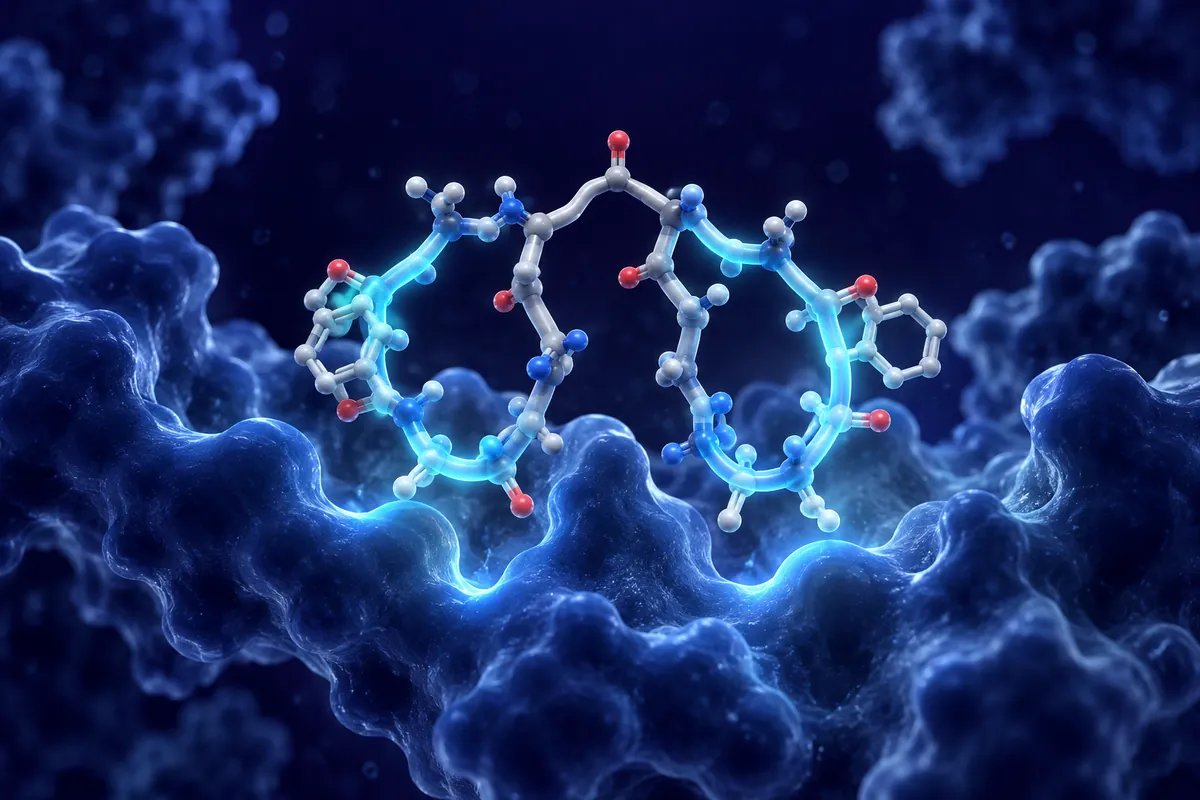
AOD 9604 occupies a fascinating corner of peptide research : a molecule small enough to synthesize reliably in the lab, yet structurally derived from one of the most complex hormones in the human endocrine system.
What makes it particularly compelling? AOD 9604 isolates just the C-terminal fragment responsible for lipid-related activity, essentially giving investigators a narrower lens.
Everything here is framed strictly within the context of laboratory and preclinical research.
What Is AOD 9604? Structural Origins of HGH Fragment 176-191
Human growth hormone is a 191-amino-acid peptide produced by the anterior pituitary.
AOD 9604 is a synthetic 16-amino-acid peptide corresponding precisely to that region. The sequence is: Tyr-Leu-Arg-Ile-Val-Gln-Cys-Arg-Ser-Val-Glu-Gly-Ser-Cys-Gly-Phe. Critically, AOD 9604 contains a disulfide bond between Cys182 and Cys189, mirroring the structural fold present in native HGH at those positions.
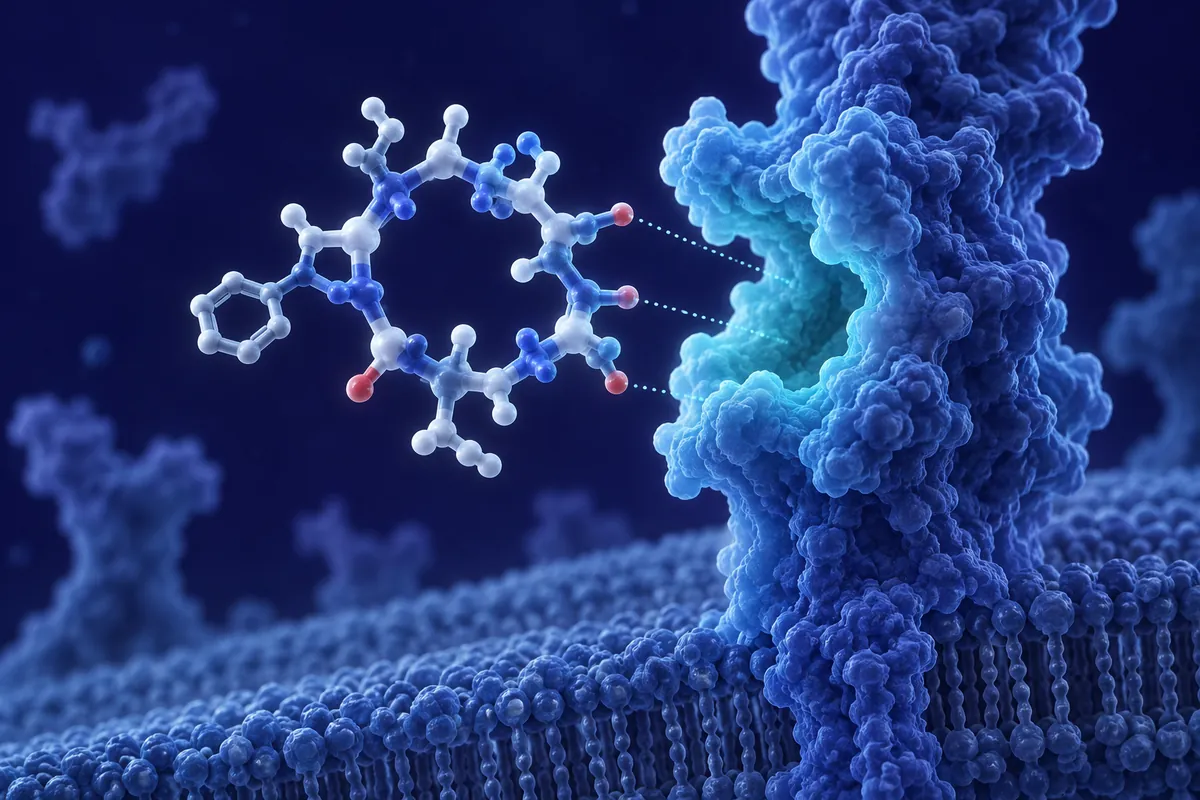
The peptide does not bind the canonical GH receptor (GHR) in the same fashion as full-length HGH, which explains its dissociation from IGF-1 stimulation and linear growth effects. This structural divergence from the parent molecule is the central premise underpinning AOD 9604 research : and it is what makes the fragment worth studying independently.
How AOD 9604 Drives Lipolysis: The Molecular Mechanism
Lipolysis : the enzymatic hydrolysis of stored triglycerides into free fatty acids and glycerol : is a tightly regulated process in adipocytes. Understanding how AOD 9604 participates in this cascade requires looking at two sides of the same coin: stimulating fat breakdown and inhibiting new fat formation.
Their activation by catecholamines : or, in this context, by peptide fragments mimicking downstream GH activity : triggers an intracellular signaling cascade: Gs protein activation → adenylyl cyclase stimulation → cyclic AMP (cAMP) elevation → protein kinase A (PKA) activation → phosphorylation of hormone-sensitive lipase (HSL) and perilipin.
Phosphorylated HSL and perilipin work together. Perilipin remodels the lipid droplet surface, making triglycerides accessible, while HSL performs the actual hydrolytic cleavage. The result: free fatty acids are released into circulation for oxidative use. AOD 9604 appears to influence this cascade upstream : likely through receptor crosstalk or secondary messenger modulation : rather than acting as a direct β3-AR agonist itself. The precise binding partner on the adipocyte surface remains an active area of inquiry, and research groups have proposed hypotheses ranging from a truncated GH receptor variant to a yet-uncharacterized membrane receptor.
Whether the mechanism is direct or indirect receptor engagement, the downstream lipid mobilization signal appears reproducible under controlled laboratory conditions.
Inhibition of Lipogenesis: The Other Half of the Equation
AOD 9604 research has examined its effects on key lipogenic enzymes, particularly fatty acid synthase (FAS) and acetyl-CoA carboxylase (ACC). The mechanism proposed involves downregulation of sterol regulatory element-binding protein 1c (SREBP-1c), a master transcriptional regulator of lipogenic gene expression.
It’s worth noting that these lipogenesis findings are predominantly from animal models and isolated cell systems. Extrapolating them to broader metabolic contexts requires significant caution, and much of this mechanistic work warrants further independent replication.
In Vitro Evidence from Cell Culture Studies
Cell culture systems have been invaluable for teasing apart AOD 9604’s molecular effects from whole-organism variables. Differentiated 3T3-L1 adipocytes : the standard preclinical model for adipocyte biology : have featured prominently in this work.
A notable body of in vitro research has demonstrated that AOD 9604 stimulates glycerol release from differentiated adipocytes in a concentration-dependent manner, consistent with triglyceride hydrolysis. This glycerol release serves as a reliable proxy measurement for lipolytic activity in cell culture.
Interestingly, in vitro work has also explored the fragment’s effects on preadipocyte differentiation : the maturation process by which precursor cells become lipid-storing adipocytes. Some data suggest AOD 9604 may inhibit differentiation at certain concentration ranges, potentially through modulation of peroxisome proliferator-activated receptor gamma (PPARγ), the nuclear receptor that orchestrates adipogenesis.
In Vivo Animal Model Observations
The most frequently cited in vivo work on AOD 9604 comes from rodent obesity models, particularly genetically obese (ob/ob) mice and diet-induced obese (DIO) rat models.
One particularly well-designed study in DIO rats tracked body weight, retroperitoneal fat pad weight, and serum lipid profiles across several weeks. This depot-specific effect, while observed in only a limited number of studies, is consistent with the proposed receptor-mediated mechanism.
Oral bioavailability studies have also been conducted in rodents, examining whether the fragment retains activity when administered via gastrointestinal absorption rather than parenteral routes.
This line of investigation emerged partly from observations that certain GH fragment sequences share structural homology with regions implicated in extracellular matrix interaction, and partly from in vitro data suggesting the peptide may modulate chondrocyte behavior.
It’s critical to frame these findings conservatively. Nevertheless, it represents a genuine area of ongoing inquiry that may merit more systematic investigation.
Mechanistically, this dissociation makes sense.
AOD 9604 Research Protocols: Laboratory Considerations
For researchers working with AOD 9604 in preclinical settings, a few protocol considerations are worth noting based on the published literature.
Storage and stability are important variables. AOD 9604, like most synthetic peptides containing disulfide bonds, is sensitive to oxidative conditions. Lyophilized (freeze-dried) powder form is the standard for long-term storage, typically at -20°C in dry, inert-gas environments. or sterile acetic acid (0.1% v/v in water), used promptly, and protected from repeated freeze-thaw cycles that can disrupt the Cys-Cys bond critical to bioactivity.
For in vivo rodent protocols, route of administration meaningfully affects experimental outcomes. Subcutaneous administration shows the most consistent bioavailability data in published literature. Intraperitoneal routes have been used with comparable results in some studies.
Researchers should also account for diurnal variation in lipid metabolism when scheduling collection timepoints, as both HSL activity and β3-AR sensitivity fluctuate across the light-dark cycle in rodents. Standardizing sacrifice and tissue collection times reduces variability in lipid panel and enzyme activity assays.
How AOD 9604 Compares to Full-Length HGH in Research
The comparison between AOD 9604 and intact human growth hormone is more than academic : it’s central to understanding what makes the fragment a useful research tool.
Full-length HGH binds two GH receptor molecules simultaneously, triggering receptor dimerization and JAK2/STAT5 signaling. AOD 9604 does not trigger GHR dimerization or meaningful STAT5 phosphorylation. It doesn’t raise IGF-1 levels in published rodent models.
What it does appear to share with full-length GH is the lipolytic signal : but through a more restricted molecular pathway. It’s a narrower tool, and that narrowness is a feature, not a limitation, in well-designed metabolic research.
The contrast also raises interesting questions about receptor pharmacology. If a 16-amino-acid fragment can capture the lipolytic component of a 191-amino-acid hormone’s activity, that implies considerable structural independence between HGH’s functional domains. This modular biology is a theme across GH research and helps explain why fragments like AOD 9604 behave as distinct molecular entities rather than simply diminished versions of the parent molecule.
Current Research Limitations & Open Questions
Despite several decades of research interest, important gaps remain in the AOD 9604 literature.
The receptor identity question is perhaps the most significant unresolved issue. Proposals exist : truncated GHR, β3-AR direct agonism, an uncharacterized GPCR : but definitive receptor binding studies with clean selectivity profiling are lacking. Without a confirmed molecular target, mechanistic claims remain partially speculative, and the field cannot fully build a structure-activity relationship around the fragment.
Most in vivo work has used rodent models with significant metabolic differences from other species. The degree to which findings in ob/ob mice or DIO rats reflect activity in other experimental model organisms is unknown and should not be assumed.
Long-term safety and off-target effects in animal models have received limited systematic investigation. Most studies run four to sixteen weeks. Whether extended AOD 9604 exposure produces tissue-level changes in non-adipose organs : liver, pancreas, cardiovascular tissue : at preclinically relevant concentrations remains largely unstudied.
The oral bioavailability question also remains unsettled. Given the practical implications for research design, this is a gap worth addressing.
It needs larger, more rigorously controlled in vitro and animal model studies before mechanistic conclusions can be drawn with confidence.
AOD 9604 offers researchers a structurally defined, mechanistically tractable entry point into the biology of adipose lipolysis.
AOD 9604 is best understood as a promising research tool in adipose biology, one that warrants continued rigorous investigation across in vitro, ex vivo, and animal model systems.
All references to AOD 9604 on this platform are strictly for research use only.
Q1: What does AOD 9604 stand for in research contexts?
A: AOD 9604 is a synthetic peptide corresponding to amino acids 176-191 of human growth hormone (hence its alternate designation HGH Fragment 176-191). In current research literature, it is most commonly referenced by its sequence position designation.
Q2: How does AOD 9604 differ from full-length human growth hormone at the receptor level?
A: Full-length HGH activates the GH receptor through dimerization, triggering JAK2/STAT5 signaling, IGF-1 secretion, and anabolic growth effects. AOD 9604 does not appear to drive meaningful GHR dimerization or STAT5 phosphorylation in published studies. Its lipolytic activity is proposed to occur through a distinct mechanism : potentially involving β3-adrenergic receptor crosstalk or a separate binding site : making it functionally distinct from the intact hormone in research models.
Q3: What in vitro models are most commonly used in AOD 9604 research?
A: Differentiated 3T3-L1 mouse adipocytes are the predominant in vitro model for AOD 9604 lipolysis studies, with glycerol release serving as the standard assay readout for triglyceride hydrolysis. Primary human adipocytes from biopsy-derived cultures have been used in more recent work. For the cartilage research line, primary chondrocyte cultures and ex vivo cartilage explant models are the standard systems referenced in published literature.
Q4: Does AOD 9604 affect insulin signaling in research models?
A: AOD 9604 contains a functionally critical disulfide bond between Cys182 and Cys189. Lyophilized powder should be stored at -20°C under dry, inert conditions to prevent oxidative degradation. or 0.1% acetic acid solution. Repeated freeze-thaw cycles should be avoided, as they can disrupt the disulfide bridge and compromise bioactivity in subsequent assays.
This educational material discusses laboratory research concepts only. Loti Labs products are intended strictly for research and development use and are not for human consumption.