
Premium USA-Made Research Compounds
Browse lab-tested peptides, research liquids, capsules and more.
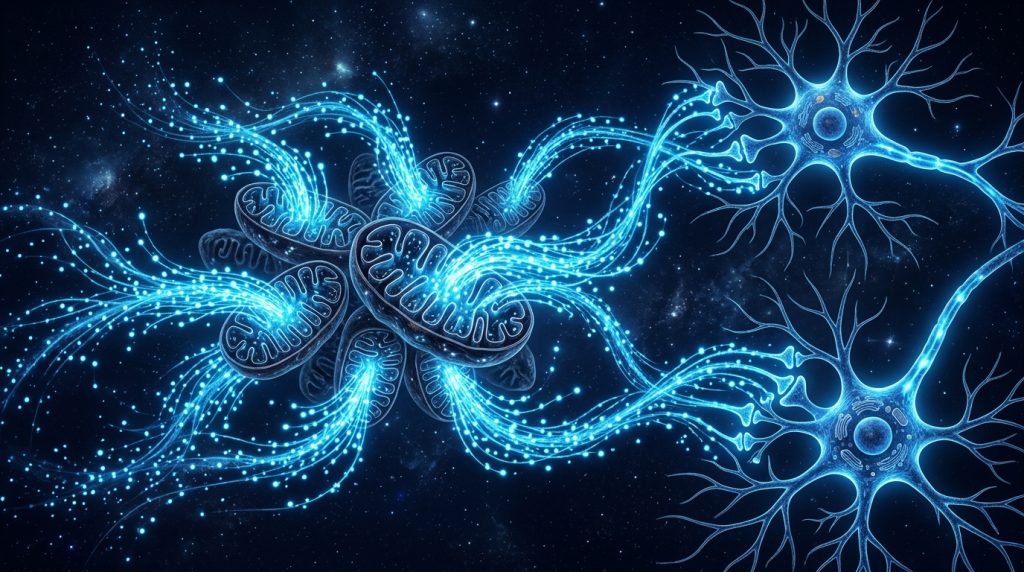
For decades, the mitochondrial genome was treated as something of an afterthought — a compact, circular remnant encoding a handful of ribosomal RNAs, tRNAs, and thirteen essential respiratory chain subunits. Nothing more. That assumption was quietly dismantled in the early 2000s when researchers discovered that the 16S ribosomal RNA region of mitochondrial DNA encodes a biologically active peptide: humanin (HN). The implications were significant. Here was evidence that mitochondria — organelles long reduced to the “powerhouse of the cell” in popular discourse — were actively participating in intercellular signaling through secreted peptides.
What followed has grown into a rich and still-expanding field of mitochondria-derived peptide (MDP) research, with humanin at its center.
Table of Contents
Looking for Premium Research Compounds?
Discovery: A Peptide Born from Alzheimer Research
Humanin was identified in 2003 by Nishimoto and colleagues during a screen for factors that could protect neurons from Alzheimer’s disease-associated cell death. The approach was elegant: they expressed a cDNA library derived from surviving neurons of an Alzheimer-affected brain and screened for sequences that conferred resistance to Aβ (amyloid-beta) toxicity. One clone stood out — and when traced to its genomic origin, it mapped to an open reading frame within the mitochondrial 16S rRNA gene.
That mapping surprised the research community. Mitochondrial DNA was not thought to encode secreted signaling peptides. The discovery prompted a broader question: if one such peptide exists, could there be others? That question eventually led to the characterization of a whole family of MDPs, including MOTS-c and the Small Humanin-Like Peptides (SHLPs 1–6), all encoded within mitochondrial ribosomal sequences.
Receptor Binding and Downstream Signaling Mechanisms
How does a 21-amino-acid peptide exert such broad biological effects? The answer lies in its receptor biology. Humanin engages multiple cell-surface receptors, which helps explain its functional versatility.
The most characterized receptor interactions involve FPRL1 (formyl peptide receptor-like 1), gp130 (a co-receptor shared with several interleukin-6 family cytokines), and CNTFR (ciliary neurotrophic factor receptor).
What makes this receptor profile interesting from a research standpoint is its overlap with several established cytokine signaling networks. Humanin, in effect, behaves partly like a cytokine — despite its mitochondrial origin. Does this suggest an ancient communication channel between mitochondrial status and systemic physiology? Researchers in the MDP field increasingly think so.
In cellular models, humanin directly inhibits Aβ-induced apoptosis in neuronal cells.
Rodent models have extended these findings in vivo.
One particularly active area involves the HNG variant — Gly14-humanin, a single amino acid substitution at position 14 (serine → glycine). For researchers designing experiments that require measurable effects at low concentrations, HNG has become a preferred research tool.
Humanin’s biology extends well beyond the nervous system.
The IGF-1 connection is notable.
The mechanistic details of this activity — whether direct ROS scavenging or indirect via gene expression changes — remain an open research question.
Circulating humanin levels — measurable in human plasma — appear to decline with advancing age. This age-associated decline has been documented across several independent cohort studies, though the mechanistic drivers are not yet fully understood.
More striking is what researchers have observed in the offspring of centenarians. Individuals whose parents lived to 100 years or beyond have been found to carry significantly higher circulating humanin levels compared to age-matched controls without centenarian parents.
The broader MDP family frames humanin within a systems-level story. Together, these peptides paint a picture of the mitochondrial genome as an active participant in cellular signaling — not merely a relic of endosymbiotic evolution.
Research Models and Experimental Considerations
For researchers establishing humanin-focused experiments, several model systems have been productively employed. In vitro, primary cortical and hippocampal neuronal cultures are the standard for neuroprotection studies — particularly assays measuring Aβ-induced cytotoxicity (LDH release, caspase-3 activation, MTT viability). Hypothalamic cell lines have been used for metabolic signaling work.
In vivo, transgenic Alzheimer mouse models (5xFAD, APP/PS1) are the most common in vivo platform. For aging-related work, aged C57BL/6 mice provide a non-transgenic model where endogenous humanin levels can be characterized alongside metabolic and cognitive readouts. Plasma-based detection relies on ELISA, though antibody selectivity between humanin and HNG variants (and cross-reactivity with SHLPs) should be carefully validated for any new experimental system.
Conclusion
Humanin represents one of the more conceptually significant discoveries in recent peptide biology — evidence that the mitochondrial genome does far more than power the cell.
For Research Purposes Only: The information presented in this article is intended solely for scientific research and educational purposes. These compounds are not approved for human use and should only be handled by qualified researchers in appropriate laboratory settings in compliance with all applicable regulations.
Continue Your Research
Explore our complete catalog of premium research compounds.
