Few research compounds illustrate the complexity of adrenergic pharmacology as clearly as clenbuterol.
β2-Adrenoceptor Pharmacology: The Signaling Cascade
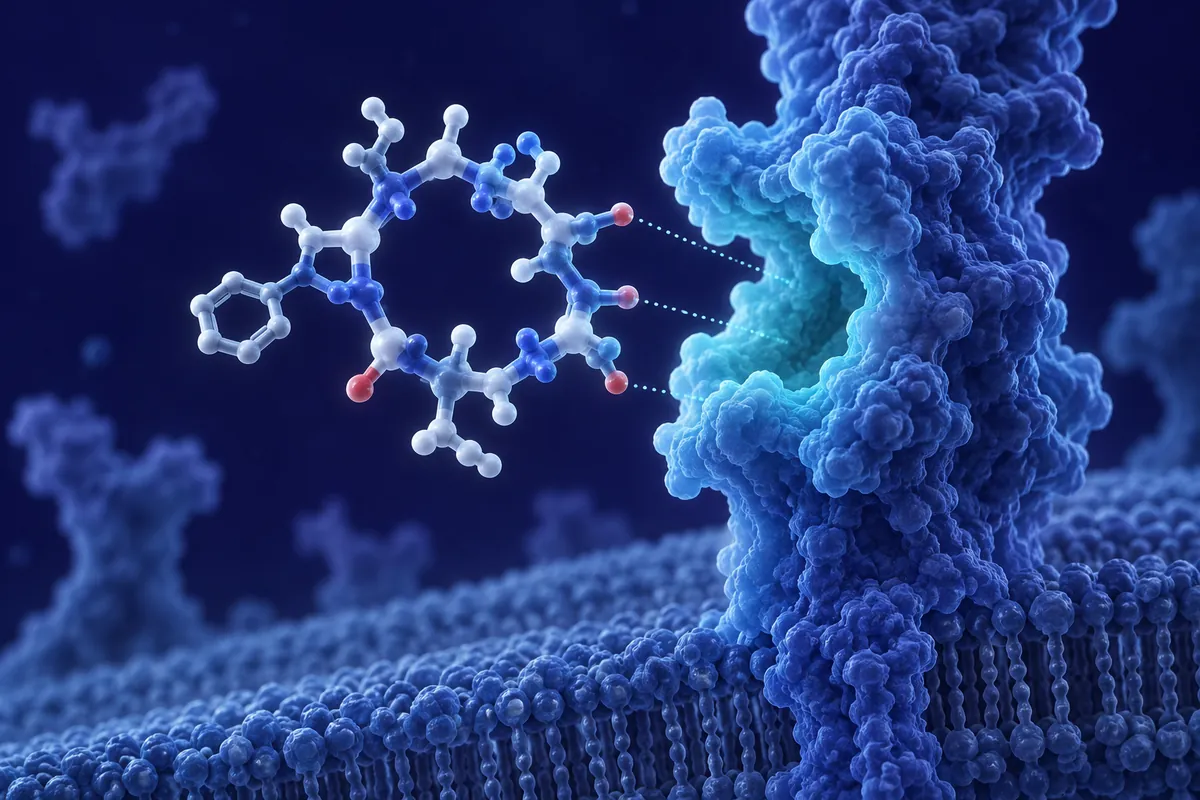
Clenbuterol is classified as a long-acting β2-adrenoceptor agonist (LABA), with measurable β1-adrenoceptor activity emerging at higher concentrations. Understanding its mechanism begins at the receptor level. β2-Adrenoceptors are G protein-coupled receptors (GPCRs) that couple preferentially to Gs subunits. Upon agonist binding, Gs activates adenylate cyclase, catalyzing the conversion of ATP to cyclic AMP (cAMP). Elevated intracellular cAMP activates protein kinase A (PKA), the primary effector kinase of this pathway.
PKA phosphorylates a wide array of downstream substrates depending on cell type. In adipocytes, the critical target is hormone-sensitive lipase (HSL) : the rate-limiting enzyme in triglyceride hydrolysis. PKA-mediated phosphorylation of HSL at serine residues activates the enzyme, initiating lipolysis: the sequential hydrolysis of stored triglycerides into glycerol and free fatty acids.
In brown adipose tissue (BAT), the pathway extends further. PKA activation leads to upregulation of uncoupling protein-1 (UCP-1) expression. UCP-1 is a mitochondrial inner membrane protein that dissipates the proton gradient driving ATP synthase, releasing energy as heat rather than storing it as ATP.
The skeletal muscle biology of β2-adrenoceptor agonism is a distinct and mechanistically separate research area. What drives this effect at the molecular level?
Some studies point to direct PKA-mediated phosphorylation of mTOR pathway components. The precise architecture of this crosstalk : β-adrenergic to mTOR : is not yet fully mapped, making it an active area for signal transduction research.
Pharmacokinetics: The Long Half-Life Variable
A defining feature of clenbuterol’s research utility : and a critical variable in study design : is its exceptionally long half-life of approximately 35 to 40 hours. This is dramatically longer than salbutamol (albuterol), the prototypical short-acting β2-agonist with a half-life of approximately 6 hours. The extended half-life of clenbuterol results from its higher lipophilicity, reduced susceptibility to first-pass metabolism, and slower renal clearance profile.
What does this mean practically for research designs? Sustained, relatively stable β2-AR occupancy between administrations. For studies examining chronic adrenergic stimulation : whether in metabolic, pulmonary, or muscular research models : clenbuterol’s pharmacokinetics produce a different receptor activation dynamics profile than short-acting alternatives. This is both an advantage and a confound.
Researchers frequently combine clenbuterol with other metabolic research compounds to study pathway interactions. The co-administration of clenbuterol and T3 (liothyronine) in metabolic studies is a well-established research pairing.
Cardiac Research Considerations and Model Limitations
Clenbuterol’s cardiac pharmacology deserves careful attention from any researcher designing a study that involves chronic administration. Cardiac muscle expresses both β1 and β2-adrenoceptors. Chronic β-adrenoceptor agonism in rodent models is a well-characterized inducer of pathological cardiac hypertrophy : specifically, a pattern of left ventricular hypertrophy (LVH) characterized by concentric remodeling, fibrosis, and impaired diastolic function.
This distinction matters enormously for experimental interpretation. Clenbuterol-induced LVH in rodent models reproduces the pathological variant: hypertrophy accompanied by collagen deposition, cardiomyocyte disarray, and functional compromise. Researchers using clenbuterol in extended protocols must account for this cardiac phenotype as a potential confounding variable in any metabolic endpoint that involves cardiovascular physiology.
The cardiac hypertrophy model is itself a research application. Investigators studying the molecular mechanisms of pathological cardiac remodeling use clenbuterol as a standardized pharmacological tool to reproducibly generate LVH in rodent models : providing a platform for testing interventions aimed at attenuating fibrotic or hypertrophic signaling. In this context, the cardiac effects are not a limitation but the study endpoint itself.
Conclusion
Clenbuterol’s sustained presence in metabolic and muscle biology research reflects the depth and breadth of its pharmacological profile. The compound is most valuable precisely because its mechanisms are tractable: each step of the cAMP/PKA pathway is accessible to molecular dissection, making clenbuterol an anchor compound for β2-adrenoceptor pharmacology research. As with any potent sympathomimetic agent, rigorous experimental design : including appropriate model selection, administration protocols, and cardiac monitoring : is essential to generating interpretable, reproducible data.
For Research Purposes Only: The information presented in this article is intended solely for scientific research and educational purposes. These compounds are not approved for human use and should only be handled by qualified researchers in appropriate laboratory settings in compliance with all applicable regulations.
This educational material discusses laboratory research concepts only. Loti Labs products are intended strictly for research and development use and are not for human consumption.