Author Archives: Admin

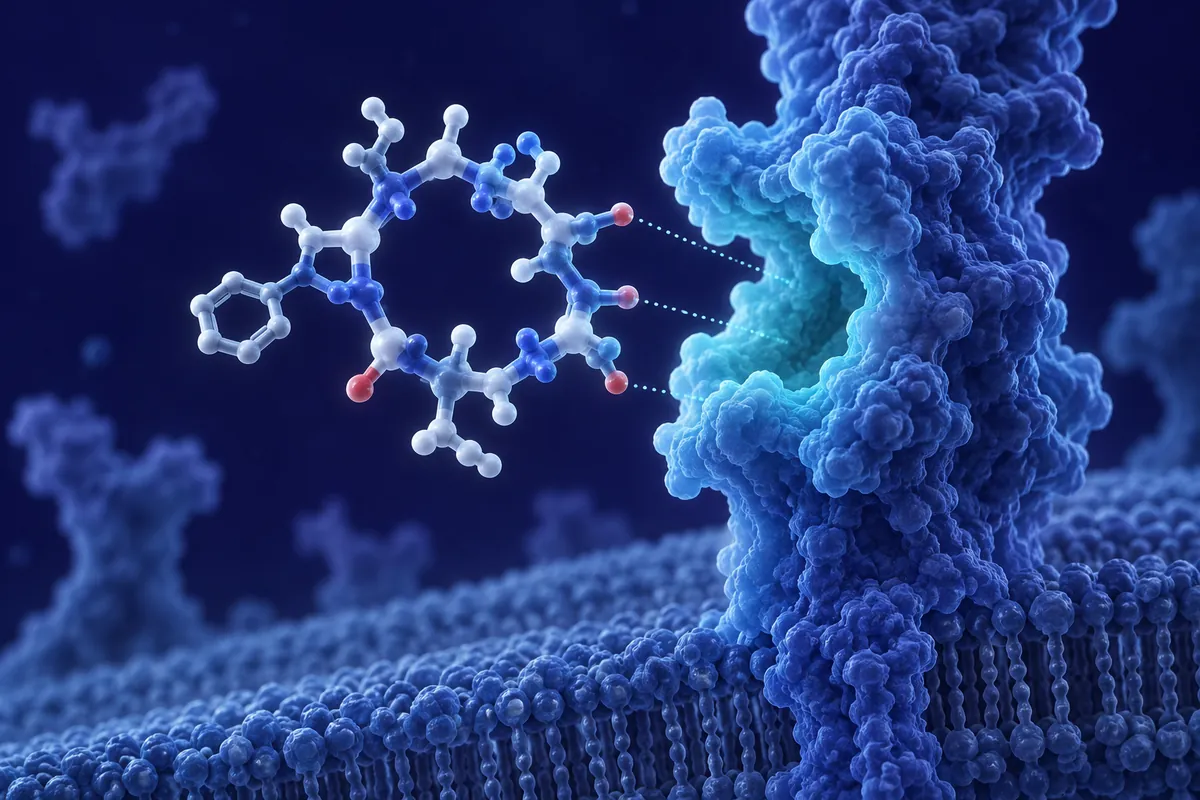
Ghrelin: Growth Hormone Secretagogue Receptor Signaling, Hunger Pathway Research & Reward Circuit Biology

Table of Contents Toggle The Hunger Hormone’s Deeper Story GHS-R1a: A Receptor with Constitutive Activity Reward, Motivation, and Dopamine Des-Acyl Ghrelin: The Other Form Current Research Directions The Hunger Hormone’s Deeper Story Ghrelin occupies a unique position in peptide biology. Discovered in 1999 by Masayasu Kojima and colleagues at Kurume University, it was identified through […]

Neuropeptide Y (NPY): Appetite Regulation, Stress Response & Sympathetic Nervous System Research

Table of Contents Toggle The Brain’s Most Abundant Neuropeptide Research Tools and Receptor Pharmacology The Brain’s Most Abundant Neuropeptide Neuropeptide Y (NPY) is a 36-amino-acid peptide that holds a remarkable distinction: it is the most abundant neuropeptide in the mammalian central nervous system. First isolated from porcine brain in 1982 by Kaare Tatemoto, NPY belongs […]

Alpha-MSH (α-Melanocyte-Stimulating Hormone): Melanocortin Signaling, Anti-Inflammatory Research & Immunomodulation

Table of Contents Toggle Structural Features and Stability Open Research Questions Alpha-melanocyte-stimulating hormone (α-MSH) is a 13-amino-acid peptide derived from the post-translational processing of proopiomelanocortin (POMC) in the anterior pituitary, hypothalamus, and various peripheral tissues. But that is barely the opening act. The melanocortin system comprises five receptor subtypes (MC1R through MC5R), and α-MSH activates […]

Irisin (FNDC5): Exercise-Induced Myokine Research, Browning of White Fat & Metabolic Crosstalk

Table of Contents Toggle What Is Irisin? The Browning Mechanism: White Fat to Beige Fat Receptor Biology and Signaling Partners Exercise Intensity and Irisin Release Current Research Frontiers What Is Irisin? Irisin burst onto the research scene in 2012 when a team led by Bruce Spiegelman at Harvard identified it as a cleaved fragment of […]

BPC-157 and TB-500 Combined: Synergistic Repair Peptide Research & Laboratory Models

Table of Contents Toggle Introduction: The Rationale for Dual-Peptide Research BPC-157: The Angiogenic Catalyst TB-500 (Thymosin Beta-4): Master of Cellular Migration The Synergy Hypothesis: Parallel Mechanistic Pathways Conclusion: Future Directions in Peptide Science Introduction: The Rationale for Dual-Peptide Research In the evolving landscape of regenerative medicine, researchers are looking beyond single-molecule interventions. The spotlight has […]

Larazotide Acetate: Tight Junction Modulator Research in Intestinal Permeability & Barrier Function

Table of Contents Toggle Larazotide: A Peptide That Tightens the Gut Barrier The Zonulin Pathway: Why Tight Junctions Open Larazotide’s Mechanism: Blocking Zonulin-Mediated Junction Opening Beyond Celiac Disease: Intestinal Permeability as a Research Target Pharmacological Characteristics Research Implications Larazotide: A Peptide That Tightens the Gut Barrier Most peptide research focuses on activating receptors or blocking […]

Pramlintide & Amylin Analogs: Pancreatic Peptide Research in Glucose Homeostasis & Satiety Signaling

Table of Contents Toggle Amylin: The Forgotten Pancreatic Peptide Pramlintide: Engineering a Stable Amylin Analog The Amylin Receptor: A Calcitonin Receptor-RAMP Complex Amylin in Obesity Research: The Cagrilintide Connection Amylin Aggregation and Islet Biology Amylin: The Forgotten Pancreatic Peptide Insulin has dominated diabetes research for over a century. But it does not act alone. Amylin […]

Defensins: Innate Immune Peptides in Antimicrobial and Microbiome Research

Table of Contents Toggle Classification: Alpha, Beta, and Theta Immunomodulatory Functions Defensins and the Microbiome They are found in organisms ranging from plants and insects to mammals, suggesting an evolutionary origin predating the adaptive immune system by hundreds of millions of years. In humans, defensins are produced by neutrophils, Paneth cells in the intestinal crypts, […]