Natural antimicrobial peptides look, on paper, like an obvious answer to a growing resistance problem. They’re potent, they’re mechanistically distinct from conventional small-molecule antibiotics, and nature has already done millions of years of iteration on the scaffold. And yet the vast majority of natural AMP candidates stall well before they become useful research tools, let alone anything resembling a viable lead. The reasons are consistent enough across the literature that they’ve become almost predictable, and they’re exactly what peptidomimetic design tries to engineer around.
Why Natural Sequences Fail the Preclinical Gauntlet
Proteolytic instability is the first wall. Linear peptides built from standard L-amino acids are exactly what endogenous proteases evolved to recognize and cleave. In serum stability assays, many natural AMPs show half-lives measured in minutes once exposed to trypsin-like or chymotrypsin-like proteases present in plasma or tissue homogenates. A peptide that degrades before it reaches a bacterial membrane in an in vitro assay isn’t going to behave any better in a more complex biological matrix.
Hemolysis is the second wall, and it’s related to the very features that make these peptides antimicrobial in the first place. Cationic charge and amphipathicity drive membrane disruption in bacteria, but the same biophysical profile frequently causes lysis of mammalian erythrocytes in culture. Selectivity indices : the ratio between hemolytic concentration and minimum inhibitory concentration : are disappointingly narrow for a large fraction of naturally derived candidates.
Then there’s salt sensitivity. Many natural AMPs, magainins and related sequences among them, lose a substantial fraction of their antibacterial activity in the presence of physiological ionic strength or divalent cations. An assay run in low-salt buffer can look impressive; the same peptide tested under conditions closer to physiological electrolyte concentrations often shows a dramatic potency drop. That gap between idealized assay conditions and anything resembling a real biological environment has quietly killed more AMP programs than any single mechanism of resistance.
Peptidomimetic Backbones as an Engineering Fix
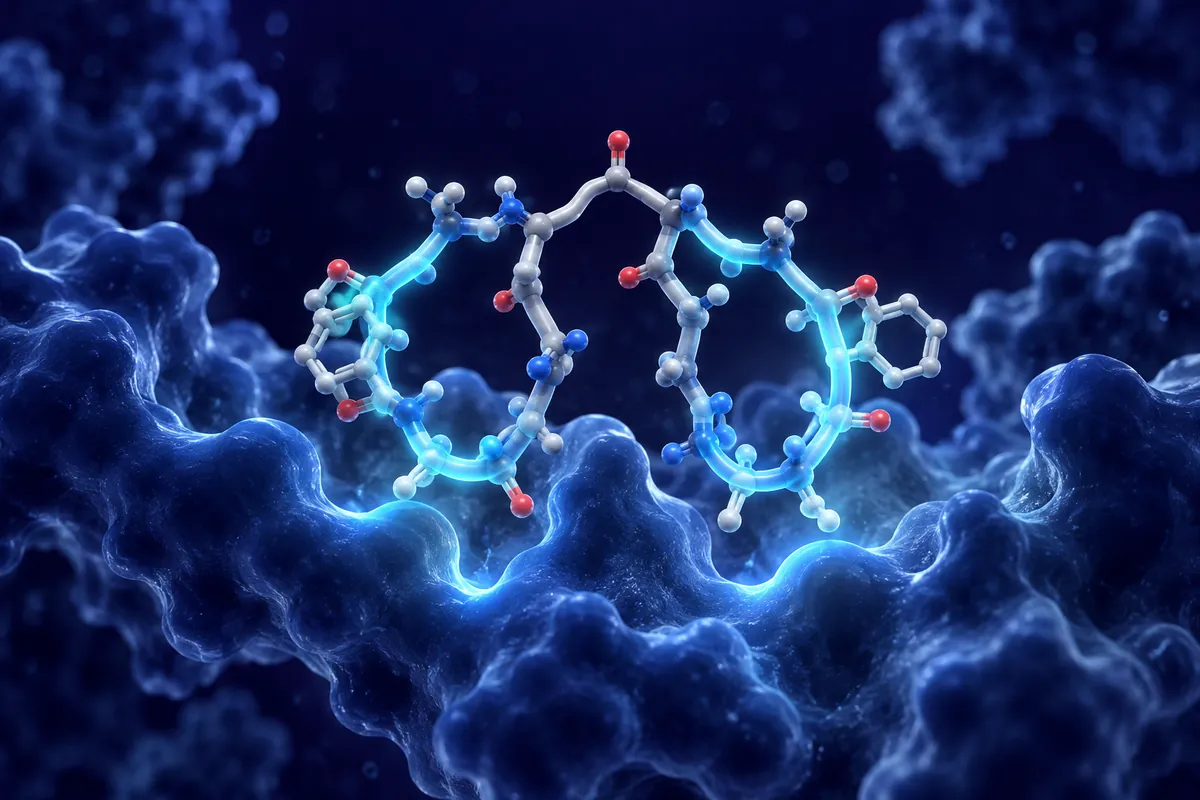
Peptidomimetics address these failure modes at the chemistry level rather than trying to optimize around them. Replacing the peptide backbone with non-natural scaffolds : beta-peptides, peptoids, arylamide oligomers, or backbones incorporating D-amino acids : removes the recognition motifs that proteases depend on. A protease active site is shape- and stereochemistry-specific; disrupt the backbone geometry enough and the enzyme simply can’t engage the substrate, regardless of how similar the overall pharmacophore looks to a natural sequence.
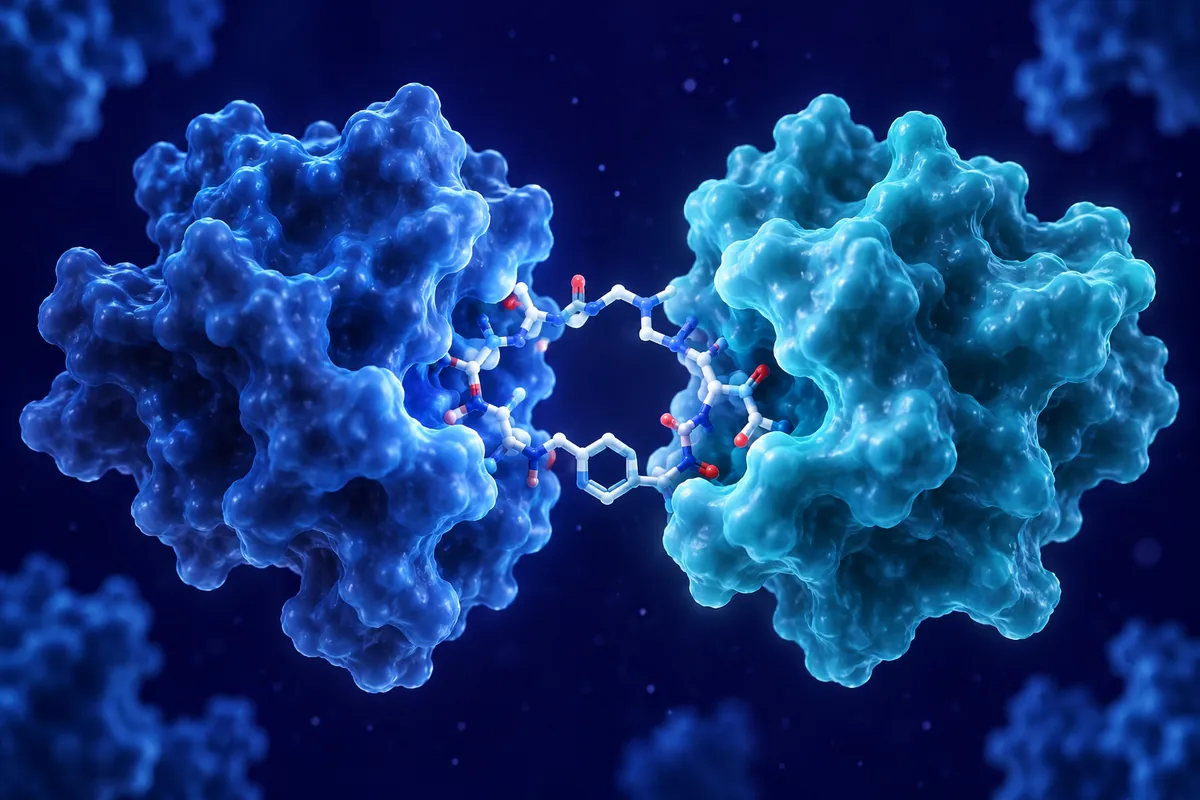
This isn’t a purely defensive design choice. Peptidomimetic scaffolds also give researchers much finer control over the spatial arrangement of cationic and hydrophobic groups : the facial amphipathicity that drives membrane selectivity : without being constrained to the twenty canonical side chains and the geometric limits of an alpha-helix or beta-sheet. Arylamide-based mimetics, for instance, can present a cationic-hydrophobic pattern on a rigid, non-degradable scaffold that mimics the amphipathic topology of a host-defense peptide without any peptide bonds for a protease to recognize at all.
Voxvoganan and the First-in-Class Synthetic Mimetic Concept
Voxvoganan is frequently cited in the medicinal chemistry literature as an example of this design philosophy taken to its logical endpoint: a fully synthetic, non-peptide small molecule engineered to reproduce the amphipathic charge topology of host-defense peptides while carrying none of the backbone chemistry that makes natural AMPs fragile. As a first-in-class synthetic peptidomimetic in this structural category, it’s studied primarily as a proof of concept for how far the mimetic approach can be pushed away from a literal peptide sequence while retaining membrane-active behavior in bacterial model systems. Specific potency and selectivity figures continue to be refined across research groups, so treat any single reported number as provisional rather than settled.
Membrane Disruption Mechanisms Shared Across the Class
Mechanistically, peptidomimetics generally converge on the same handful of models developed for natural AMPs: the barrel-stave model, where helical or helix-mimetic units insert perpendicular to the membrane and oligomerize into a pore; the toroidal pore model, where lipid headgroups bend inward alongside the inserted peptide; and the carpet model, where accumulated surface coverage eventually collapses membrane integrity without a discrete pore structure at all. Which model applies depends heavily on the specific scaffold, its charge density, and the lipid composition of the target membrane : differences that show up clearly in liposome leakage assays using calcein or ANTS/DPX dye-release systems.
Resistance Considerations Worth Tracking
Membrane-targeting mechanisms are often framed as resistance-resistant, and there’s some truth to that : evolving a lipid bilayer composition robust against a broad class of amphipathic disruptors is a bigger genetic lift than mutating a single enzyme target. But it isn’t a free pass. Some bacterial strains modify surface charge through lipid A modifications or teichoic acid alterations, reducing the electrostatic attraction that initiates peptidomimetic binding in the first place. Comparative resistance-selection experiments across passaged bacterial cultures remain one of the more informative ways to stress-test whether a given mimetic scaffold holds up better than its natural counterpart over serial exposure.
The overall case for peptidomimetics isn’t that they’re universally superior : it’s that they let researchers decouple the properties that matter (membrane selectivity, potency) from the properties that don’t need to be inherited (protease susceptibility, natural backbone constraints). That decoupling is what keeps this design space active.
Disclaimer: This content is intended for research purposes only and is not meant to constitute medical advice.
This educational material discusses laboratory research concepts only. Loti Labs products are intended strictly for research and development use and are not for human consumption.