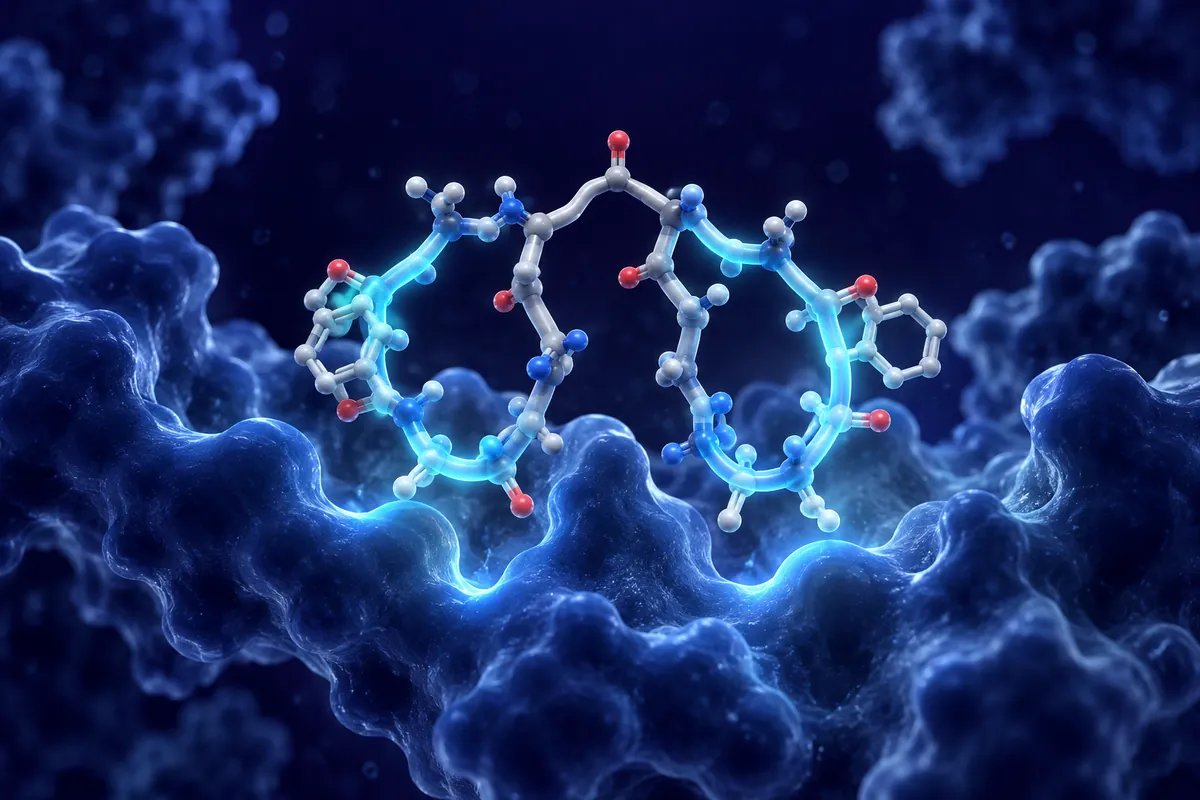
Tesamorelin is another growth hormone releasing hormone analogue with enhanced stability.
Molecular Composition and Chemical Structure
This structure provides the molecular framework for GHRH receptors activation and has a relatively short half-life of 11-12 minutes in lab studies.
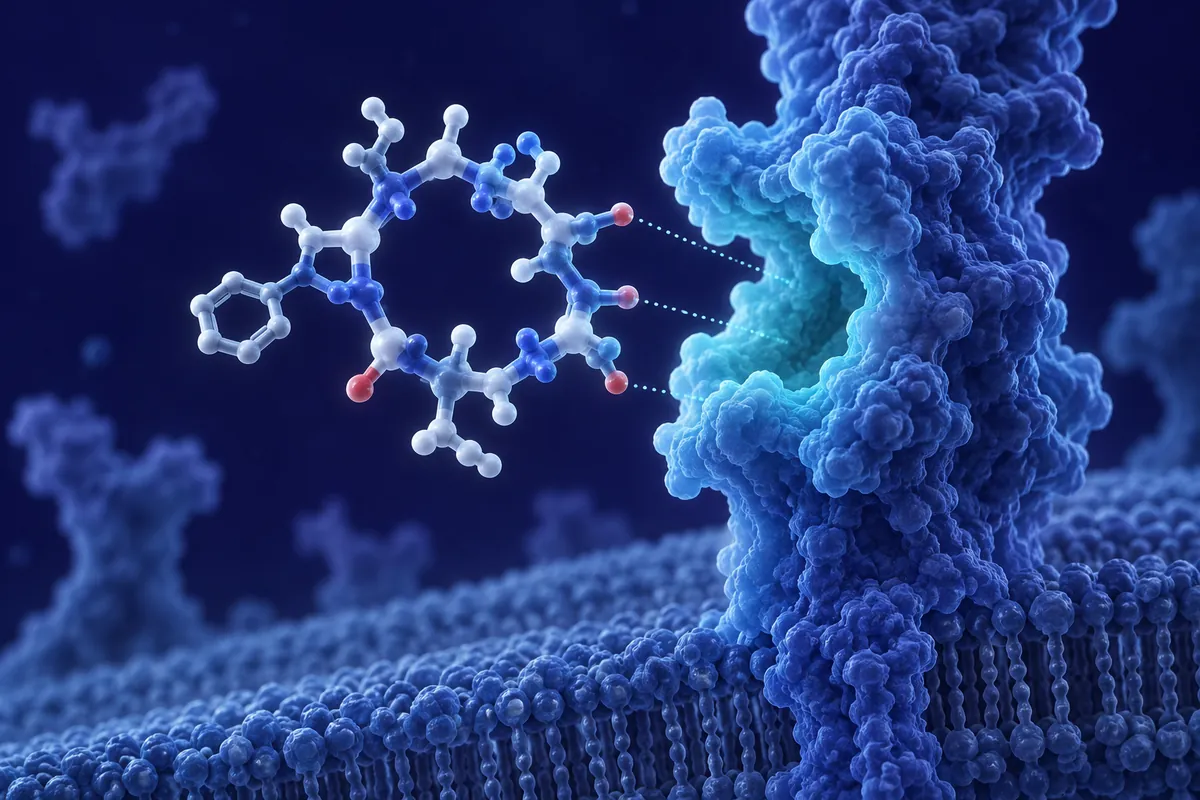
Ipamorelin has a more compact molecular structure as a selective ghrelin receptor agonist.
Tesamorelin has a 44 amino acid structure with enhanced stability compared to natural GHRH. Studies show this extended molecular composition provides improved resistance to enzymatic degradation and has a half-life of 26-38 minutes and is more stable for research.
|
Peptide |
Amino Acids |
Half-life |
Molecular Weight |
Primary Target |
|---|---|---|---|---|
Sermorelin |
29 |
11-12 minutes |
3357.9 Da |
GHRH Receptors |
Ipamorelin |
5 |
2-3 hours |
711.85 Da |
Ghrelin Receptor |
Tesamorelin |
44 |
26-38 minutes |
5135.89 Da |
GHRH Receptors |
These differences in structure affect how each compound interacts with the target receptors and maintains activity in research.
Mechanism of Action Comparison
Understanding these pathways is key to choosing the right compound for your research goals.
This natural stimulation approach results in moderate GH levels that follow normal circadian patterns.
Ipamorelin works through ghrelin receptor activation, specifically targeting the growth hormone secretagogue receptor without affecting other receptor types.
Cost for research applications is $200-500 monthly in clinical settings making Sermorelin an affordable option for long term research.
The compound’s selective action allows for long term research without hormonal complications.
However research costs can go up to $3,000 monthly making it the most expensive option among the three for long term research.
The compound’s natural mechanism and excellent safety profile supports diverse research applications and is cost effective.
The compound’s availability and proven research applications supports wide range of research objectives.
The compound’s FDA approval for specific medical conditions provides regulatory advantage for certain research protocols.
However, cost and supervision requirements affect protocol design and accessibility.
Key factors for peptide selection are research objectives, subject population characteristics, budget and supervision levels.
Supervision requirements vary among compounds, Tesamorelin requires more intensive monitoring compared to Sermorelin or Ipamorelin. This affects research design and resource allocation in clinical studies.
Frequently Asked Questions
Which is better: Sermorelin or Ipamorelin for research?
The optimal choice depends on specific research goals. Both are legitimate research tools; the selection should be driven by the target outcome.
What is the strongest GH secretagogue among these three peptides?
The concept of “strongest” depends on the research objective. Sermorelin provides moderate, physiological GH release suitable for long-term optimization studies. Each leads in a different research context; none is universally “strongest.”
Can Sermorelin and Ipamorelin be used together in research?
Yes. Combining Sermorelin and Ipamorelin targets both GHRH receptors (Sermorelin) and ghrelin receptors (Ipamorelin) simultaneously, potentially producing complementary GH stimulation through different pathways. Such combination protocols require careful design and monitoring.
How long does it take to see effects in research models?
Onset depends on the outcome being measured. All three peptides have relatively short half-lives (Sermorelin ~11-12 minutes, Ipamorelin ~2-3 hours, Tesamorelin ~26-38 minutes), meaning GH pulses are acute.
What is the difference between GHRH peptides and GHRPs?
What are the long-term safety considerations for these peptides?
Tesamorelin, while FDA-approved for specific conditions, requires monitoring for potential joint pain, transient blood glucose elevation, and water retention. Researchers should adhere to applicable guidelines for research chemical handling and ensure appropriate oversight for any long-term study protocol involving these compounds.
Research comparing Sermorelin vs Ipamorelin vs Tesamorelin shows different advantages for different research applications.
The compound is excellent for diverse research applications. Its FDA approval provides regulatory advantage and its targeted mechanism provides unique research opportunities.
Evidence based recommendations suggest selecting compounds based on specific research objectives not broad applications.
However, cost and supervision requirements must be factored in protocol design and resource planning.
Studies show optimal results require proper monitoring, correct administration and regular assessment of research parameters.
Combining lifestyle interventions with peptide research may give better outcomes according to emerging studies.
Comparative studies between all three compounds will provide valuable insights for research protocol design.
This educational material discusses laboratory research concepts only. Loti Labs products are intended strictly for research and development use and are not for human consumption.