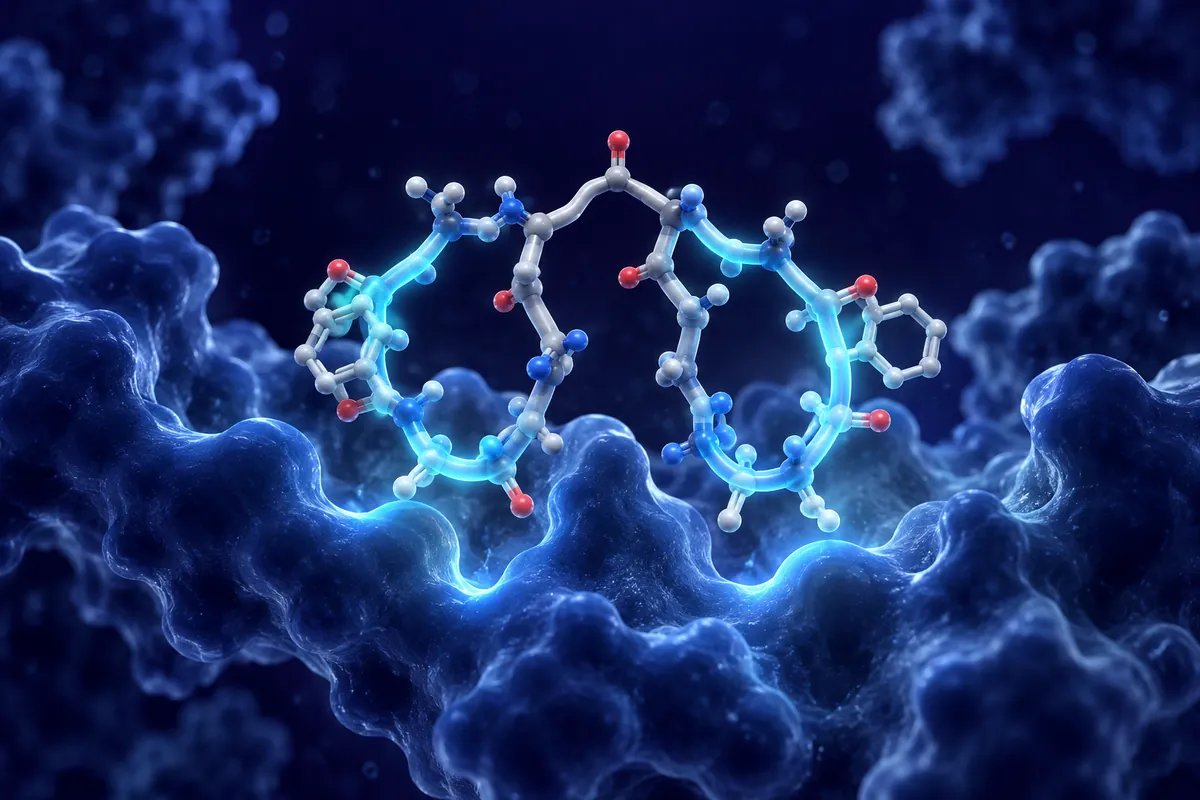
In the landscape of peptide research, ipamorelin has emerged as a compound of significant scientific interest since its discovery in 1998.
Notably, Andersen PH has contributed to the scientific understanding of growth hormone-releasing peptides like ipamorelin, particularly in the context of pharmacological profiling and receptor selectivity.
Understanding the mechanisms and applications of this research compound provides valuable insights into modern peptide science and growth hormone modulation studies.
Key characteristics observed in research include:
- Molecular Weight: Approximately 711.85 g/mol
- Laboratory Stability: Requires proper storage conditions for research applications
- Half-Life: Research indicates ipamorelin has a short half-life of approximately 2 hours in biological systems, necessitating specific administration protocols in research
Research Mechanisms and Pathways
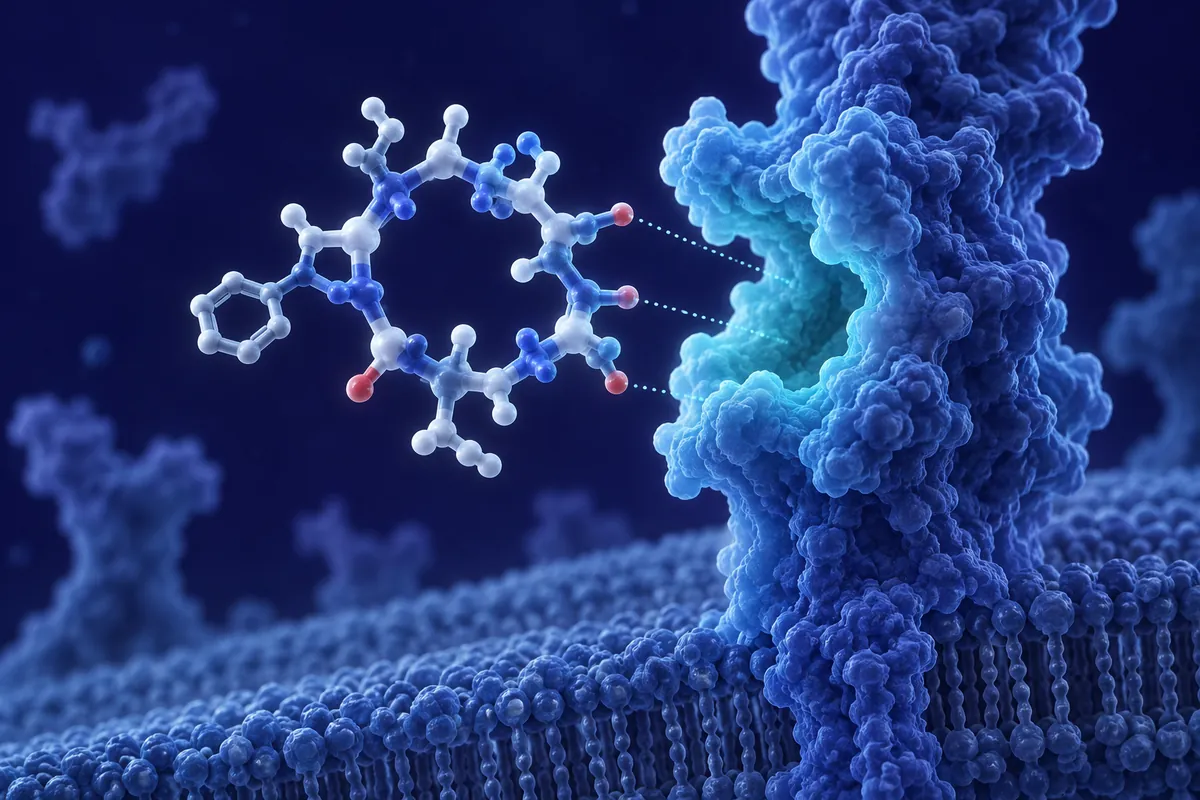
Laboratory investigations reveal that ipamorelin functions as a selective agonist of the gh secretagogue receptor, primarily located in the hypothalamus and pituitary gland.
Receptor Interaction Studies
Studies conducted on primary rat pituitary cells demonstrate that ipamorelin’s mechanism involves:
- Signal Transduction: Laboratory findings indicate activation of specific cellular pathways
- In vitro potency: EC50 ≈ 1.3±0.4 nmol/L for ipamorelin versus 2.2±0.3 nmol/L for GHRP-6
- Maximum response: Emax ≈ 1545±250 ng/mL vs. 1167±120 ng/mL respectively
IGF-1 Pathway Activation
Observed Physiological Effects in Research Models
Ipamorelin’s selectivity for the gh secretagogue receptor, without significant impact on other hormones, distinguishes it from other peptides and makes it a promising candidate for peptide research.
Laboratory Applications and Study Protocols
Research applications of ipamorelin span various scientific investigations, with studies focusing on its potential effects in laboratory settings. Research suggests that the compound’s applications include investigations into:
For further assistance or research inquiries, you can contact Loti Labs.
Growth Hormone Research
Laboratory studies have explored ipamorelin’s role in:
- Body fat composition changes in laboratory subjects
Combination Research Studies
Laboratory investigations have explored combining ipamorelin with other peptides, particularly CJC-1295.
- Extended activity: Laboratory findings suggest prolonged hormone elevation
Comparative Research with Other Compounds
Research comparisons reveal significant differences between ipamorelin and other gh releasing peptides.
Selectivity Advantages in Research
- Hormone Specificity: Research indicates minimal impact on cortisol or prolactin levels
- Appetite Effects: Laboratory studies show no significant appetite stimulation
- Safety Profile: Research suggests fewer adverse observations in laboratory settings
Research Tolerance and Observations
Research observations include:
- Temporary fatigue noted in initial research phases
- Occasional headaches observed in laboratory studies
- Transient nausea reported in some research protocols
Research Safety Considerations
Laboratory studies indicate several important considerations for research applications:
Research Monitoring Requirements
Scientific studies emphasize the importance of:
- Baseline hormone level assessments
- Regular monitoring during research protocols
- Proper medical supervision in research settings
- Individual protocol adjustments based on research responses
Current Research Directions and Scientific Evidence
The foundational 1998 study by B.K. Raun et al. remains a cornerstone in establishing the compound’s research profile and scientific potential.
Ongoing Research Areas
Current scientific investigations continue to explore:
- Long-term research applications and safety profiles
- Optimal combination protocols with other research compounds
- Enhanced delivery methods for laboratory applications
- Expanded research indications in various scientific fields
Research Quality and Sourcing
Laboratory studies emphasize the importance of obtaining research-grade ipamorelin from reputable sources. Research protocols require:
- Third-party testing verification
- Certificate of analysis documentation
- Proper storage and handling procedures
- Qualified research supervision
- Appropriate research facility conditions
Research Timeline and Response Patterns
Laboratory studies indicate varying timelines for observable research responses. Research suggests that changes may occur according to the following general patterns observed in scientific studies:
Research indicates that response patterns vary depending on baseline hormone levels, age of research subjects, and concurrent research protocols.
Future Research Applications
The scientific community continues to investigate ipamorelin’s potential in various research applications.
- Combination studies with other research compounds
- Long-term safety assessments in extended research
- Novel applications in emerging scientific fields
Conclusion
Laboratory investigations demonstrate its unique ability to stimulate gh release while maintaining a clean research profile compared to other gh releasing peptides.
For researchers interested in exploring ipamorelin applications, consulting current scientific literature and working with qualified research facilities ensures proper protocols and optimal research outcomes.
This educational material discusses laboratory research concepts only. Loti Labs products are intended strictly for research and development use and are not for human consumption.