What Are Cell-Penetrating Peptides?
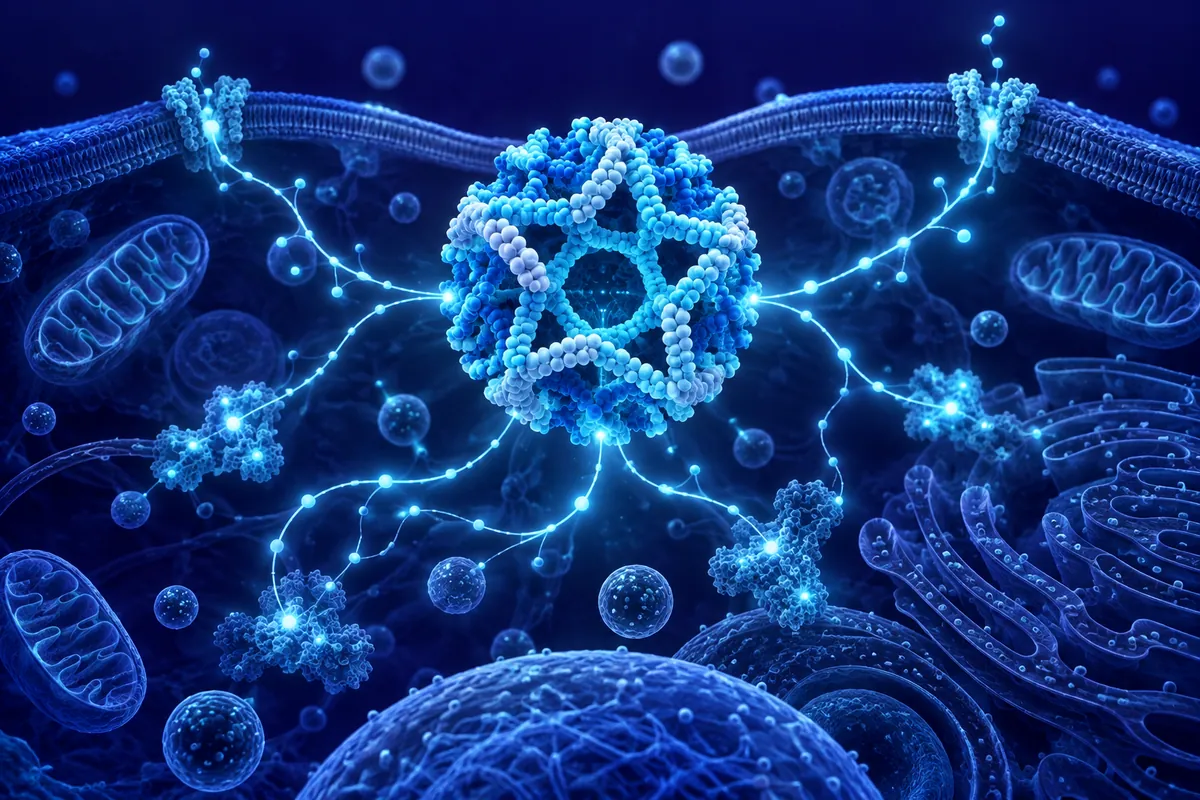
Cell-penetrating peptides (CPPs) are short sequences : typically 5 to 30 amino acids : that cross biological membranes and carry molecular cargo into cells. They solve one of the fundamental problems in drug delivery: getting large, charged, or hydrophilic molecules past the lipid bilayer and into the cytoplasm or nucleus where their targets reside.
The field began with a surprising observation in 1988. Frankel and Pabo discovered that the HIV-1 transactivator of transcription protein (TAT) could enter cells spontaneously when added to culture medium. Green and Loewenstein made the same observation independently. The minimal peptide sequence responsible : TAT(47-57), an arginine-rich fragment : became the prototype cell-penetrating peptide and launched three decades of delivery research.
Major CPP Families and Their Structures
CPPs are classified by charge, structure, and origin. The three major families reflect different evolutionary solutions to the same biophysical problem.
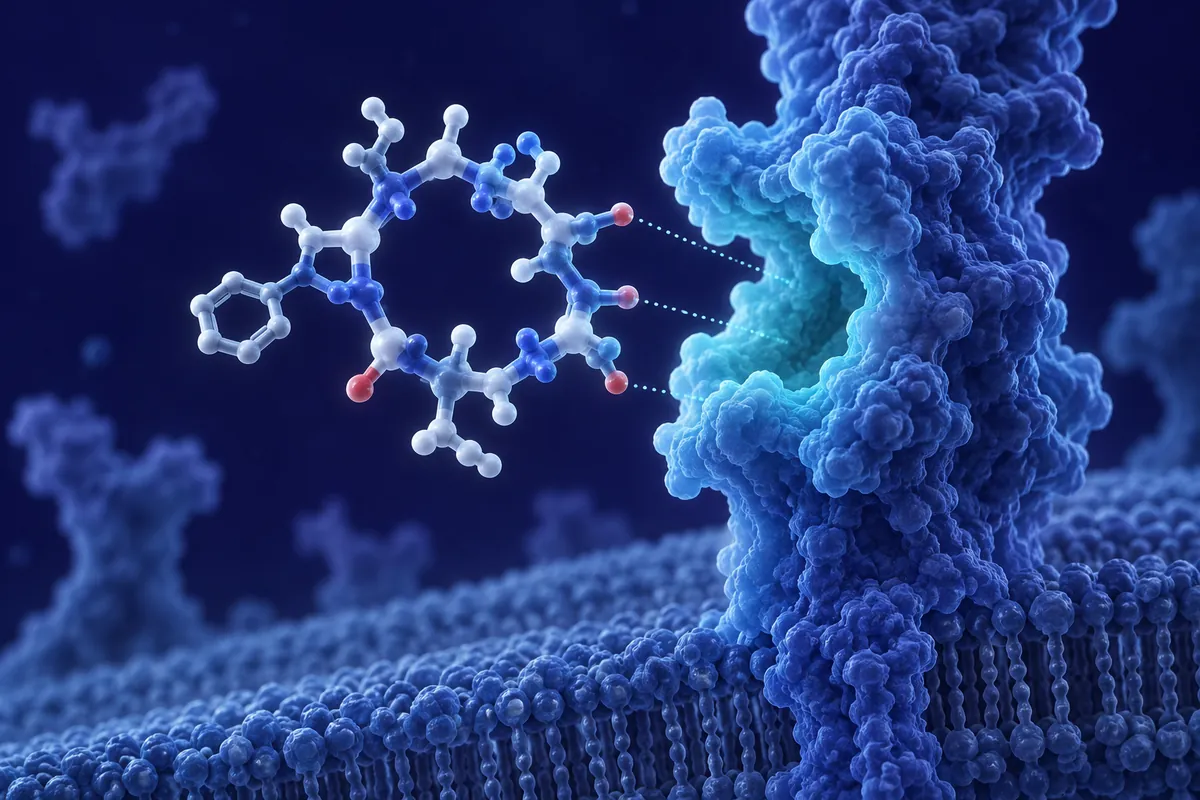
Cationic CPPs carry a net positive charge at physiological pH, driven by arginine and lysine residues. TAT, polyarginine (R8, R9), and penetratin (from the Drosophila Antennapedia homeodomain) belong to this group. Their positive charge interacts with negatively charged membrane components : phospholipids, heparan sulfate proteoglycans : to initiate uptake. Polyarginine peptides are particularly efficient because arginine’s guanidinium group forms bidentate hydrogen bonds with phosphate and sulfate groups on the cell surface.
Amphipathic CPPs contain both hydrophobic and hydrophilic domains, often arranged in an alpha-helical structure. MAP (model amphipathic peptide), transportan, and Pep-1 are examples. Their membrane interaction involves partial insertion of the hydrophobic face into the lipid bilayer, a mechanism distinct from purely electrostatic engagement.
Hydrophobic CPPs rely primarily on nonpolar residues for membrane partitioning. These are less common in research use but include peptides derived from signal sequences and fusion peptides of viral origin.
Uptake Mechanisms: Direct Penetration vs. Endocytosis
How CPPs cross membranes has been debated intensely since the field’s inception. The truth, accumulated through two decades of biophysical studies, is that multiple mechanisms operate simultaneously, and the dominant pathway depends on CPP concentration, cargo size, and cell type.
At low concentrations (below ~1 μM), most CPPs enter via endocytotic pathways : macropinocytosis, clathrin-mediated endocytosis, or caveolae-dependent uptake. The cargo ends up in endosomes, and endosomal escape becomes the rate-limiting step for cytoplasmic delivery. This is the Achilles heel of CPP-mediated delivery: material that cannot escape endosomes gets degraded in lysosomes.
At higher concentrations, direct translocation across the membrane becomes significant. This involves transient membrane disruption, inverted micelle formation, or pore creation : mechanisms that bypass endosomes entirely but carry a higher risk of membrane damage and cytotoxicity. The concentration threshold for direct translocation varies by CPP and cell type but is generally in the low-micromolar range.
Cargo Delivery: From Small Molecules to Nanoparticles
The versatility of CPPs as delivery vehicles is remarkable. Cargo successfully transported into cells includes small-molecule compounds, antisense oligonucleotides, siRNA, plasmid DNA, proteins, quantum dots, and even liposomal nanoparticles. The cargo is typically conjugated to the CPP through covalent bonds (disulfide bridges, amide bonds) or non-covalent complexation (electrostatic assembly with nucleic acids).
TAT-mediated delivery of proteins has been demonstrated for enzymes (β-galactosidase, Cre recombinase), transcription factors, and antibody fragments. The cargo size limit is generous : TAT has delivered functional proteins exceeding 100 kDa into mammalian cells, though delivery efficiency decreases with increasing cargo mass.
For nucleic acid delivery, CPPs compete with viral vectors and lipid nanoparticles. The advantage of CPP-based delivery is lower immunogenicity and simpler manufacturing compared to viral approaches. The disadvantage is typically lower transfection efficiency, though recent advances in CPP design : particularly stapled and multivalent CPPs : have narrowed this gap considerably.
Recent Advances: Cyclic CPPs and Endosomal Escape
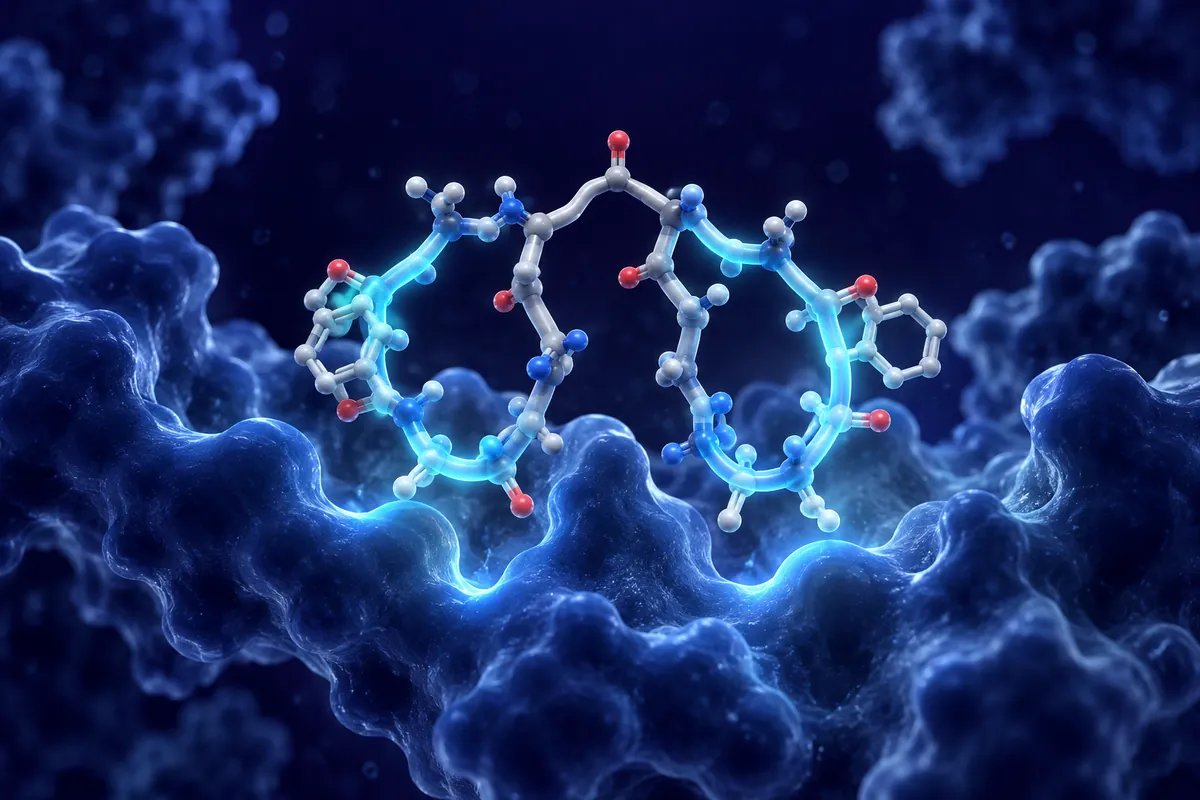
The endosomal escape problem has driven innovative CPP engineering in recent years. Cyclic cell-penetrating peptides, pioneered by Dehua Pei’s laboratory, show dramatically improved cytoplasmic delivery compared to their linear counterparts. Cyclization constrains the peptide backbone into conformations that enhance both membrane binding and endosomal membrane disruption.
pH-responsive CPPs represent another approach. These peptides are designed to be membrane-inactive at physiological pH but become membrane-lytic at the acidic pH of endosomes (pH 5-6). The GALA peptide and its derivatives use glutamic acid residues that protonate in acidic environments, triggering a conformational shift from random coil to alpha-helix that disrupts the endosomal membrane.
CPPs in the Broader Peptide Research Landscape
Cell-penetrating peptides occupy a unique niche. They are not therapeutic agents themselves : they are enabling technologies. Their value lies in making other molecules work by overcoming the delivery barrier.
Disclaimer: This content is intended for research purposes only and is not meant to constitute medical advice.
This educational material discusses laboratory research concepts only. Loti Labs products are intended strictly for research and development use and are not for human consumption.