Peptides
Tesamorelin Peptide: GHRH Analogue Research & Mechanism of Action
Tesamorelin is a 44-amino acid GHRH analogue with enhanced stability. This article covers its mechanism of action.
Read articleBrowse the latest articles in this research category.
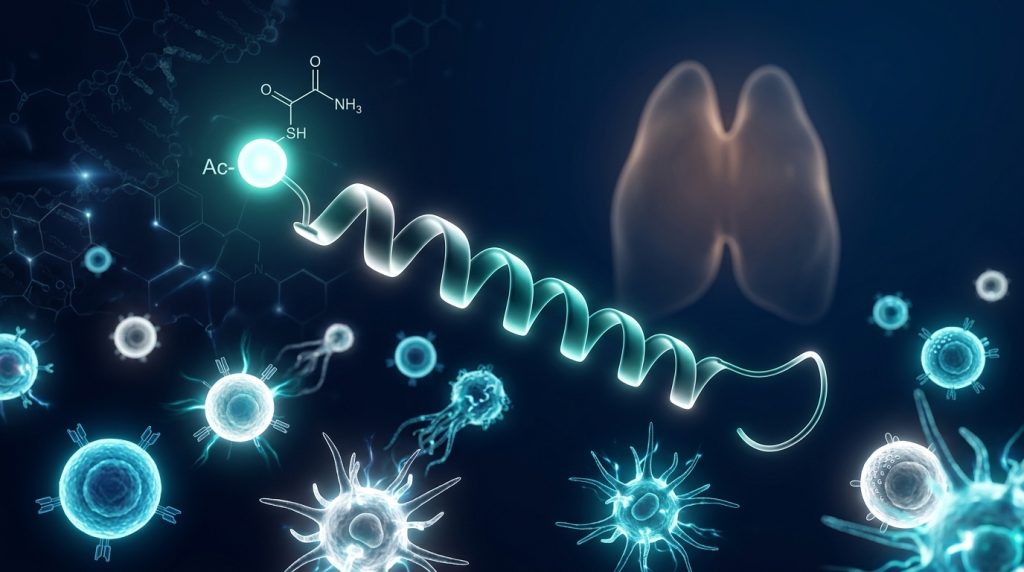
Tesamorelin is a 44-amino acid GHRH analogue with enhanced stability. This article covers its mechanism of action.
Read articleFor laboratory and research use only. Not for human consumption. It was 1973, he was looking at liver tissue, and he stumbled onto a…
Read articleTable of Contents Toggle Peptide Synthesis Introduction Molecular Basis and Chemical Principles Research Areas in Peptide Synthesis Mechanism of Action in Peptide Synthesis Future…
Read articleTable of Contents Toggle What is MOTS-c Peptide Molecular Composition and Chemical Data Research Areas for MOTS-c Peptide Mechanism of Action for MOTS-c Peptide…
Read articleTable of Contents Toggle Introduction to Peptides and Their Biological Connections Types of Peptides Molecular Composition, Amino Acids and Chemical Relationships Peptide Synthesis and…
Read articleBPC 157, also known as body protection compound 157, is a synthetic peptide with 15 amino acids. This article covers capsule formulation and oral…
Read articleMOTS-c is made by mitochondria and signals to the nucleus; SS-31 is a synthetic peptide that binds cardiolipin. We compare the published evidence for…
Read articleSermorelin and tesamorelin are both derived from the growth hormone-releasing hormone (GHRH) sequence [2,6].
Read articleTesamorelin is a 44-amino acid synthetic GHRH analogue. The article covers its molecular structure and stability.
Read articleMelanotan II (MT2) is a cyclic lactam analog of α-MSH that has been studied at melanocortin receptors.
Read article
Peptides
Peptides
Peptides
Peptides
Peptides
Peptides
Peptides
Peptides
Peptides