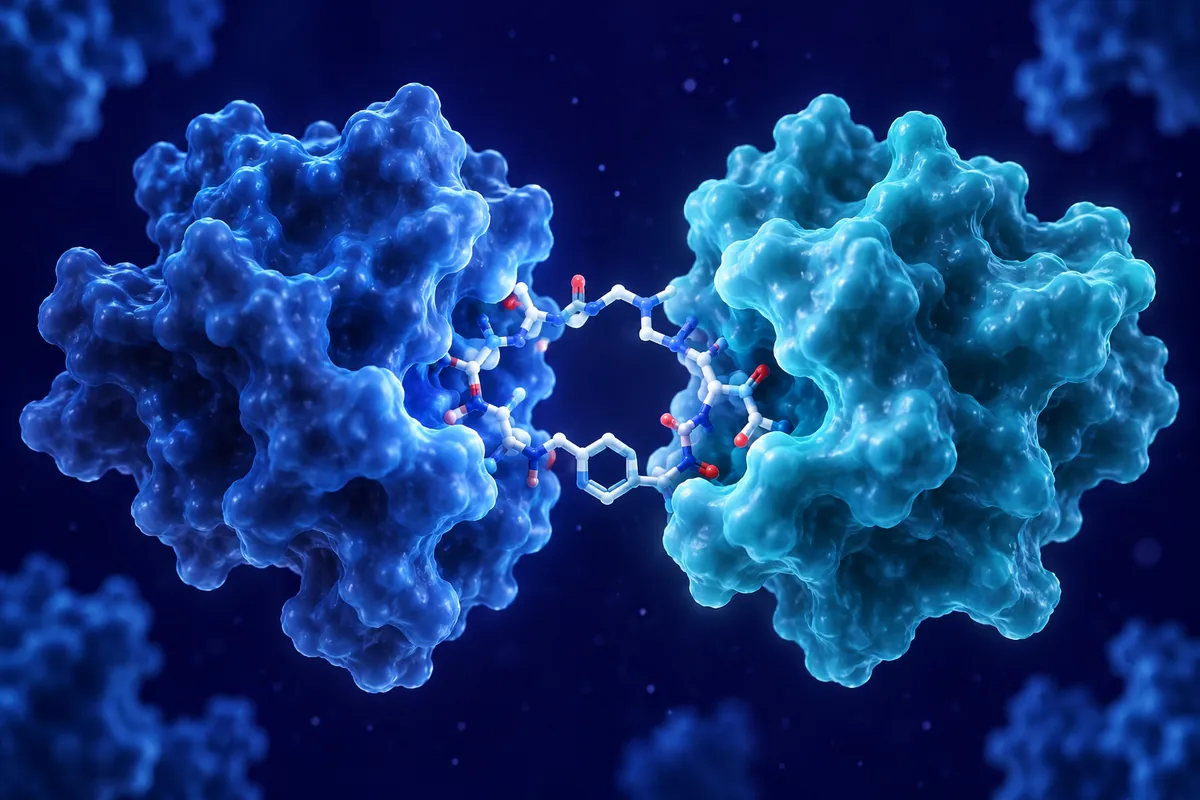
Ipamorelin is a synthetic peptide studied for its interaction with the growth hormone secretagogue receptor.
Notably, Andersen PH has contributed to the scientific understanding of growth hormone-releasing peptides like ipamorelin, particularly in the context of pharmacological profiling and receptor selectivity.
Understanding the mechanisms and applications of this research compound provides valuable insights into modern peptide science and growth hormone modulation studies.
Key characteristics observed in research include:
- Molecular Weight: Approximately 711.85 g/mol
- Laboratory Stability: Requires proper storage conditions for research applications
- Half-Life: A half-life of approximately 2 hours has been reported for ipamorelin in pharmacokinetic research. Interpretation depends on the experimental conditions and measurement method.
Research Mechanisms and Pathways
Laboratory investigations reveal that ipamorelin functions as a selective agonist of the gh secretagogue receptor, primarily located in the hypothalamus and pituitary gland.
Receptor Interaction Studies
In primary rat pituitary cell experiments, researchers measured growth hormone release in response to ipamorelin:
- Signal Transduction: Laboratory findings indicate activation of specific cellular pathways
- In vitro potency: EC50 ≈ 1.3±0.4 nmol/L for ipamorelin versus 2.2±0.3 nmol/L for GHRP-6
- Maximum response: Emax ≈ 1545±250 ng/mL vs. 1167±120 ng/mL respectively
IGF-1 Pathway Activation
Observed Physiological Effects in Research Models
Studies of selectivity compare growth hormone measurements with measurements of other hormones in a defined experimental model. The model and assay conditions matter when interpreting those comparisons.
Laboratory Applications and Study Protocols
Research applications of ipamorelin span various scientific investigations, with studies focusing on its potential effects in laboratory settings. Research suggests that the compound’s applications include investigations into:
For further assistance or research inquiries, you can contact Loti Labs.
Growth Hormone Research
Laboratory studies have explored ipamorelin’s role in:
- Growth hormone release measured in primary rat pituitary cells
Combination Research Studies
In cell-based experiments involving more than one peptide, separate controls are needed to distinguish each compound’s contribution to the measured signal.
- Time-course measurements: Sampling at defined intervals can show how an assay signal changes over time
Comparative Research with Other Compounds
Research comparisons reveal significant differences between ipamorelin and other gh releasing peptides.
Receptor Selectivity Comparisons
- Hormone Specificity: Growth hormone, cortisol and prolactin measurements can be compared within a defined experimental model
Experimental Design Considerations
Laboratory studies indicate several important considerations for research applications:
Experimental Documentation
Scientific studies emphasize the importance of:
- Baseline assay measurements and control conditions
- Instrument calibration and assay quality checks
- Documentation of cell preparations, reagents and assay conditions
- Documented criteria for handling measurements outside the assay range
Current Research Directions and Scientific Evidence
The foundational 1998 study by B.K. Raun et al. remains a cornerstone in establishing the compound’s research profile and scientific potential.
Ongoing Research Areas
Questions for further laboratory work include:
- Peptide stability across defined storage conditions
- Comparative receptor assays using reference compounds and controls
- Assay methods for measuring peptide concentration in experimental samples
- Receptor signaling across defined experimental systems
Research Material Characterization
Before interpreting assay results, researchers need documentation of the material being tested. Relevant records and laboratory conditions include:
- Third-party testing verification
- Certificate of analysis documentation
- Proper storage and handling procedures
- Qualified research supervision
- Appropriate research facility conditions
Sampling Times and Assay Conditions
Time-course experiments track a defined measurement at specified sampling points. Reports should identify the experimental model, sampling intervals and assay method.
In cell-based assays, cell preparation, incubation conditions and starting peptide concentration can affect the measured response.
Future Research Applications
The scientific community continues to investigate ipamorelin’s potential in various research applications.
- Combination studies that distinguish receptor-level interactions in cell-based assays
- Stability assessments under defined laboratory storage conditions
- Novel applications in emerging scientific fields
Conclusion
In primary rat pituitary cell experiments, ipamorelin elicited measurable growth hormone release. Concentration-response measurements characterized its activity within that model.
For researchers interested in exploring ipamorelin applications, consulting current scientific literature and working with qualified research facilities ensures proper protocols and optimal research outcomes.
This educational material discusses laboratory research concepts only. Loti Labs products are intended strictly for research and development use and are not for human consumption.