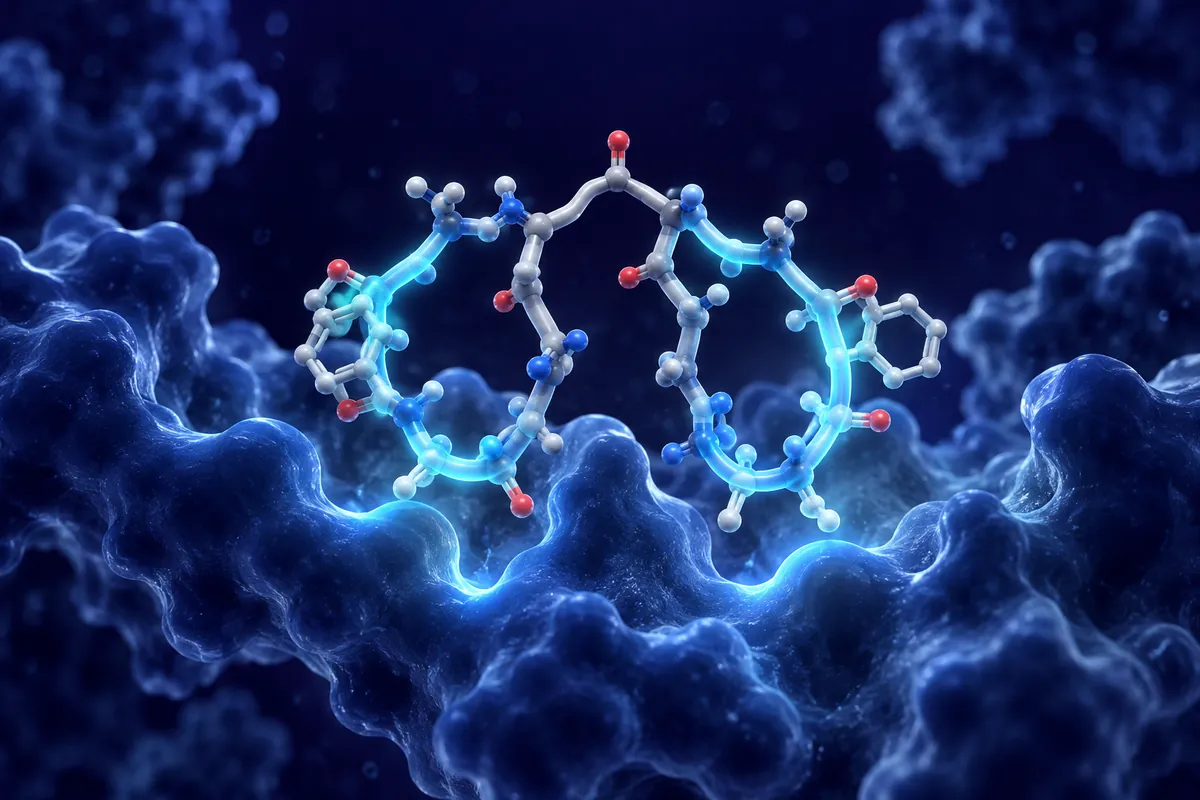
Why Orforglipron Is Different
Orforglipron is a small-molecule GLP-1 receptor agonist rather than a peptide. By contrast, semaglutide, tirzepatide, liraglutide, and dulaglutide have peptide backbones. These structural differences provide a basis for comparing peptide and non-peptide receptor interactions.
Orforglipron belongs to a class called non-peptide GLP-1 receptor agonists. Its synthetic small-molecule scaffold differs from a peptide backbone. Structural studies examine the contacts it makes within the GLP-1 receptor’s binding pocket.
Mechanism of Action: Small Molecule, Same Target
The GLP-1 receptor is a class B G protein-coupled receptor (GPCR) expressed in pancreatic beta cells, the hypothalamus, the gastrointestinal tract, and the cardiovascular system.
Orforglipron engages the same receptor but through a distinct binding mode. Cryo-EM structural studies suggest it nestles into the transmembrane domain’s helical bundle rather than relying on the large extracellular domain contacts that peptide agonists require. This difference in binding architecture is precisely what allows a small molecule to mimic the effect of a 31-amino-acid peptide.
One research question is whether orforglipron differs from peptide ligands in its signaling bias, the relative activation of G-protein and β-arrestin pathways.
Pharmacokinetics and Absorption Research
Absorption research examines properties such as solubility and membrane permeability. These measurements address how a small molecule crosses biological barriers, while receptor assays measure its activity at the target.
Implications for Incretin Research
Orforglipron provides an example of GLP-1 receptor activation by a non-peptide scaffold. This makes it relevant to comparisons of peptide and small-molecule interactions with class B GPCRs. Related research questions include binding selectivity and signaling at the GIP and glucagon receptors, as well as the GLP-1 receptor.
Lilly’s pipeline already includes oral dual GIP/GLP-1 agonist candidates in preclinical development.
For research laboratories, this transition creates new experimental paradigms. Oral bioavailability studies, GPCR binding assays with non-peptide ligands, and head-to-head comparisons between peptide and small-molecule agonists at the same receptor become increasingly relevant lines of investigation.
Where Orforglipron Stands in 2026
Research questions for orforglipron include how receptor conformation relates to signaling bias and how assay conditions influence measured potency. Binding and signaling data should be interpreted within the experimental system in which they were collected.
Disclaimer: This content is intended for research purposes only and is not meant to constitute medical advice.
/wp:htmlThis educational material discusses laboratory research concepts only. Loti Labs products are intended strictly for research and development use and are not for human consumption.