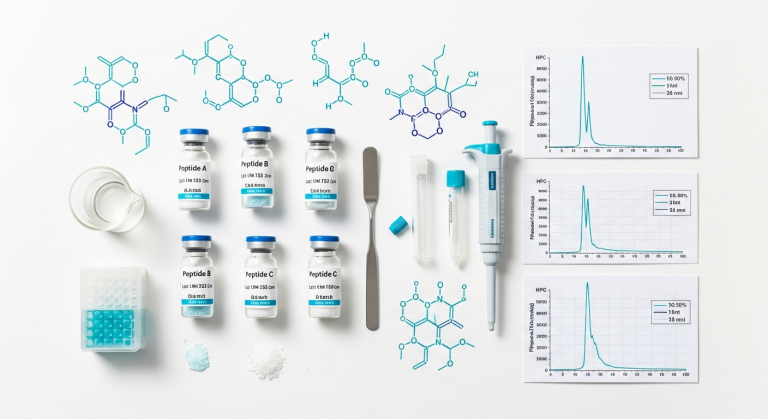
Current research is pointing to some interesting molecular pathways that labs are now exploring in depth. Remember, the compounds listed are not for human consumption; they are research only.
Loti Labs is the leader in peptide technology, combining purity with innovation and setting the standards for the industry. As a dedicated supplier to research institutions, Loti Labs has a global production network that delivers synthesized peptides and reagents worldwide. For prompt support or inquiries, please contact us.
Within these pages you will find a comprehensive list of research peptides. Some are staples for everyday use, others are experimental candidates for niche hypotheses. Let’s see what the research community is prioritizing in peptide research right now.
Since the FDA is cracking down, several peptides have been removed from the approved list.
Key Research Takeaways: Top Research Peptides
- Loti Labs is the top peptide vendor, trusted by the research community.
- To get valid research results, only the best grade compounds, made in GMP facilities, should be used. Rigorous testing and expert guidance will help labs design smarter studies and get consistent data.
What Are Peptides?
Peptides are short chains of amino acids, the same building blocks that form proteins. The special peptides that scientists research in the lab are called biologically active peptides. Their exact sequence of amino acids gives them unique functions, making them important tools in biomedical and pharmaceutical research. These tiny molecules help scientists explore many bodily processes, from how cells grow to how hormones send signals. Researchers can either find these peptides in nature or create them in the lab. For every study, high-quality research-grade peptides are a must to get valid and repeatable results. Beyond the standard ways of making peptides, modern methods like liquid-phase peptide synthesis allow scientists to produce large amounts of very pure peptides.
How Peptides Work
This is best done in labs that focus on peptides where scientists can control everything and get clear answers.
These include Ipamorelin, CJC-1295, MK-677 and BPC-157.
Importantly, findings show Ipamorelin does not significantly affect blood glucose, making it a reliable agent for metabolic studies. Remember that current literature is for use in controlled laboratory environments within peptide research facilities only. No use outside these parameters is allowed.
Selecting compounds for research requires uncompromising quality verification to ensure reproducible results.
Its long half-life means continuous GH release, allowing for longer experimental windows.
Researchers often study CJC-1295 with Ipamorelin because the two work better together than alone.
These substances are for lab use only and should always be handled with safety protocols.
MK-677, also known as Ibutamoren, is not a peptide but can be taken as a pill.
However, like all research chemicals, it’s for laboratory use only and not for human consumption outside of formal studies. To ensure highest purity and reliability, labs must source MK-677 from reputable peptide suppliers.
It’s important to work with this peptide in strict lab settings to get reliable results.
As with any experimental material they must only be used in controlled lab settings.
IGF-1 LR3 (Insulin-Like Growth Factor-1 Long R3) is a synthetic analog of endogenous IGF-1 with an extended half-life of approximately 20-30 hours, compared to the native form’s 15-minute half-life. Its extended circulation time makes it particularly useful for sustained anabolic signaling studies in rodent models. IGF-1 LR3 is available from Loti Labs for in-vitro and preclinical research use. Not for human or veterinary use.
TB-500 is a synthetic version of Thymosin Beta-4, a naturally occurring peptide found in high concentrations in platelets and wound fluid. TB-500 is available from Loti Labs for laboratory research use only.
Research into how to regulate body weight safely is a top priority. These are investigational agents in the pharmaceutical pipeline and are only available for laboratory use. Labs should only order from moderators with a proven track record.
Falls under the broader effort to understand how hormones affect metabolism and body weight.
Remember this is for lab studies only. Researchers can order Semaglutide from a peptide specialty store.
This peptide is only for strictly controlled laboratory use.
Tirzepatide: Dual GLP-1/GIP Agonist
Tirzepatide is interesting to scientists with its dual pharmacological profile, activating both GLP-1 and GIP receptors.
Tirzepatide is only for use in controlled laboratory studies and can be purchased from trusted peptide suppliers.
Retatrutide (GLP-1/GIP/glucagon triple receptor agonist) represents the cutting edge of metabolic peptide research. All use in laboratory settings is strictly for in-vitro and preclinical research purposes only.
Catalog peptides are often the go-to choice for routine skin health research because of their availability and consistency.
Proper peptide sourcing is crucial to ensure the reliability and reproducibility of skin health research.
These research compounds are only for controlled laboratory studies. Proper peptide procurement is important to ensure the quality and authenticity of copper peptides used in research.
This research compound is only for controlled laboratory studies. Proper peptide sourcing is important for consistent results in Matrixyl research.
Argireline: Expression Line
This research compound is only for controlled laboratory studies.
Peptides in Dermatological Research Applications
Best Peptides for Overall Health
Selecting Peptides for Specific Research Objectives
Having access to comprehensive information about each peptide is important to support research objectives and ensure optimal selection.
Designing Peptide Research Protocols
However research protocols should be designed with expert consultation. Many providers offer specialized services and expertise to help researchers design effective peptide combinations for their studies. This ensures experimental combinations are appropriate and effective for specific research objectives.
Quality Matters in Research Compounds
Quality is a fundamental consideration when choosing research compounds. The effectiveness and reliability of peptide research depends heavily on compound quality and materials from questionable sources may compromise experimental outcomes.
Quality peptides are produced using advanced peptide synthesis techniques in state-of-the-art facilities that meet strict manufacturing standards. High quality research compounds ensure experimental results are reliable and support overall research integrity.
Purity Testing and Regulatory Standards
Purity testing ensures the reliability and integrity of peptide research. At , our mission is to advance scientific research by providing the highest quality peptides and adhering to rigorous quality control protocols. Purity testing is conducted on every production batch to ensure research compound quality. This rigorous process ensures peptides meet standards and contain minimal impurities so researchers can have confidence in their experimental materials.
Adherence to regulatory guidelines and thorough purity testing are essential in maintaining research integrity. Ensuring research compounds meet standards minimizes experimental variables and leads to more reliable research outcomes.
How should research peptides be stored to maintain stability?
Lyophilized (freeze-dried) peptides should be stored at -20°C in a sealed container, protected from light and moisture; under these conditions, most peptides remain stable for 12-24 months. Avoid repeated freeze-thaw cycles as they degrade compound integrity. Always follow batch-specific storage guidelines provided with the Certificate of Analysis.
For most peptides, Acetic acid (0.1-1%) is recommended for peptides with poor aqueous solubility (e.g., BPC-157, IGF-1 LR3). Swirl gently : do not vortex or shake, as mechanical shear degrades peptide bonds. Calculate final concentration using: concentration (mg/mL) = peptide mass (mg) ÷ volume of solvent added (mL). Prepare aliquots into individual-use volumes using sterile low-bind microcentrifuge tubes to minimize freeze-thaw cycling.
What is the legal status of research peptides?
Research peptides occupy a distinct regulatory category. In the United States, peptides sold for laboratory research use only (RUO) are legal to purchase and possess for in-vitro and preclinical research purposes, provided they are not marketed or intended for human consumption. Regulations vary by jurisdiction; some peptides (e.g., BPC-157, TB-500) have faced increased FDA scrutiny regarding compounding and clinical use. Researchers are responsible for understanding and complying with all applicable federal, state, and institutional regulations governing research chemicals in their region. Loti Labs supplies peptides strictly under RUO designation.
What purity level should researchers look for in research peptides?
For reliable and reproducible experimental results, research-grade peptides should meet a minimum purity threshold of ≥95% as verified by HPLC (high-performance liquid chromatography). For advanced mechanistic studies, enzyme kinetics, or receptor binding assays where trace impurities may confound results, ≥98% HPLC-verified purity is recommended. Always request a batch-specific Certificate of Analysis (COA) from the supplier confirming purity percentage, identity (mass spectrometry), and concentration prior to use in experimental protocols.
How are research peptides administered in laboratory models?
Administration routes depend on the peptide’s physicochemical properties and the research objective. In cell-based in-vitro assays, peptides are typically dissolved in DMSO or aqueous buffer and added directly to cell culture media. Selection of administration route should be informed by published pharmacokinetic data and the specific research question being investigated.
Customizing Research Protocols
Customizing research protocols is key to getting the best results. Customizing may involve choosing from a wide range of research chemicals including peptides and related compounds. Consult with experts and veterinary professionals is crucial to ensure proper administration and monitoring during peptide research in lab models. Tailoring protocols to specific research objectives will enhance the effectiveness and reliability of the study.
Continuous monitoring and adjustment of research protocols is important to get the best results. Regularly evaluating and refining research methods will give you meaningful and accurate results.
These are for laboratory use only.
Safety Considerations for Peptide Research
When done properly peptide research follows established safety protocols. However like any research compounds they need to be handled and administered carefully. Researchers may observe various physiological responses during administration. In some cases more significant responses may occur.
Note that oral administration of peptides may be affected by the digestive system which can break down peptides and reduce their effectiveness unless alternative delivery methods are used.
Follow recommended protocols and guidelines to minimize experimental variables. Not all peptides are suitable for every research model especially with certain physiological conditions. Ensure proper experimental design and monitoring to get the best results. Researchers should also consider physiological changes related to weight regulation when doing peptide research.
Consult with Research Experts
Research experts have years of experience and knowledge to guide experimental design and protocol optimization. They can help determine the best compound or combination for your research objectives. They can also monitor experimental progress and adjust protocols as needed. This professional guidance will optimize experimental design and ensure research compounds are used properly and effectively. Research also shows consulting with experts can help improve experimental design through personalized research plans.
Peptide Research Future
Peptide research is a rapidly growing field with new discoveries emerging every day. Cutting edge research in peptides is driving science and attracting researchers globally, solidifying the industry as a leader in biomedical innovation. As research methods advance we can expect more refined and targeted peptide research approaches. This will open up more research applications and new ways to understand health and physiological challenges.
By focusing on quality, safety and continued research the potential of peptides in various research fields will continue to grow in the coming years.
Research Peptide Comparison: Top Compounds at a Glance
The following table summarizes the primary research applications, mechanisms of action, and typical laboratory administration routes for the most studied research peptides:
| Peptide | Primary Research Application | Mechanism | Lab Admin Route |
|---|---|---|---|
| MK-677 (Ibutamoren) | Non-peptide ghrelin receptor agonist; oral bioavailability | Oral (capsule/liquid) | |
| GHK-Cu (Copper Peptide) | Topical or subcutaneous | ||
| Collagen Peptides | Oral |
All compounds listed are for in-vitro and preclinical laboratory research use only (RUO). Not for human or veterinary use.
Conclusion: Advancing Peptide Research
Quality of research compounds is key. Ensuring purity and following guidelines is crucial for reliable results. Customizing research protocols to address specific research questions will further enhance investigational effectiveness. By focusing on quality and proper use of peptides researchers can maximize their potential and drive innovation in these critical areas of research.
Frequently Asked Questions About Research Peptides
What are peptides and why are they important for research?
Their multiple roles highlight their value in advancing knowledge.
Are the peptides sold by Loti Labs for human use?
For inquiries the peptides sold by Loti Labs are not for human use; they are for research use only in controlled laboratory settings.
Why is Semaglutide useful for weight regulation research?
Its mechanism is a research tool for weight regulation.
Why is purity testing important for research compounds?
Purity testing is important for research compounds as it ensures quality and reliability and follows guidelines and supports confidence in results.
References
- Bennie, J. A., et al. (2018). American Journal of Preventive Medicine, 55(6), 864-874.
- Teichman, S. L., et al. (2006). Journal of Clinical Endocrinology & Metabolism, 91(3), 799-805.
- Cleveland Clinic. (2022). Ghrelin. Retrieved from https://my.clevelandclinic.org
- Mayo Clinic Staff. (2024). Retrieved from https://www.mayoclinic.org
- Falutz, J., et al. (2008).
- Wang, L., et al. (2015). Bioavailability of collagen peptides after oral administration. Journal of Agricultural and Food Chemistry, 63(14), 3752-3756.
- U.S. Food & Drug Administration. (2024). Guidance for industry: Immunogenicity assessment for therapeutic protein products. Retrieved from https://www.fda.gov
- Zdzieblik, D., et al. (2015). British Journal of Nutrition, 114(8), 1237-1245.
- Cleveland Clinic. (2022). Collagen. Retrieved from https://my.clevelandclinic.org
- Dhillon, S. (2011). Tesamorelin: A review in HIV-associated lipodystrophy. Drugs, 71(8), 1071-1091.
- MedlinePlus. (2024). Collagen peptides. Retrieved from https://medlineplus.gov
- Renukuntla, J., et al. (2013). Approaches for enhancing oral bioavailability of peptides. International Journal of Pharmaceutics, 447, 75-93.
- Alsbrooks, K., & Hoerauf, K. (2022). Prevalence and management of single-use access component phobia. PLOS ONE, 17(11), e0276814.
- Cleveland Clinic. (2024). Cachexia (Wasting syndrome). Retrieved from https://my.clevelandclinic.org
- Magkos, F., & Mantzoros, C. S. (2010). Metabolism, 60(6), 749-753.
- Cleveland Clinic. (2022). Lipodystrophy. Retrieved from https://my.clevelandclinic.org
- MedlinePlus. (2024). Growth hormone. Retrieved from https://medlineplus.gov
- Cleveland Clinic. (2025). Cortisol. Retrieved from https://my.clevelandclinic.org
- Cleveland Clinic. (2022). Visceral fat. Retrieved from https://my.clevelandclinic.org
- United States Anti-Doping Agency. (2023). Retrieved from https://www.usada.org
- (n.d.). Peptide research handbook for healthcare professionals.
- Cleveland Clinic. (2021). Everything you should know about collagen peptides. Retrieved from https://my.clevelandclinic.org
- Cleveland Clinic. (2024). Cachexia (Wasting syndrome). Retrieved from https://my.clevelandclinic.org
- Cleveland Clinic. (2022). Growth hormone. Retrieved from https://my.clevelandclinic.org
- Cleveland Clinic. (2022). Collagen. Retrieved from https://my.clevelandclinic.org
- Cleveland Clinic. (2025). Cortisol. Retrieved from https://my.clevelandclinic.org
- Cleveland Clinic. (2022). Lipodystrophy. Retrieved from https://my.clevelandclinic.org
- Cleveland Clinic. (2024). Visceral fat. Retrieved from https://my.clevelandclinic.org
- Cleveland Clinic. (2022). Ghrelin. Retrieved from https://my.clevelandclinic.org
- Cleveland Clinic. (2022). Human growth hormone (HGH). Retrieved from https://my.clevelandclinic.org
- Cleveland Clinic. (2022). Collagen peptides. Retrieved from https://my.clevelandclinic.org
- Cleveland Clinic. (2022). Retrieved from https://my.clevelandclinic.org
- Cleveland Clinic. (2022). Protein synthesis. Retrieved from https://my.clevelandclinic.org
- Cleveland Clinic. (2022). Retrieved from https://my.clevelandclinic.org
- Cleveland Clinic. (2022). Retrieved from https://my.clevelandclinic.org
- Cleveland Clinic. (2022). Blood vessel formation. Retrieved from https://my.clevelandclinic.org
- Cleveland Clinic. (2022). Retrieved from https://my.clevelandclinic.org
- Cleveland Clinic. (2022). Retrieved from https://my.clevelandclinic.org
- Cleveland Clinic. (2022). Retrieved from https://my.clevelandclinic.org
- Cleveland Clinic. (2022). Growth hormone releasing hormone. Retrieved from https://my.clevelandclinic.org
This educational material discusses laboratory research concepts only. Loti Labs products are intended strictly for research and development use and are not for human consumption.