What Are Peptide-Drug Conjugates?
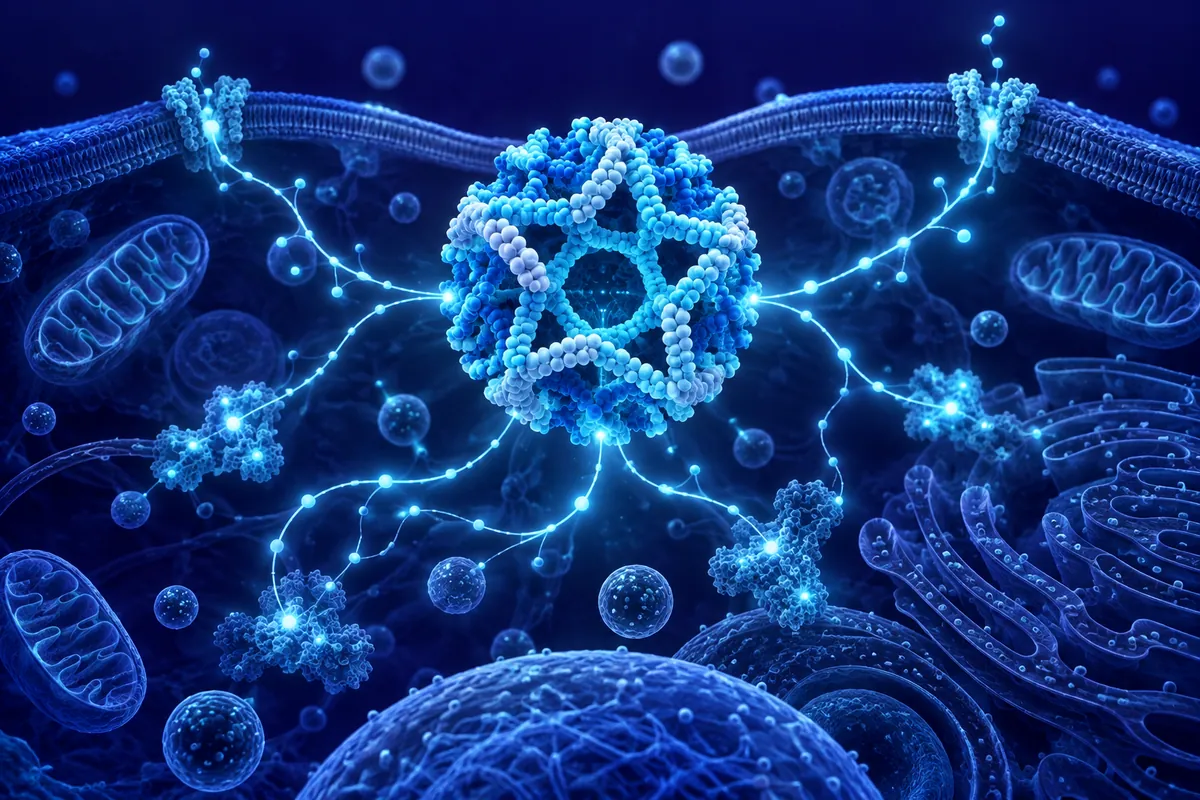
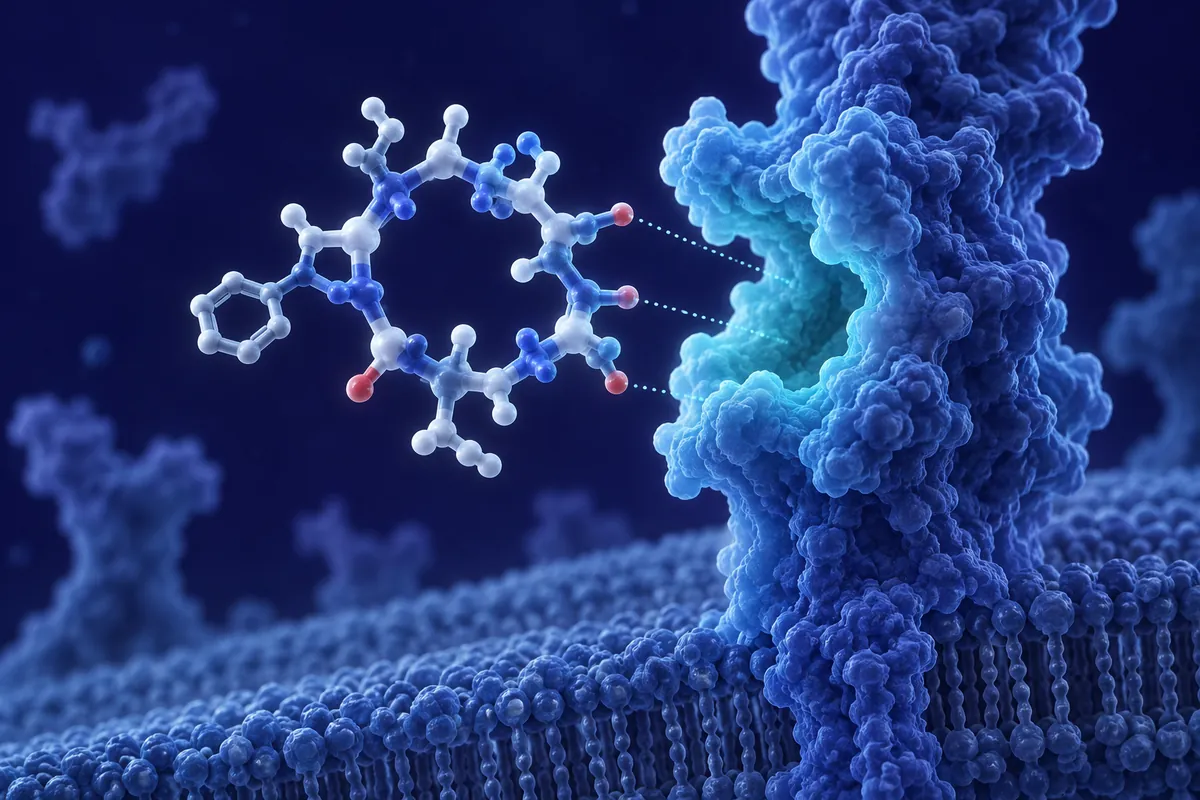
The concept borrows from antibody-drug conjugate (ADC) technology but replaces the large antibody targeting moiety with a small peptide : typically 5 to 20 amino acids : that binds a receptor overexpressed on the target cell surface.
The rationale is pharmacological precision. A cytotoxic agent attached to a tumor-homing peptide circulates systemically but concentrates at the tumor. Receptor-mediated internalization pulls the conjugate into the target cell, where the linker cleaves and releases the active drug intracellularly.
Homing Peptides: The Targeting Engine
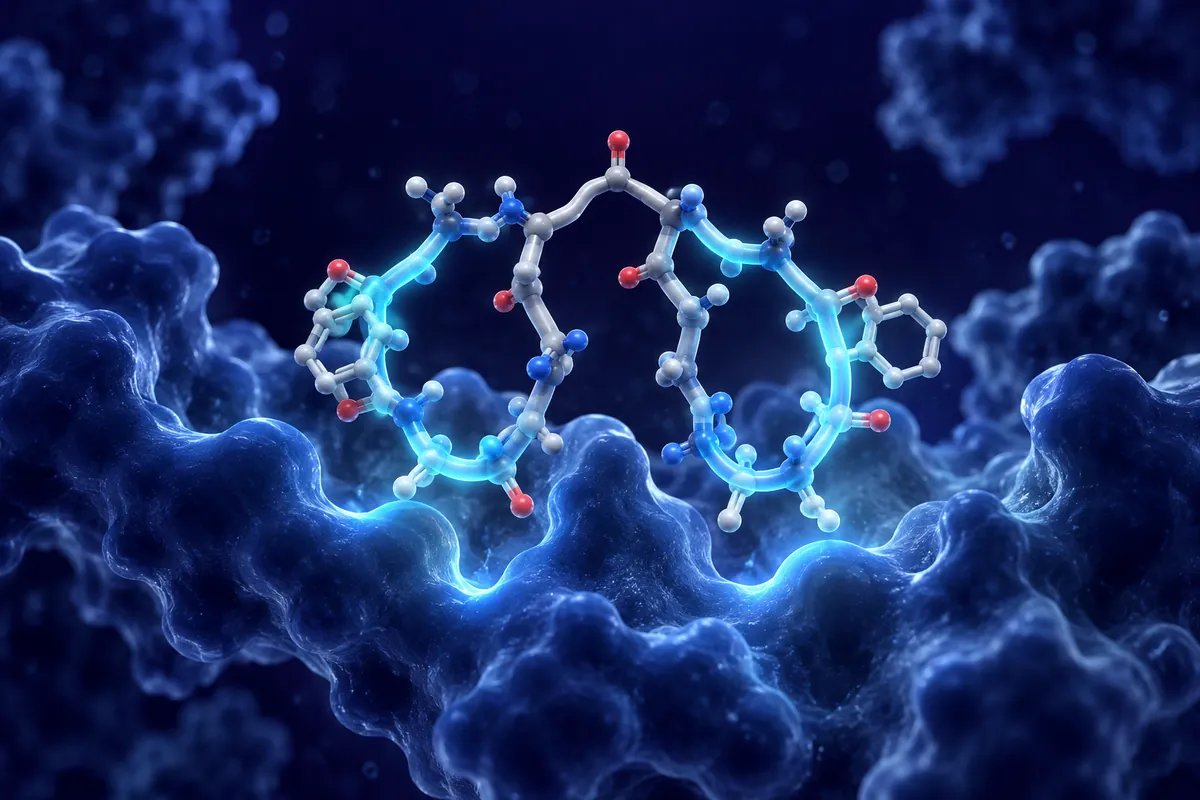
The targeting peptide determines where the conjugate goes. Several families of homing peptides have been validated in preclinical models.
RGD peptides (Arg-Gly-Asp motifs) bind αVβ3 and αVβ5 integrins, which are overexpressed on tumor neovasculature and many solid tumor cells. Their integrin-targeting makes them particularly useful for anti-angiogenic drug delivery strategies.
NGR peptides (Asn-Gly-Arg) target aminopeptidase N (CD13), a metalloprotease overexpressed on tumor endothelial cells.
Somatostatin analogs like octreotide target somatostatin receptors (SSTRs), which are densely expressed on neuroendocrine tumors. Conjugating cytotoxic agents to octreotide creates tumor-selective delivery vehicles for cancers that evade conventional chemotherapy targeting.
GnRH analogs exploit gonadotropin-releasing hormone receptor overexpression in prostate and breast cancers.
Linker Chemistry: Controlling Payload Release
The linker connecting peptide to payload is as critical as the targeting peptide itself. It must be stable in circulation (to prevent premature payload release and systemic toxicity) but cleavable at the target site (to liberate the active agent intracellularly).
Cleavable linkers include disulfide bonds (reduced by intracellular glutathione), acid-labile hydrazones (cleaved in the low-pH environment of endosomes/lysosomes), and protease-sensitive sequences (cut by cathepsins or other lysosomal proteases). Val-Cit dipeptide linkers, borrowed from ADC technology, are cleaved selectively by cathepsin B inside tumor cells.
PDCs vs. ADCs: Size Matters
Why use a peptide instead of an antibody for targeting? Three advantages emerge consistently in the literature.
First, size. Antibodies are ~150 kDa; targeting peptides are 1-3 kDa. In solid tumors, antibodies struggle to diffuse beyond the first few cell layers from blood vessels. Peptides penetrate deeper, reaching hypoxic tumor cores that antibodies often miss.
Second, manufacturing. Peptides are synthesized chemically (solid-phase synthesis), avoiding the mammalian cell culture, purification, and cold-chain requirements of antibody production. Batch-to-batch consistency is higher, and production costs are lower.
Third, immunogenicity.
The trade-off is binding affinity. Antibodies typically achieve sub-nanomolar dissociation constants; peptides are often in the nanomolar to low-micromolar range. This lower affinity can result in faster target dissociation and reduced cellular uptake efficiency compared to ADCs.
Several PDCs have entered clinical development. Melflufen (melphalan flufenamide) : technically a peptide-drug conjugate that leverages aminopeptidase-mediated activation in myeloma cells : received accelerated FDA approval in 2021, though it was later withdrawn for commercial reasons.
177Lu-DOTATATE (Lutathera), a radiolabeled somatostatin analog used in neuroendocrine tumor therapy, functions as a radiopharmaceutical PDC : the targeting peptide delivers a radioactive payload to SSTR-expressing tumors.
Future Directions in PDC Research
The PDC field is converging with advances in peptide discovery (phage display, mRNA display), linker chemistry (bio-orthogonal cleavage mechanisms), and payload diversity (including oligonucleotides and immune-stimulating agents beyond traditional cytotoxics). As targeting peptides become more selective and linker technology more sophisticated, PDCs are positioned to address delivery challenges that neither small molecules nor antibodies can solve alone.
Disclaimer: This content is intended for research purposes only and is not meant to constitute medical advice.
/wp:html
This educational material discusses laboratory research concepts only. Loti Labs products are intended strictly for research and development use and are not for human consumption.