A Gut-Brain Messenger
The name reflects its dual identity: “neuro” for its central nervous system presence, “tensin” for the hypotension it produced upon peripheral administration.
Neurotensin is produced by N-cells scattered through the jejunum and ileum, where it is released into the bloodstream following fat-rich meals. It is also synthesized by neurons in discrete brain regions, particularly the hypothalamus, amygdala, nucleus accumbens, and ventral tegmental area. This dual distribution : endocrine hormone and neurotransmitter : makes neurotensin a genuine gut-brain peptide.
Three Receptors, Divergent Functions
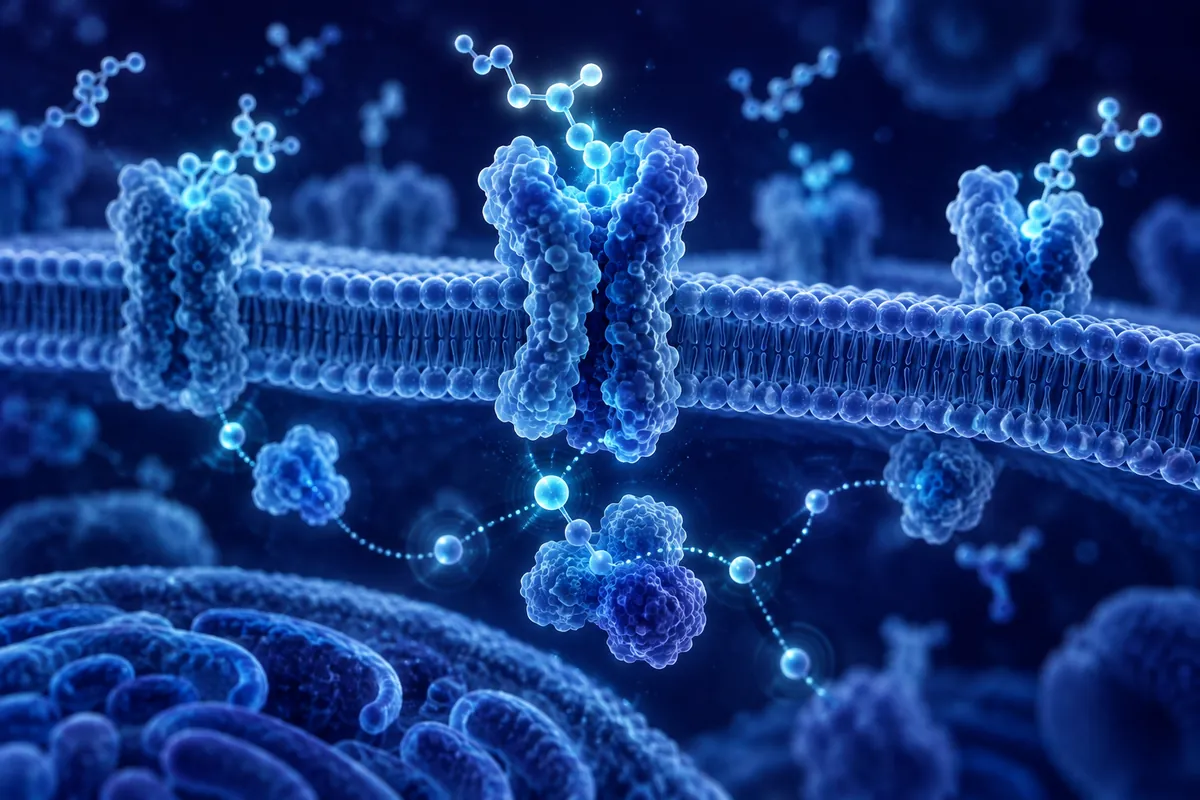
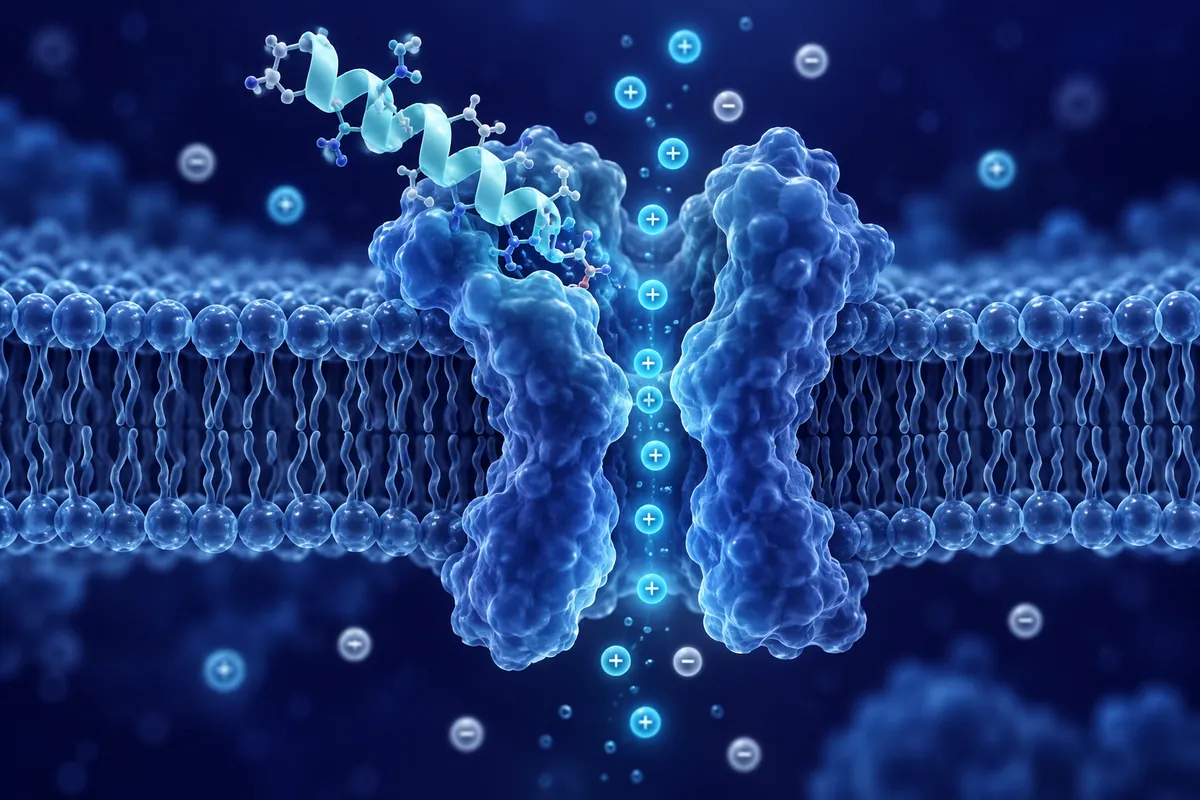
Neurotensin signals through three known receptors. NTS1 (NTSR1) and NTS2 (NTSR2) are G-protein-coupled receptors, while NTS3 (also known as sortilin) is a single-transmembrane sorting receptor with roles in intracellular trafficking.
It couples primarily to Gq/11, activating phospholipase C and triggering calcium release from intracellular stores. NTS2, which shares only 43% sequence homology with NTS1, shows distinct pharmacological properties and is emerging as a research target for analgesic effects without the sedation that accompanies NTS1 activation.
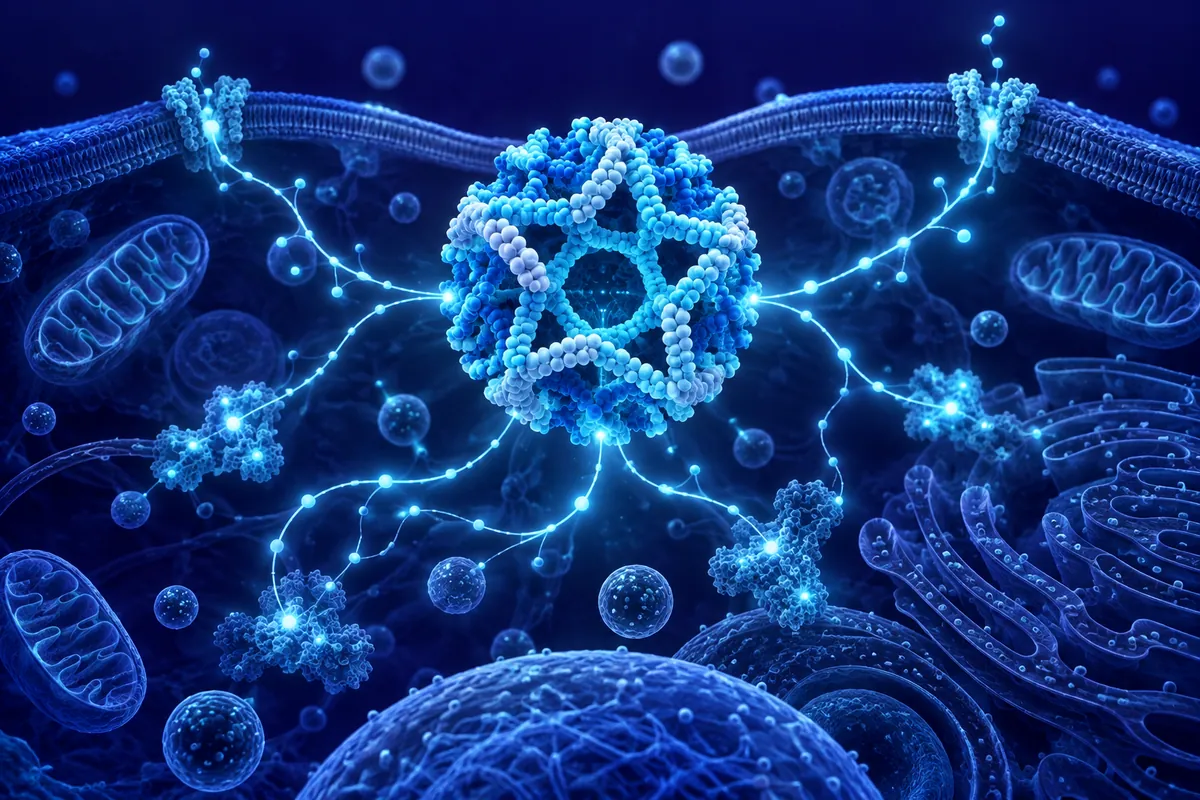
Sortilin/NTS3 adds an entirely different dimension. As a receptor involved in protein sorting and trafficking, it interacts with neurotensin to regulate the surface expression of other receptors and the clearance of extracellular peptides. The downstream consequences are indirect but significant : sortilin-mediated internalization of neurotensin affects the duration and spatial pattern of NTS1/NTS2 signaling in ways that static receptor-binding assays cannot capture.
Dopamine Modulation in the CNS
Neurotensin’s relationship with dopamine is intimate and bidirectional. In the ventral tegmental area, neurotensin-containing afferents synapse directly onto dopaminergic neurons.
But neurotensin also acts postsynaptically in dopamine target regions, where it modulates the response to dopamine itself. The net effect depends on the brain region and circuit context: neurotensin can either amplify or constrain dopaminergic signaling depending on where it acts.
This complexity has made neurotensin a research subject in schizophrenia models, where dopaminergic dysregulation is a central feature. Cerebrospinal fluid neurotensin concentrations are altered in several neuropsychiatric conditions studied in preclinical models, though the directionality and functional significance remain under investigation.
In the gut, neurotensin released after fatty meals serves multiple functions. It stimulates pancreatic and biliary secretion, inhibits gastric acid production and motility, and facilitates intestinal fat absorption. These actions position neurotensin as a key coordinator of the postprandial digestive response to dietary lipids.
Thermoregulatory Effects
One of neurotensin’s most reproducible central effects is hypothermia. This thermoregulatory action is independent of behavioral changes (animals do not seek warmer environments) and appears to involve direct modulation of warm-sensitive neurons that control heat dissipation.
Researchers have leveraged this effect as a pharmacological tool. The neurotensin-induced hypothermia assay remains a standard in vivo screen for NTS1 agonist activity, providing a robust, quantifiable readout that correlates with receptor engagement.
Pain Research Applications
Neurotensin produces analgesia through mechanisms distinct from opioid pathways. This non-opioid analgesic profile has driven considerable interest in NTS2 as a research target.
The spinal cord is a key site of action. Neurotensin-containing interneurons in the dorsal horn modulate pain signal transmission from peripheral nociceptors to ascending pathways. NTS2 activation in this region appears to gate pain signals through inhibition of excitatory neurotransmitter release from primary afferent terminals.
Forward-Looking Research
Several research threads are converging on neurotensin. Understanding how peripheral neurotensin (gut-derived, endocrine) coordinates with central neurotensin (neurotransmitter) across the gut-brain axis remains one of the most integrative challenges in contemporary peptide research.
Disclaimer: This content is intended for research purposes only and is not meant to constitute medical advice.
This educational material discusses laboratory research concepts only. Loti Labs products are intended strictly for research and development use and are not for human consumption.