GLP-2: The Gut’s Growth Factor
Glucagon-like peptide-2 (GLP-2) is a 33-amino-acid peptide co-secreted with GLP-1 from enteroendocrine L-cells in the distal ileum and colon. Where GLP-1 targets the pancreas and brain, GLP-2 targets the gut itself.
Both peptides are derived from the same proglucagon precursor by tissue-specific post-translational processing. In the intestine and brain, prohormone convertase 1/3 cleaves proglucagon to yield GLP-1, GLP-2, glicentin, and oxyntomodulin.
The GLP-2 Receptor and Its Unusual Distribution
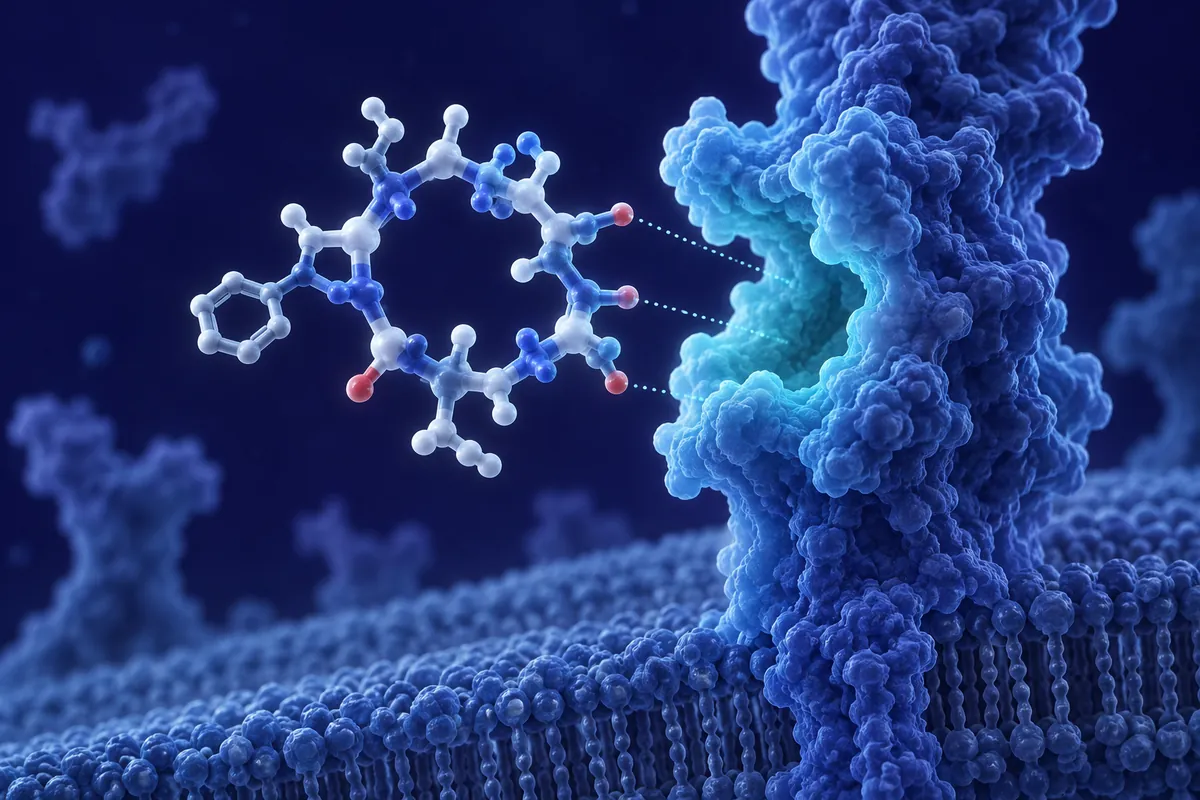
The GLP-2 receptor (GLP-2R) is a class B GPCR structurally related to the GLP-1 receptor but with a markedly different expression pattern. In rodents, GLP-2R is expressed predominantly in the subepithelial myofibroblasts of the intestinal lamina propria : not in the epithelial cells that GLP-2 ultimately causes to proliferate. This creates an indirect signaling model: GLP-2 binds its receptor on myofibroblasts, which then release paracrine growth factors (IGF-1, KGF, EGF family members) that drive epithelial proliferation.
GLP-2R expression has also been detected in enteric neurons, which may mediate some of GLP-2’s effects on intestinal blood flow and motility. In the central nervous system, GLP-2R is found in the hypothalamus, though the physiological significance of central GLP-2 signaling is still being defined.
Trophic Effects: How GLP-2 Grows the Gut
The intestinotrophic action of GLP-2 was first demonstrated by Daniel Drucker’s laboratory in 1996. The effect was specific to the gastrointestinal tract : no hypertrophy was observed in liver, kidney, or other organs.
The net result is a thicker, more absorptive mucosa.
Teduglutide: The GLP-2 Analog That Reached the Clinic
Native GLP-2 has a half-life of approximately seven minutes in circulation, cleaved rapidly by dipeptidyl peptidase-IV (DPP-IV) at the alanine-2 position.
Gut Barrier Function and Permeability Research
Beyond mucosal growth, GLP-2 research has expanded into intestinal barrier integrity. The intestinal epithelium is a single-cell-thick barrier separating the sterile internal environment from the microbial-laden lumen. Disruption of this barrier : “leaky gut” in colloquial terms : is implicated in inflammatory bowel disease, celiac disease, and systemic inflammatory conditions.
Research Frontiers in GLP-2 Biology
Several questions define the current edge of GLP-2 research. Can longer-acting GLP-2 analogs (with half-lives of days rather than hours) produce greater intestinal adaptation? Does chronic GLP-2 stimulation carry any risk of intestinal neoplasia, given its pro-proliferative effects on crypt cells?
The intersection of GLP-2 biology with microbiome research adds another dimension. This connection is speculative but represents a logical extension of the GLP-2 research trajectory.
Disclaimer: This content is intended for research purposes only and is not meant to constitute medical advice.
This educational material discusses laboratory research concepts only. Loti Labs products are intended strictly for research and development use and are not for human consumption.