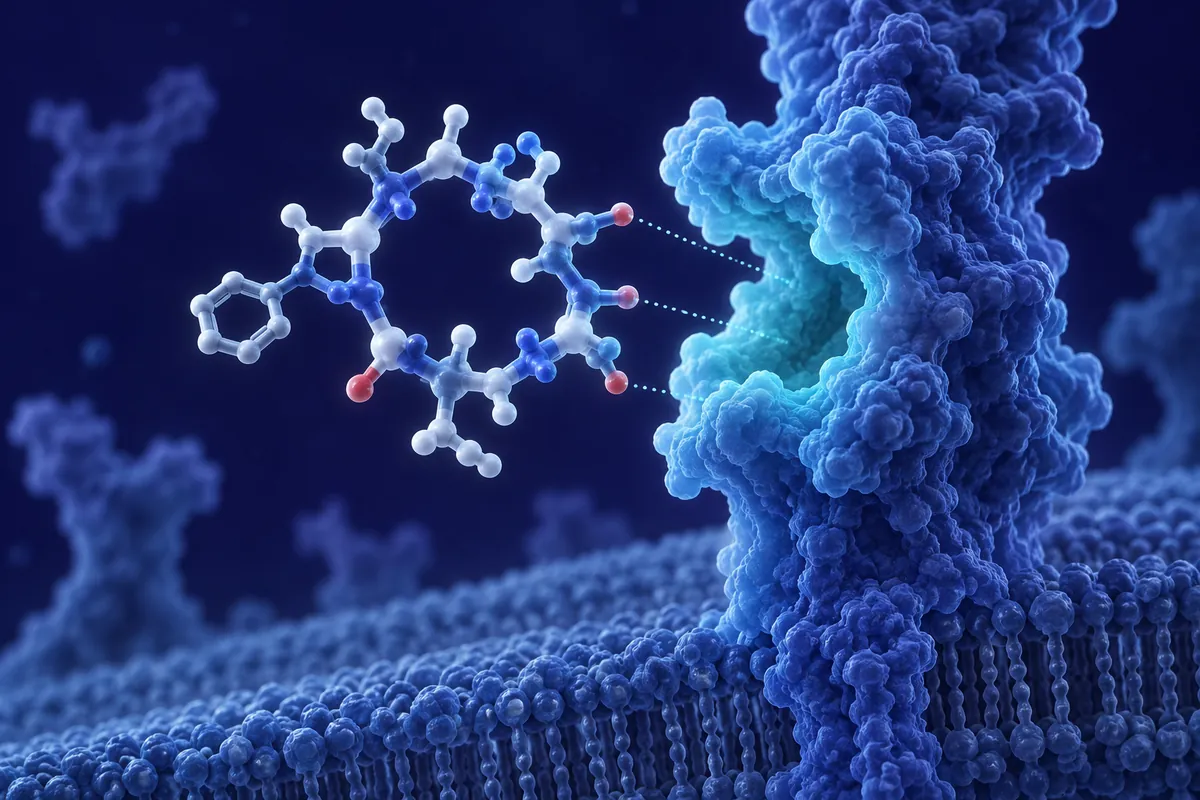
AOD9604 is a hexadecapeptide modelled on the C-terminal domain of the human growth hormone (hGH). It has been studied for its ability to promote lipolysis and prevent lipogenesis in rodent obesity models.
Genesis
The human growth hormone (hGH) secreted by the anterior pituitary (adenohypophysis) is a mixture of proteins that modulate glucose and amino acid uptake, lipolysis and overall growth. Mature hGH is a 22kDa, 191 amino acid polypeptide that has two distinct functional domains. The N terminal domain of 125 residues has an insulin-like action while the last 16 amino acids of the C terminal form a lipid mobilizing domain.
A synthetic peptide comprising residues 177-191 was found to increase tibial plate length, decrease body mass, reduce the uptake of glucose in adipocytes and inhibit the activity of acetyl-CoA carboxylase in adipocytes and hepatocytes of leptin deficient mice. This peptide was given the developmental code of AOD9401.
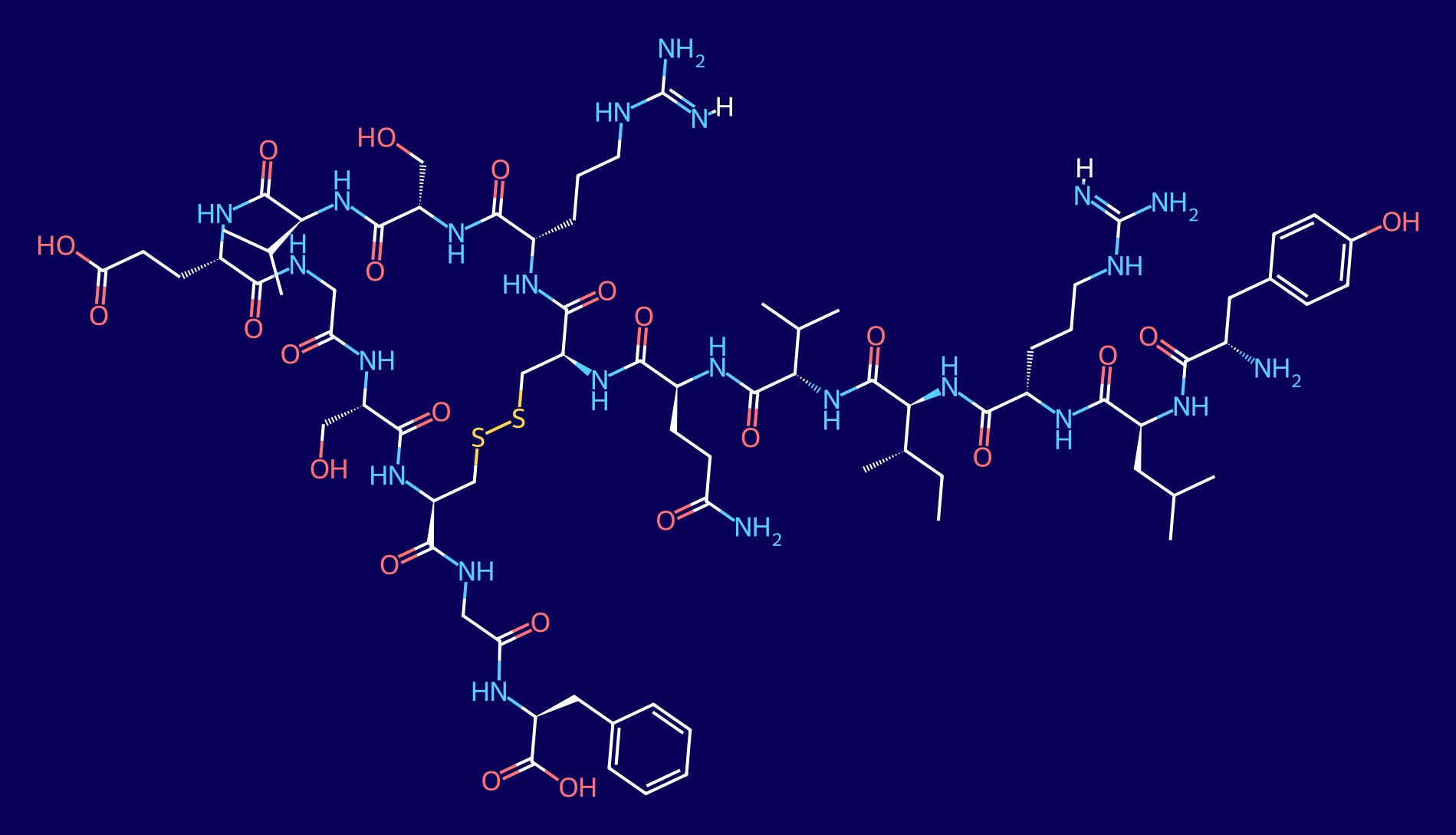
AOD9604 is a synthetic analogue of the AOD9401, where an N-terminal tyrosine has been added to increase stability. The sequence of this peptide is H2N-Tyr-Leu-Arg-Ile-Val-Gln-Cys-Arg-Ser-Val-Glu-Gly-Ser-Cys-Gly-Phe-COOH (YLRIVQCRSVEGSCGF). Like hGH and AOD9401, the single disulphide bond between the two cysteine residues, makes it a cyclic peptide. Replacement of either of the two cysteine residues, or the arginine or glutamate between the cysteines results in loss of anti-lipogenic and lipolytic activity.
Published animal studies
Long term treatment of leptin deficient and leptin receptor deficient rodent models with AOD9604 showed a marked decrease in body weight gain for the same food intake as lean animals. Triglyceride levels were lower and there was no significant change in tibial bone length. Increased glycerol release from adipose tissue with a decrease in the size of adipocytes indicated enhanced lipolysis. Additionally, plasma levels of free fatty acids were high, but there was no change in glucose levels and insulin sensitivity.
Ogru et al (2000) showed that lipogenesis in mouse, swine and human adipocytes was downregulated as measured by the uptake of 14C-glucose by fatty tissue and incorporation of the label into triglycerides. Inhibition of acetyl CoA carboxylase activity in adipocytes and hepatocytes was also observed.
AOD9604 has been found to promote the differentiation of adipose mesenchymal stem cells to bone, and enhance proteoglycan and collagen production in bovine chondrocytes in vitro. Further investigations in a rabbit model of collagenase-induced osteoarthritis revealed decrease in lameness with intra-articular injections of the peptide with and without hyaluronic acid.
Mode of action
AOD9604 does not compete with hGH for binding to the hGH receptor since it does not have the requisite sequences to initiate hGH receptor dimerization and activation. The peptide is thought to act via the lipolytic Beta-adrenergic receptor 3 (βAR3), a G-protein coupled receptor which activates a (hormone-sensitive) lipase. Administration of the peptide to leptin deficient mice has shown that decrease in adipose tissue is associated with an increase in βAR3 expression. In βAR3 knock-out mice, long term administration of the peptide resulted in negligible weight gain.
The peptide and its shorter degradation products can be detected from urine samples by mass spectrometry.
Batch identity and purity data for the material Loti Labs supplies are published in the AOD-9604 compound reference and the certificate of analysis archive. Handling and storage information is in the AOD-9604 safety data sheet, and related reading on peptide handling is in our note on peptide storage and stability.
References
- Olarescu NC, Gunawardane K, Hanson TK, et al. Normal Physiology of Growth Hormone in Normal Adults. [Updated 2025 Apr 18]. In: Feingold KR, Adler RA, Ahmed SF, et al., editors. Endotext [Internet]. South Dartmouth (MA): MDText.com, Inc.; 2000. NCBI Bookshelf
- Heffernan MA, Jiang WJ, Thorburn AW, Ng FM. Effects of oral administration of a synthetic fragment of human growth hormone on lipid metabolism. Am J Physiol Endocrinol Metab. 2000 Sep;279(3):E501-7. doi: 10.1152/ajpendo.2000.279.3.E501. PubMed
- Ogru E, Wilson JC, Heffernan M, Jiang WJ, Chalmers DK, Libinaki R, Ng F. The conformational and biological analysis of a cyclic anti-obesity peptide from the C-terminal domain of human growth hormone. J Pept Res. 2000 Dec;56(6):388-97. doi: 10.1034/j.1399-3011.2000.00771.x. PubMed
- Heffernan M, Summers RJ, Thorburn A, Ogru E, Gianello R, Jiang WJ, Ng FM. The effects of human GH and its lipolytic fragment (AOD9604) on lipid metabolism following chronic treatment in obese mice and beta(3)-AR knock-out mice. Endocrinology. 2001 Dec;142(12):5182-9. doi: 10.1210/endo.142.12.8522. PubMed
- Ng FM, Sun J, Sharma L, Libinaka R, Jiang WJ, Gianello R. Metabolic studies of a synthetic lipolytic domain (AOD9604) of human growth hormone. Horm Res. 2000;53(6):274-8. doi: 10.1159/000053183. PubMed
- Jiang WJ, Gianello R, Heffernan M, Ogru E, Libinaki R, Ng F. Development of a Human Growth Hormone Peptide Analogue AOD9604 into an Anti-Obesity Drug. In: Lebl M, Houghten RA, eds. Peptides: The Wave of the Future. American Peptide Symposia, vol 7. Springer, Dordrecht; 2001. doi: 10.1007/978-94-010-0464-0_333
- Kwon DR, Park GY. Effect of Intra-articular Injection of AOD9604 with or without Hyaluronic Acid in Rabbit Osteoarthritis Model. Ann Clin Lab Sci. 2015 Summer;45(4):426-32. PubMed
- Cox HD, Smeal SJ, Hughes CM, Cox JE, Eichner D. Detection and in vitro metabolism of AOD9604. Drug Test Anal. 2015;7(1):31-8. doi: 10.1002/dta.1715. Wiley
Disclaimer: This content is intended for research purposes only and is not meant to constitute medical advice.
This educational material discusses laboratory research concepts only. Loti Labs products are intended strictly for research and development use and are not for human consumption.