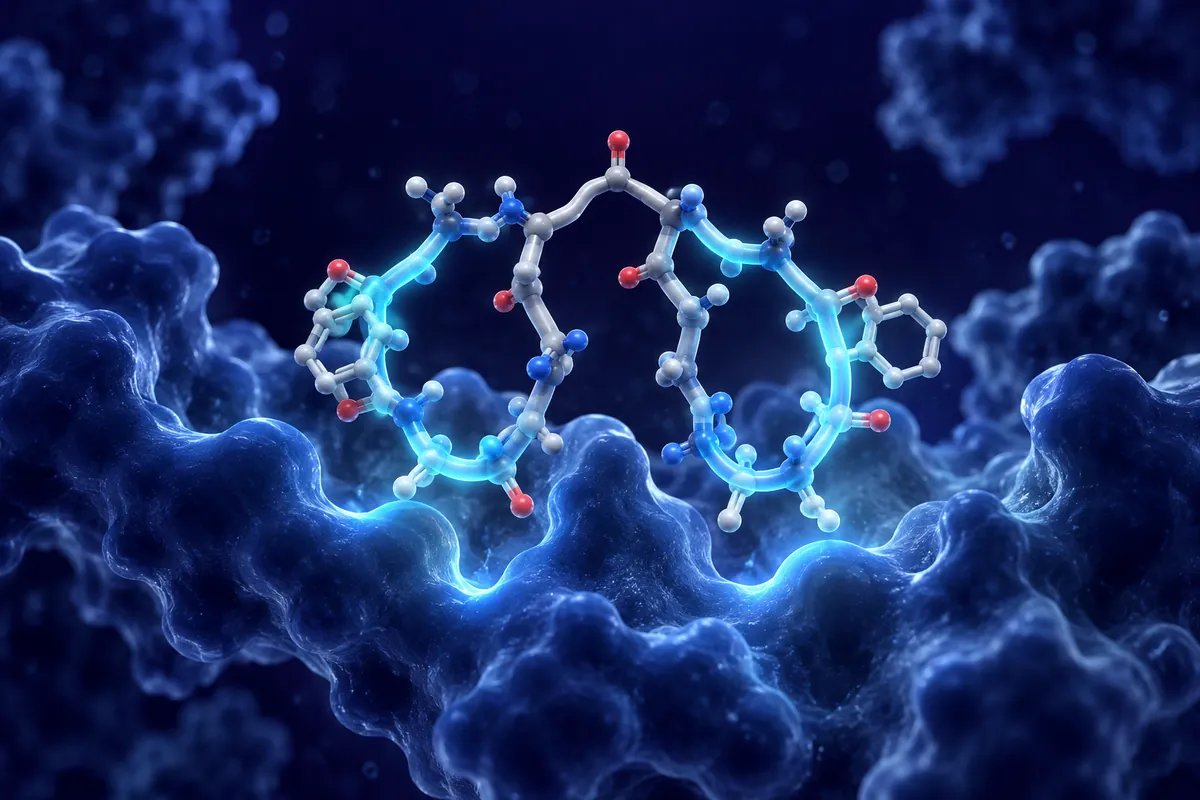
Amylin biology has spent two decades in the shadow of GLP-1, but that is changing fast. Eloralintide is one of the newer investigational compounds giving researchers a cleaner way to ask a specific question: what happens when you activate the amylin receptor alone, without pulling calcitonin receptor signaling along for the ride? That distinction sits at the center of current metabolic peptide research, and it is why eloralintide research has drawn attention from labs comparing selective versus dual-acting amylin agents.
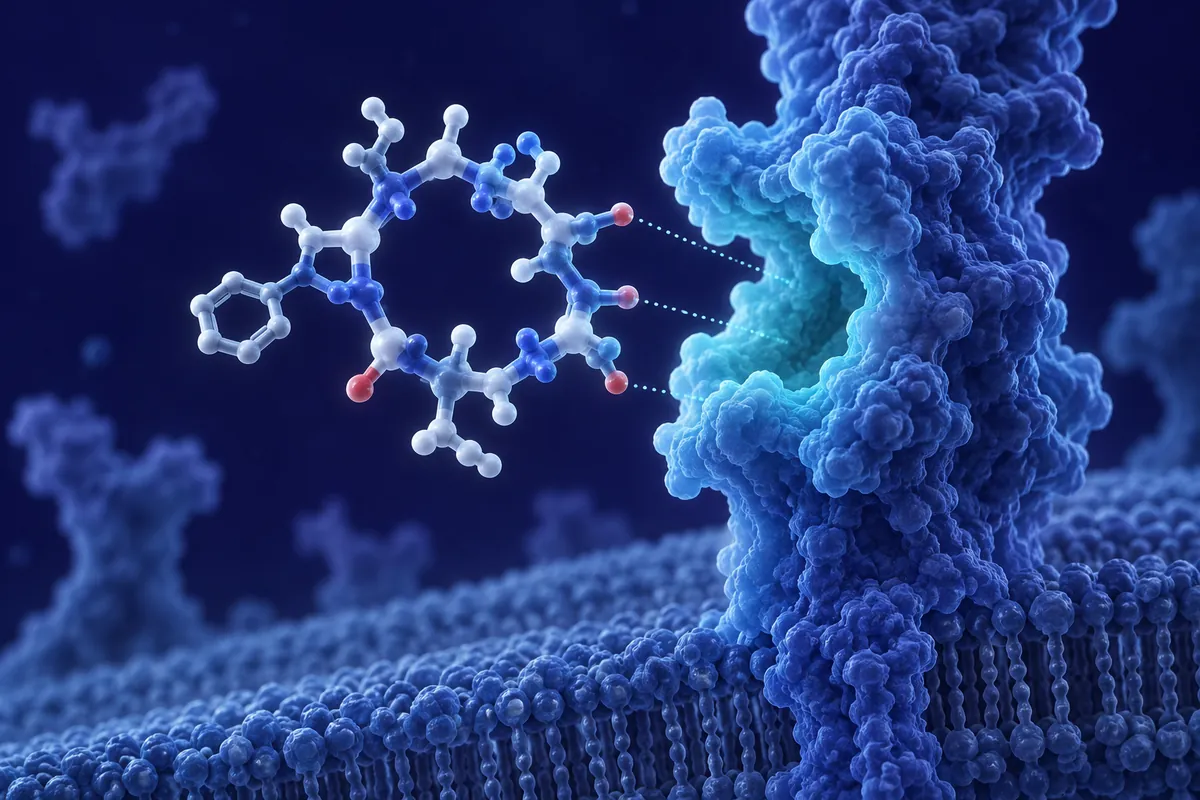
Why does selectivity even matter here? Because the amylin receptor itself is not a single, fixed target. It is a heterodimer formed when the calcitonin receptor (CTR) associates with one of three receptor activity-modifying proteins (RAMP1, RAMP2, or RAMP3). Depending on which RAMP is present, the resulting complex has a different pharmacological personality. Compounds like cagrilintide are engineered to hit both amylin receptor subtypes and the calcitonin receptor itself, producing a dual amylin/calcitonin receptor agonist (DACRA) profile. Eloralintide, by contrast, is designed to favor the amylin receptor complex with much lower calcitonin receptor engagement.
Mechanistic Rationale for Amylin-Selective Agonism
Native amylin (also called islet amyloid polypeptide) is co-secreted with insulin from pancreatic beta cells and signals through the area postrema and other hindbrain nuclei to slow gastric emptying and reduce food intake in rodent and non-human primate models. A purely selective amylin receptor agonist attempts to reproduce that satiety signaling cascade without recruiting calcitonin receptor-mediated effects on bone and calcium handling that a dual agonist would also touch.
Researchers investigating eloralintide have focused on binding assays across the AMY1, AMY2, and AMY3 receptor subtypes, generally reporting sub-nanomolar to low nanomolar EC50 values at AMY receptor complexes with markedly reduced potency at the unmodified calcitonin receptor. That separation is the whole point. It lets a research model isolate satiety and gastric-emptying signaling from any confounding calcitonin-pathway activity.
Comparing the Selectivity Profiles
Cagrilintide’s dual profile is not a design flaw; it is a deliberate strategy to leverage overlapping pathways for additive effects in combination research protocols, often paired with GLP-1 receptor agonists. Eloralintide takes the opposite bet: isolate the amylin arm and see what a cleaner signal reveals. Both approaches generate useful data, but they are not interchangeable, and conflating them in study design would muddy the interpretation of any downstream metabolic finding.
Rodent and Primate Model Findings
In diet-induced obesity mouse models, amylin receptor agonists as a class have been associated with reduced body weight and improved glycemic parameters relative to vehicle-treated controls, with effect sizes often compounding when paired with a GLP-1 receptor agonist arm in the same protocol. Half-life extension strategies, frequently achieved through fatty-acid acylation or PEGylation, extend plasma exposure enough to support less frequent administration schedules in these models. Does a longer half-life change the qualitative pharmacology, or just the frequency of administration? That question remains an open area of investigation, and it matters for anyone designing a multi-week protocol.
What Selective Signaling Might Reveal
One of the more interesting threads in this line of research is whether amylin receptor selectivity changes the adaptation profile over repeated exposure. Receptor desensitization and internalization kinetics differ across RAMP-associated complexes, and some in vitro work using HEK293 cells overexpressing individual AMY subtypes has shown divergent recycling rates. A dual agonist recruiting calcitonin receptor pathways alongside AMY receptors could, in theory, produce a different desensitization curve than a selective compound. Untangling that requires careful pharmacokinetic and receptor trafficking work, not just body-weight readouts in a terminal study.
There is also the question of central nervous system penetration. Amylin’s primary site of action is thought to be the area postrema, a circumventricular organ with a naturally permeable blood-brain barrier. This gives peptide agonists a way to access central satiety circuits without needing to cross an intact barrier elsewhere, which is a useful structural feature when researchers are comparing peripheral versus central contributions to the observed research findings.
- AMY1/AMY2/AMY3 receptor subtype binding profiles
- Comparative calcitonin receptor engagement versus DACRA compounds
- Gastric emptying and food intake endpoints in rodent models
- Receptor trafficking and desensitization kinetics in vitro
Study Design Considerations
Anyone designing a protocol around a selective amylin receptor agonist needs to think carefully about control arms. Comparing a selective compound against a dual DACRA molecule without also including a pure calcitonin receptor agonist arm can make it difficult to attribute observed effects to the amylin pathway specifically. Species choice matters too. Rodent amylin receptor pharmacology does not map perfectly onto the human receptor complex, and cross-species affinity differences have been documented for several amylin analogs, which is part of why non-human primate data tends to carry extra weight when researchers are trying to project findings toward eventual human study relevance.
Route of administration and injection site can also influence the observed pharmacokinetic profile in ways that are easy to overlook. Subcutaneous absorption kinetics vary by anatomical site in rodent models, and a poorly controlled variable here can introduce noise into half-life estimates that gets misattributed to the compound itself rather than the study design.
Research Outlook
The next phase of amylin receptor research will likely hinge on combination protocols pairing selective agonists with incretin-based investigational compounds, alongside deeper structural biology work resolving how each RAMP-CTR complex engages its ligand. Cryo-EM structures of amylin receptor complexes published in recent years have already reshaped how researchers think about ligand engagement, and that structural clarity should sharpen the next generation of selective agonist design. Eloralintide research sits right at that intersection, offering a tool to ask sharper mechanistic questions rather than broader ones. As with any emerging investigational compound, reproducibility across independent labs and model systems will determine how much of the early promise holds up.
Disclaimer: This content is intended for research purposes only and is not meant to constitute medical advice.
This educational material discusses laboratory research concepts only. Loti Labs products are intended strictly for research and development use and are not for human consumption.