
Premium USA-Made Research Compounds
Browse lab-tested peptides, research liquids, capsules and more.
Compounded Semaglutide & Tirzepatide Legal Status 2026: The FDA 503B Ban Explained
⚠️ Research Use Only
All GLP-1 receptor agonists and compounds discussed in this article are strictly for laboratory and in vitro/in vivo research use only. None are FDA-approved for human consumption or self-administration. This article is for scientific and regulatory education purposes only.
The regulatory landscape for glucagon-like peptide-1 (GLP-1) receptor agonists has undergone a seismic shift in early 2026. For academic investigators and laboratory researchers, the distinction between clinical compounding and Research Use Only (RUO) procurement has never been more critical. As the FDA moves to finalize the exclusion of these peptides from the bulk compounding lists, the legal framework established by the Federal Food, Drug, and Cosmetic Act (FD&C Act) is being strictly enforced to protect the integrity of the drug approval process.
Looking for Premium Research Compounds?
This report analyzes the current legal status of Semaglutide, Tirzepatide, and Liraglutide compounding, the implications of the April 2026 FDA proposal, and the continued legality of high-purity Active Pharmaceutical Ingredient (API) procurement for in vitro research and preclinical modeling. For a broader perspective on regulatory changes, researchers should consult our broader FDA peptide reclassification 2026 guide.
The April 2026 FDA Proposal: Excluding GLP-1s from the 503B Bulks List
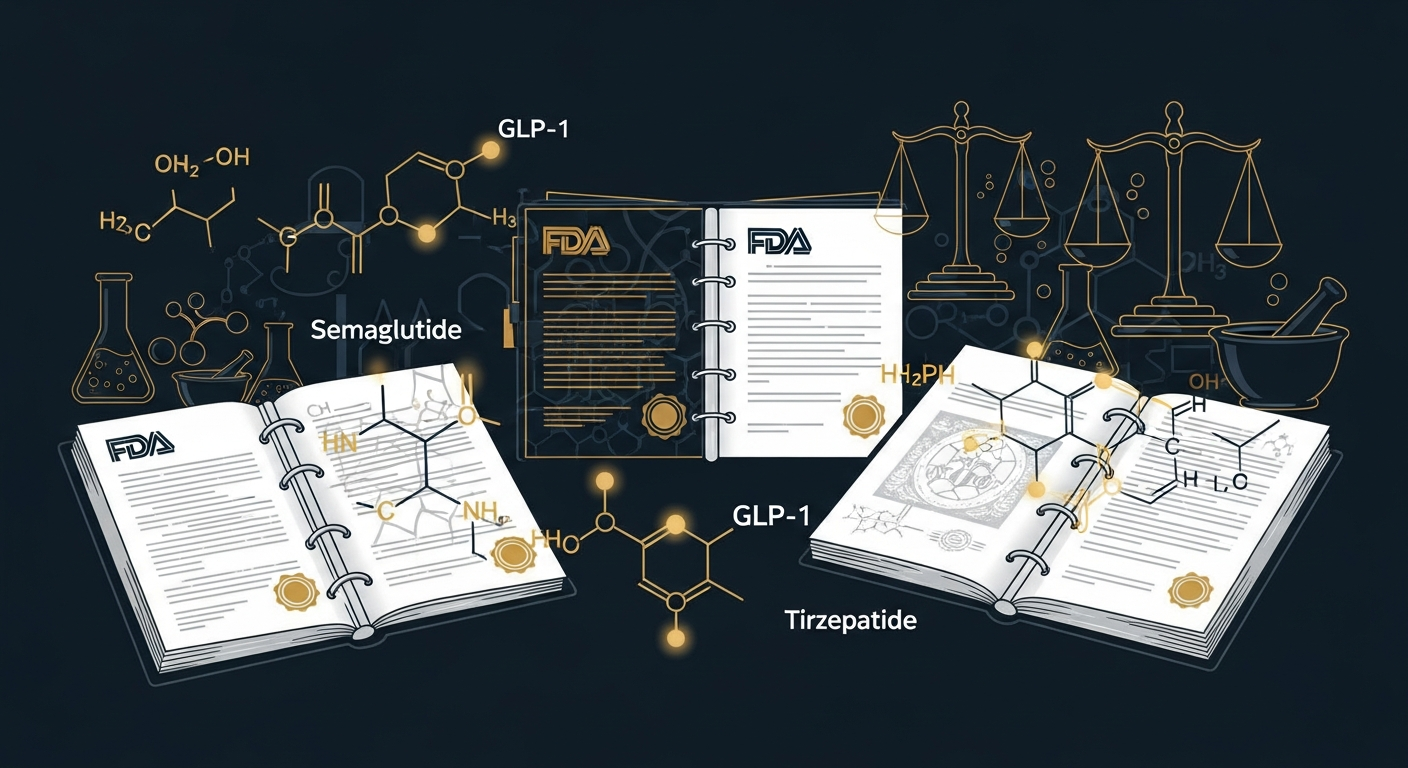
Is compounded semaglutide legal in 2026? As of 2026, compounded semaglutide and tirzepatide are strictly regulated and largely restricted for human use. The FDA declared the semaglutide shortage resolved in early 2025, ending 503A compounding exceptions. On April 30, 2026, the FDA proposed removing semaglutide, tirzepatide, and liraglutide from the 503B outsourcing facilities bulks list — effectively blocking large-scale compounding. However, procuring these peptides as Research Use Only (RUO) compounds for in vitro laboratory studies is a legally distinct framework under the FD&C Act, unaffected by 503B compounding restrictions.
On April 30, 2026, the FDA, under the direction of Commissioner Marty Makary, issued a formal proposal to remove Semaglutide and Tirzepatide from the 503B bulks list. This list determines which bulk drug substances outsourcing facilities can use to compound medications in the absence of a specific patient prescription. The proposal follows a multi-year period where high demand and supply chain disruptions allowed for broader compounding permissions under the “shortage” exceptions of the FD&C Act.
Why the FDA Is Targeting GLP-1 Bulk Compounding
The primary driver for this proposal is the determination that “clinical need” for bulk-compounded versions of these peptides no longer exists. Under Section 503B of the FD&C Act, a substance can only remain on the bulks list if there is a demonstrated clinical need that cannot be met by an FDA-approved drug. With Eli Lilly and Company and Novo Nordisk achieving supply stabilization in late 2025, the FDA has signaled that the safety risks associated with non-standardized compounding outweigh the benefits of increased access through these channels.
Commissioner Marty Makary emphasized in the April 30 announcement that the agency’s priority is ensuring that patients receive medications manufactured under rigorous Current Good Manufacturing Practice (cGMP) standards. The agency noted that many 503B facilities were essentially mass-producing “copycat” versions of branded tirzepatide and a commercial tirzepatide presentation without the proprietary delivery systems or stabilized formulations found in the commercial products.
? Key Deadline: June 29, 2026 — Public Comment Period Closes
The FDA’s April 30, 2026 proposal to remove Semaglutide and Tirzepatide from the 503B outsourcing facilities bulks list is open for public comment through June 29, 2026. Researchers and institutional buyers can submit comments via regulations.gov. A final rule is expected to follow the comment period review.
The June 2026 Public Comment Deadline and What Comes Next
The FDA has opened a formal docket on regulations.gov for public feedback regarding this exclusion. The June 29, 2026 public comment deadline represents the final opportunity for compounding pharmacies and advocacy groups to argue for the retention of these substances on the bulks list. However, industry analysts expect the ban to be finalized by Q3 2026, effectively ending the era of mass-scale GLP-1 compounding in the United States.
Understanding the Legal Framework: 503A vs. 503B Compounding
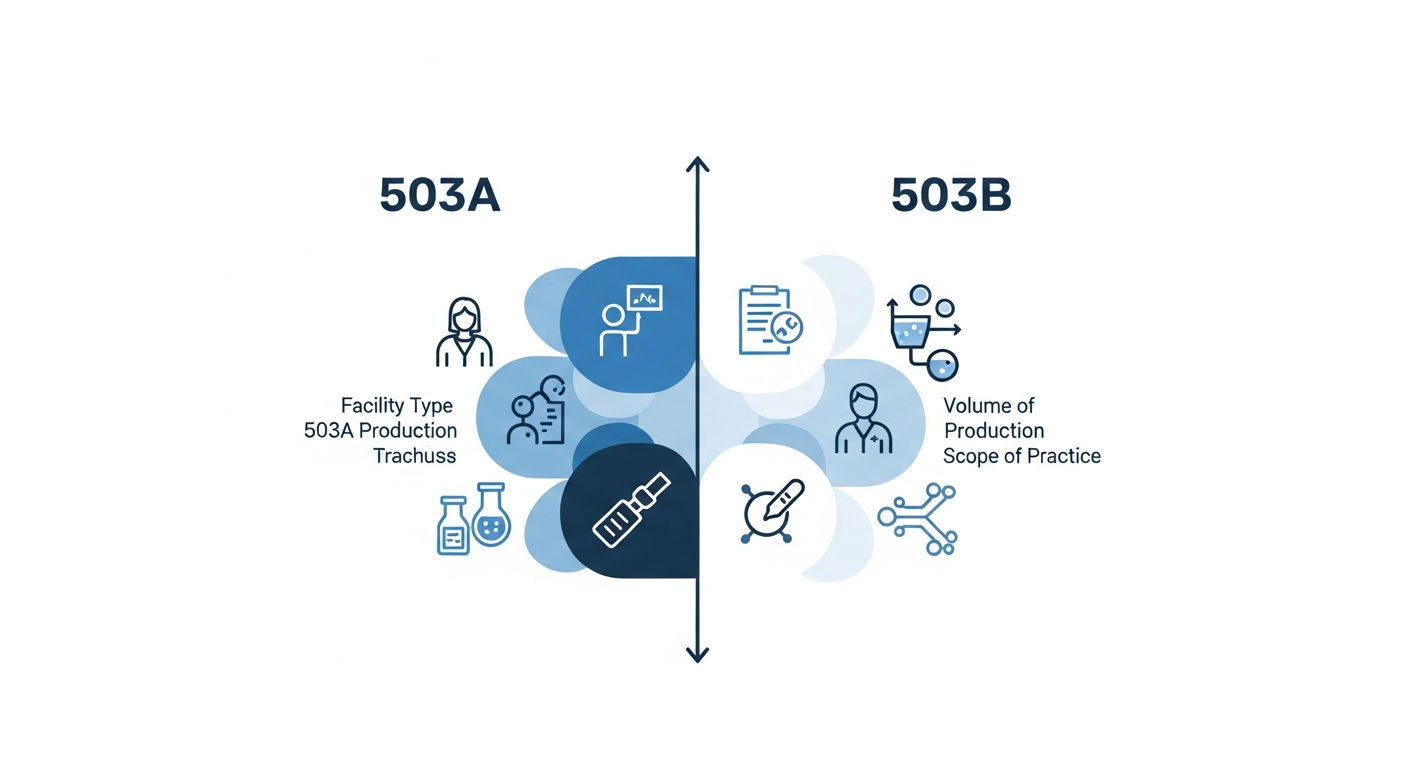
To navigate the 2026 regulatory environment, researchers must distinguish between the two primary legal pathways for drug compounding defined by the FD&C Act.
503A: Patient-Specific Prescriptions and Individual Compounding
Section 503A governs traditional compounding pharmacies. These facilities are permitted to compound medications only upon receipt of a valid, patient-specific prescription. While 503A pharmacies can still technically compound Semaglutide or Tirzepatide, they are prohibited from doing so “regularly or in inordinate amounts” if the compounded drug is essentially a copy of a commercially available drug. Because the shortage has resolved, the 503A pathway for GLP-1s has become legally precarious, as it often violates the “essential copy” provision of the Act.
503B: Outsourcing Facilities and the “Clinical Need” Clause
Section 503B created “outsourcing facilities” which are allowed to compound larger batches of drugs without individual prescriptions, provided they follow stricter cGMP requirements and use substances on the 503B bulks list. The clinical need clause is the pivot point for the 2026 ruling. If the FDA determines that an approved drug (like a commercial semaglutide presentation HD (7.2 mg)) can meet the needs of the population, the bulk substance is removed from the list, and 503B facilities can no longer legally produce it from raw API.
The FD&C Act “Essentially a Copy” Prohibition
A key legal mechanism driving the crackdown is the FD&C Act’s “essentially a copy” prohibition. Under this provision, compounding pharmacies — both 503A and 503B — are generally prohibited from producing drugs that are essentially copies of commercially available FDA-approved medications, unless the patient has a documented need for a specific modification (e.g., allergen removal, alternative concentration form). With branded tirzepatide, a commercial tirzepatide presentation (tirzepatide), and a commercial semaglutide presentation/a commercial semaglutide presentation (semaglutide) all commercially available in 2026, the shortage-based exemption that previously allowed bulk compounding no longer applies.
The Outsourcing Facilities Association (OFA) filed federal injunctions challenging the FDA’s enforcement timeline, but courts denied those motions in 2025, confirming the FDA’s authority to restrict 503B compounding of non-shortage GLP-1s. This legal precedent has effectively sealed the clinical compounding pathway for these compounds, absent another declared shortage.
State Pharmacy Boards and DEA Telemedicine Rules
While the FDA regulates 503B outsourcing facilities at the federal level, State Boards of Pharmacy regulate 503A compounding pharmacies under state law. This creates a dual-oversight structure: a compounding pharmacy may comply with its state board while still violating FDA federal law, or vice versa. States such as California, Michigan, and New York have issued their own guidance in 2026 addressing GLP-1 compounding within their jurisdictions.
The DEA’s telemedicine prescribing flexibilities — extended through 2025 under the Ryan Haight Act waivers — also intersect with GLP-1 compounding access. Many patients obtained compounded semaglutide or tirzepatide via telehealth prescriptions during the shortage period. As the FDA’s compounding restrictions tighten, DEA-regulated prescribing pathways for these substances remain under review, creating ongoing legal ambiguity for telehealth platforms that previously relied on 503B bulk supplies.
The End of the GLP-1 Shortage: Big Pharma’s 2026 Supply Stabilization
The legal justification for compounding GLP-1s was largely predicated on the official FDA Shortage List. As of early 2026, the status of these molecules has changed significantly.
Eli Lilly and Novo Nordisk: Supply Chain Resolution
Throughout late 2025, both Eli Lilly and Company and Novo Nordisk invested billions into parenteral manufacturing facilities. By March 2026, the FDA officially declared the Tirzepatide shortage resolved. This resolution triggered the “essential copy” protections of the FD&C Act, making it illegal for compounders to produce versions of branded tirzepatide and a commercial tirzepatide presentation that do not offer a significant clinical difference for an individual patient.
Tirzepatide vs. Retatrutide comparison for detailed molecular pharmacokinetics.
a commercial semaglutide presentation HD (7.2 mg) and Expanding Commercial GLP-1 Pipeline
In March 2026, the FDA approved a commercial semaglutide presentation HD (7.2 mg) by Novo Nordisk. The approval of a commercial semaglutide presentation HD (7.2 mg) further weakened the argument for compounding, as it provided a commercial solution for patients requiring dose escalation beyond the previous 2.4 mg limit. The expansion of the commercial pipeline ensures that various titration needs are met by regulated products, further narrowing the legal “clinical need” for compounded alternatives.
FDA Enforcement in 2026: Warning Letters, Recalls, and API Quality Risks
With the 503B proposal in motion, the FDA has shifted its focus toward aggressive enforcement. This is particularly relevant for laboratories that may have inadvertently sourced materials from facilities intended for clinical use rather than dedicated RUO suppliers.
Sterility Recalls and cGMP Violations at Compounding Facilities
In April 2026, the FDA issued a series of warning letters and oversaw major sterility recalls. A notable example was the ProRx LLC tirzepatide recall, which occurred after investigators found evidence of microbial contamination and inadequate environmental monitoring. Such incidents highlight the risks associated with compounding facilities that lack the industrial-scale sterilization infrastructure of major pharmaceutical manufacturers. The FDA’s testing of grey-market and unauthorized compounded samples has also identified specific impurities including formaldehyde adducts, trace heavy metals (arsenic, lead), and in some cases unlabeled BPC-157 mixtures sold as semaglutide — all documented in 2026 enforcement actions. The FDA’s Import Alert 66-80 (covering unapproved, misbranded, and counterfeit drugs) has been applied at the border to intercept foreign-sourced compounded GLP-1 formulations entering the US.
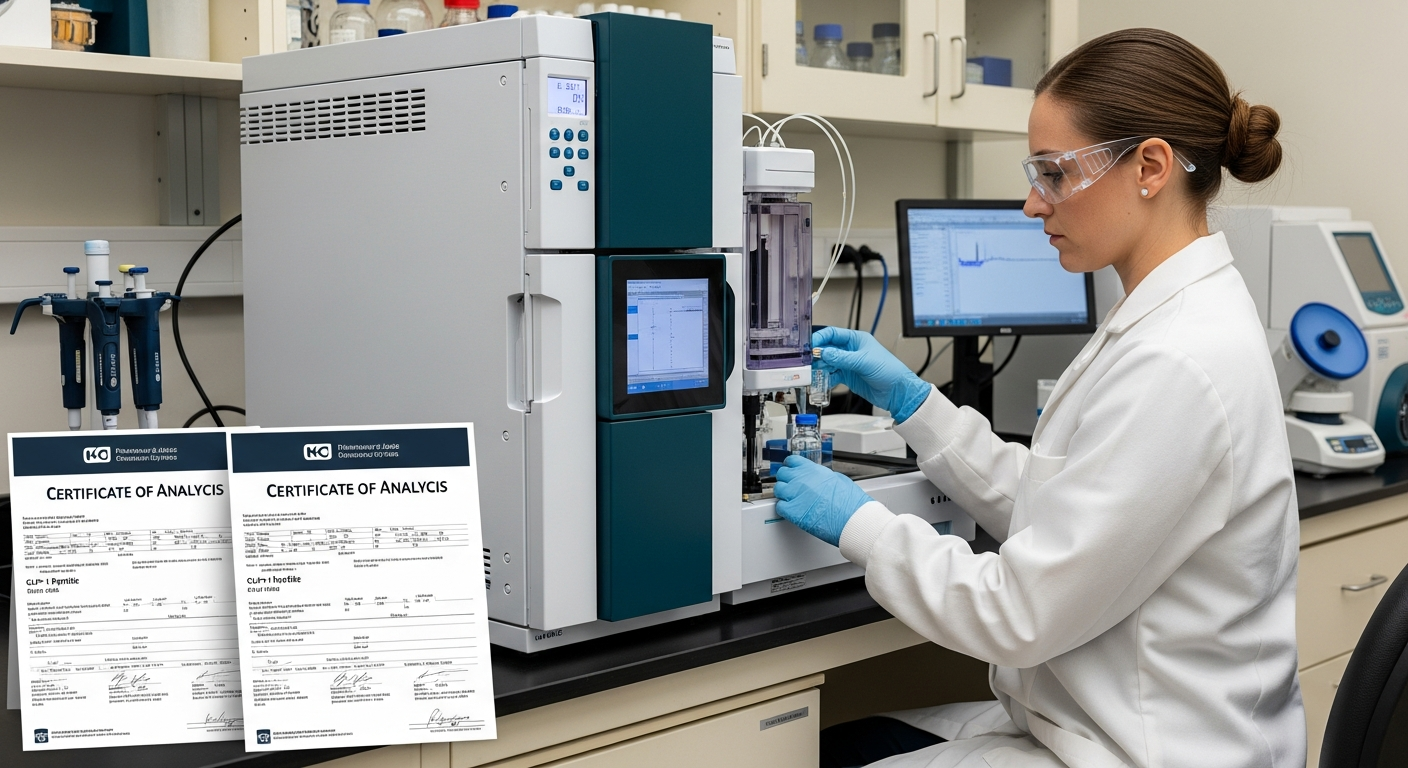
For laboratory researchers, these recalls serve as a warning: clinical compounding pharmacies are often not optimized for the API purity levels required for In Vitro Research. Research-grade materials must undergo ICP-MS testing to ensure the absence of heavy metals and 3rd-party COA verification to confirm peptide sequence integrity, standards that compounding pharmacies may not consistently meet.
The FTC and FDA Joint Crackdown on Misleading Marketing
The FDA, in collaboration with the FTC, has also targeted entities marketing compounded GLP-1s with claims of “superiority” over the brand-name versions. Under the 2026 guidelines, any suggestion that a compounded peptide is “identical” to branded tirzepatide or a commercial semaglutide presentation is considered a violation of the FD&C Act, as compounded drugs are not FDA-approved for safety or efficacy.
Research Use Only (RUO) GLP-1 Peptides: The Laboratory Legal Framework
It is essential to distinguish between the FDA‘s regulation of *compounded drugs for human use* and the procurement of *peptides for laboratory research*. The 503B ban does not apply to the sale of API or peptides intended strictly for Research Use Only (RUO).
ℹ️ The 503B Ban Does Not Apply to RUO Research Peptides
The FDA’s 503B compounding restrictions target clinical pharmacies producing human-use drug formulations. Research Use Only (RUO) GLP-1 peptides procured for in vitro laboratory assays and animal model studies operate under an entirely separate legal framework — they are not pharmaceutical-grade APIs and are not subject to 503A/503B compounding regulations.
Why the 503B Ban Does Not Apply to RUO Laboratory Procurement
The RUO framework exists outside the scope of clinical pharmacy regulations. Section 503A and 503B of the FD&C Act apply only to medications intended for “administration to a human being.” Peptides procured for in vitro research, liquid chromatography-mass spectrometry (LC-MS) calibration, or preclinical animal modeling are not classified as drugs under these sections. Therefore, the exclusion of GLP-1s from the 503B bulks list does not restrict a researcher’s ability to purchase Semaglutide or Tirzepatide for legitimate laboratory investigation.
✅ RUO GLP-1 Procurement Checklist
- Third-party Certificate of Analysis (COA) — HPLC purity ≥98% per lot
- ICP-MS heavy metal panel (arsenic, lead, mercury, cadmium) per USP <232>/<233>
- Mass spectrometry (MS) sequence confirmation
- Explicit “Research Use Only / Not for Human Use” labeling
- No therapeutic claims on product pages or documentation
- US-based supplier with traceable chain of custody
Cold Chain Storage Requirements for RUO GLP-1 APIs
Research-grade GLP-1 peptides require strict cold chain handling. Lyophilized (freeze-dried) RUO semaglutide and tirzepatide should be stored at −20°C for long-term stability; reconstituted solutions require 2–8°C refrigeration and are generally stable for 14–28 days depending on the vehicle and excipient system used. These temperature requirements mirror the cold chain demands of clinical compounded preparations and underscore the importance of sourcing from suppliers with proper cold chain packaging and documented stability data.
Purity Standards and Vendor Compliance for Research Procurement
While RUO procurement remains legal, the 2026 regulatory environment demands higher transparency from vendors. Researchers must ensure that their suppliers are not “masking” clinical compounding as RUO. A compliant vendor will:
- Provide 3rd-party COA (Certificate of Analysis) for every batch.
- Utilize ICP-MS (Inductively Coupled Plasma Mass Spectrometry) to detect trace metal contaminants.
- Strictly prohibit any language suggesting human consumption or clinical application.
- Clearly label all products as Research Use Only.
Maintaining these standards is vital for data reproducibility. Contaminants found in low-grade compounded “research” materials can lead to off-target effects in cellular assays, compromising the validity of the study. For a deep dive into verifying these standards, read our peptide research supplier evaluation guide.
| Category | 503A/503B Compounding | RUO Research Procurement |
|---|---|---|
| Legal Status (2026) | Highly restricted; 503B bulk ban pending. | Legal for laboratory use. |
| Primary Regulation | FD&C Act Sections 503A/503B. | RUO Exemption (Preclinical). |
| Intended Subject | Humans (with or without prescription). | In vitro or animal models only. |
| API Source | Must be on FDA Bulks List (for 503B). | Unrestricted for laboratory analysis. |
| Purity Requirement | USP/NF Standards. | >99% via HPLC/MS verification. |
Frequently Asked Questions
1. Is compounded semaglutide legal in 2026?
As of May 2026, the legality is limited. While 503A pharmacies can compound it for individual patients under specific conditions, the FDA’s April 2026 proposal to remove it from the 503B bulks list effectively bans mass-production by outsourcing facilities. Compounding “essential copies” of stabilized commercial drugs like a commercial semaglutide presentation is generally prohibited under the FD&C Act once the shortage is resolved.
2. What is the FDA 503B bulks list?
The 503B bulks list identifies bulk drug substances that outsourcing facilities can use to compound medications. Inclusion requires a demonstrated “clinical need.” The FDA‘s 2026 move to exclude GLP-1s from this list means 503B facilities can no longer use raw API to produce these peptides for clinical use.
3. Did the FDA semaglutide shortage end?
Yes, the FDA officially declared the Tirzepatide shortage resolved in early 2026, with Semaglutide supplies stabilizing shortly thereafter due to the approval of a commercial semaglutide presentation HD (7.2 mg) and expanded manufacturing capacity by Novo Nordisk and Eli Lilly and Company.
4. Can telehealth companies still prescribe compounded tirzepatide?
In 2026, telehealth companies face severe legal restrictions. They can only prescribe compounded versions if the pharmacy is a 503A facility and the medication is tailored for a specific patient need that the commercial product (a commercial tirzepatide presentation/branded tirzepatide) cannot meet, such as an allergy to an inactive ingredient. Marketing these as cheaper “alternatives” is currently under FDA and FTC scrutiny.
5. Are research peptides legal to buy online?
Peptides sold as Research Use Only (RUO) are legal to purchase for in vitro research and laboratory experimentation. However, they are not intended for human or animal consumption. Buying API for laboratory analysis remains a standard and legal practice for academic and commercial researchers.
6. What is the difference between 503A and 503B compounding?
Section 503A pharmacies are traditional facilities requiring a patient-specific prescription. Section 503B outsourcing facilities are larger operations that can compound in bulk and sell to healthcare providers, provided they follow cGMP and use substances on the FDA bulks list.
7. When does the FDA 503B GLP-1 ruling take effect?
The public comment period ends on June 29, 2026. A final ruling is expected by late summer 2026, at which point 503B facilities must cease production of compounded Semaglutide and Tirzepatide unless a specific exception is granted.
8. Why did the FDA ban bulk compounded GLP-1s?
The ban was proposed because the “clinical need” for compounded versions evaporated once Eli Lilly and Novo Nordisk resolved supply issues. The FDA and Commissioner Marty Makary prioritized the safety of approved, standardized medications over the proliferation of unapproved compounded versions.
9. Does the 503B compounding ban affect RUO research peptide procurement?
No. The 503B bulks list and the associated bans apply only to the production of drugs for human use. Procurement of peptides for in vitro research or preclinical laboratory studies remains legal under the RUO framework, provided the substances are not administered to humans.
10. What quality standards should labs require for RUO GLP-1 APIs?
Researchers should demand a 3rd-party COA, HPLC purity data (>99%), and ICP-MS testing for heavy metals. Verification of the peptide sequence via Mass Spectrometry is also essential to ensure the API matches the intended molecular profile for the study.
What is the 503B bulks list?
The 503B bulks list identifies Active Pharmaceutical Ingredients (APIs) that FDA-registered outsourcing facilities are legally permitted to use for large-scale compounding without patient-specific prescriptions. A substance on the 503B bulks list can be compounded in bulk for hospital and clinical use. The FDA’s April 30, 2026 proposal removes semaglutide, tirzepatide, and liraglutide from this list, citing the end of clinical need as commercial supply shortages have resolved.
Are compounding pharmacies banned from making semaglutide?
As of 2026, yes — with important distinctions. 503A pharmacies lost their shortage-exemption compounding rights for semaglutide when the FDA declared the shortage resolved in early 2025. 503B outsourcing facilities face a proposed total ban under the April 30, 2026 FDA proposal. Individual 503A prescriptions with documented medical necessity (e.g., alternative base, specific excipient requirements) may continue in limited circumstances, but mass-market telehealth compounding is effectively prohibited.
What is the difference between compounded and RUO semaglutide?
Compounded semaglutide is prepared by licensed pharmacies as a drug formulation intended for human therapeutic use, which is now largely prohibited under 2026 FDA regulations. Research Use Only (RUO) semaglutide is a research chemical sold exclusively for in vitro laboratory assays, cell-based receptor binding studies, and animal model experiments. It carries explicit “Not for Human Use” labeling, is not a pharmaceutical-grade drug, and is governed by research chemical regulations — not pharmaceutical compounding law.
Why did the FDA recall ProRx compounded tirzepatide?
On April 7, 2026, the FDA issued a warning letter to ProRx LLC, an outsourcing facility, and initiated a recall of their compounded tirzepatide and semaglutide multidose vials. The basis was a critical lack of sterility assurance — the facility failed to meet Current Good Manufacturing Practice (cGMP) standards required for injectable compounded preparations. This enforcement action was part of the FDA’s broader 2026 intensification of outsourcing facility oversight.
Is RUO semaglutide legal to purchase for laboratory research?
Yes. Purchasing semaglutide for Research Use Only (RUO) for legitimate in vitro and animal model laboratory research is legal in the United States. The FDA’s 503A/503B compounding restrictions target human-use pharmaceutical preparations, not research chemicals. RUO procurement requires that the supplier clearly label the compound as “Research Use Only / Not for Human Use” and that the purchaser uses it strictly for non-clinical laboratory purposes.
Does compounded semaglutide require refrigeration?
Yes. Liquid compounded semaglutide formulations must be stored at 2–8°C (standard refrigerator temperature) to maintain chemical stability. This cold chain requirement applies equally to RUO research peptides: lyophilized powder should be stored at −20°C; reconstituted research solutions at 2–8°C. Failure to maintain proper temperature can result in peptide degradation, reduced bioactivity, and unreliable experimental results.
Can I order compounded semaglutide online without a prescription?
Compounded semaglutide intended for human use legally requires a prescription from a licensed healthcare provider. As of 2026, the FDA has restricted large-scale compounding and enforcement against unprescribed human-use sales is active. However, Research Use Only (RUO) semaglutide — explicitly labeled for in vitro laboratory research and not for human consumption — does not require a prescription and can be legally sourced from certified RUO peptide vendors.
What happened to the compounded semaglutide shortage exemption?
The FDA’s shortage exemption for compounded semaglutide — which had allowed 503A and 503B facilities to produce bulk copies during the commercial supply shortage — ended in early 2025 when the FDA declared the semaglutide shortage officially resolved. The subsequent tirzepatide shortage was similarly resolved in late 2025. With both shortages ended, the legal basis for bulk compounding under shortage exemptions no longer exists, leaving only highly customized patient-specific 503A formulations as a narrow remaining pathway.
Continue Your Research
Explore our complete catalog of premium research compounds.
