The Protective Arm of the Renin-Angiotensin System
For decades, the renin-angiotensin system (RAS) was understood as a linear cascade: angiotensinogen → angiotensin I → angiotensin II, with angiotensin II acting through AT1 receptors to raise blood pressure, promote fibrosis, and drive inflammation. Then angiotensin (1-7) emerged as the system’s counterweight : a seven-amino-acid peptide that opposes nearly every harmful effect attributed to its eight-amino-acid sibling angiotensin II. The discovery reshaped how researchers think about the RAS, transforming it from a one-directional pressor system into a balanced regulatory axis with opposing arms.
Angiotensin (1-7) is generated through two primary enzymatic routes. Angiotensin-converting enzyme 2 (ACE2) cleaves a single amino acid from angiotensin II, converting the vasoconstrictor directly into the vasodilator. Alternatively, neprilysin and prolyl endopeptidase can generate Ang(1-7) from angiotensin I, bypassing angiotensin II entirely. ACE2 : which gained worldwide recognition for entirely different reasons : is thus the key enzyme tipping the RAS balance from harmful toward protective.
The Mas Receptor
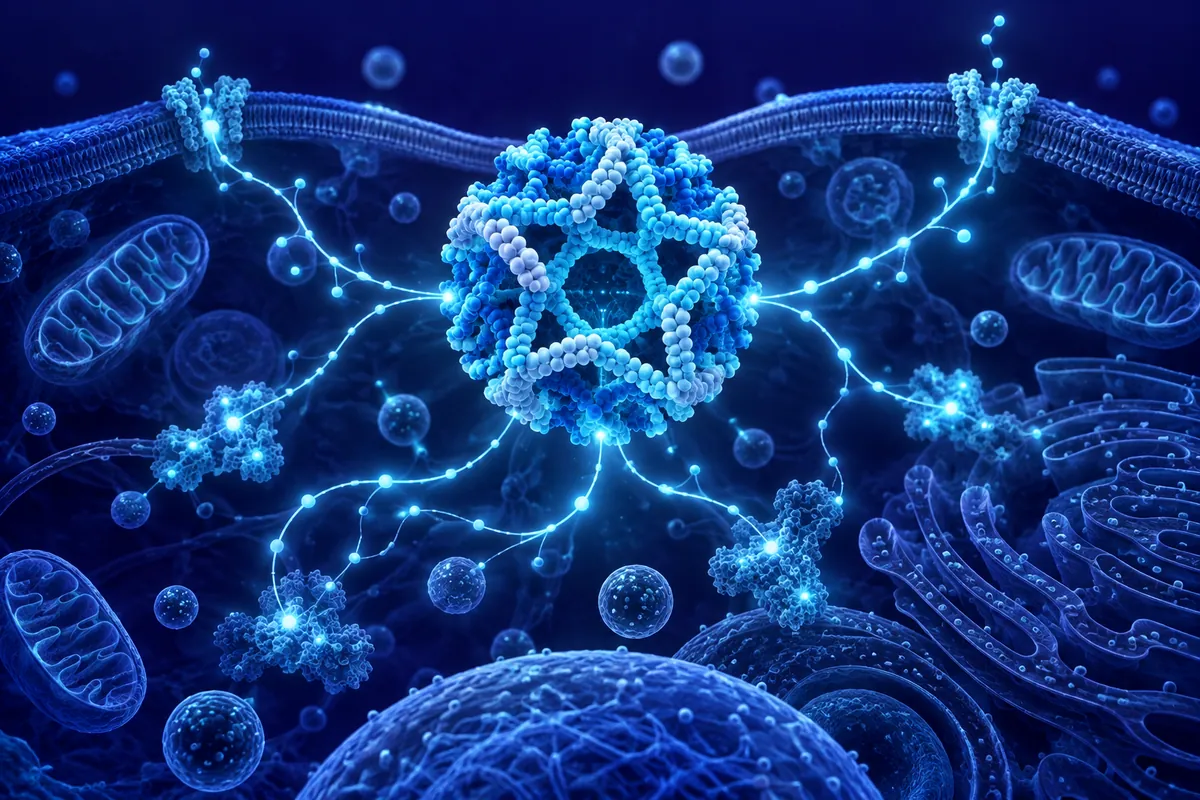
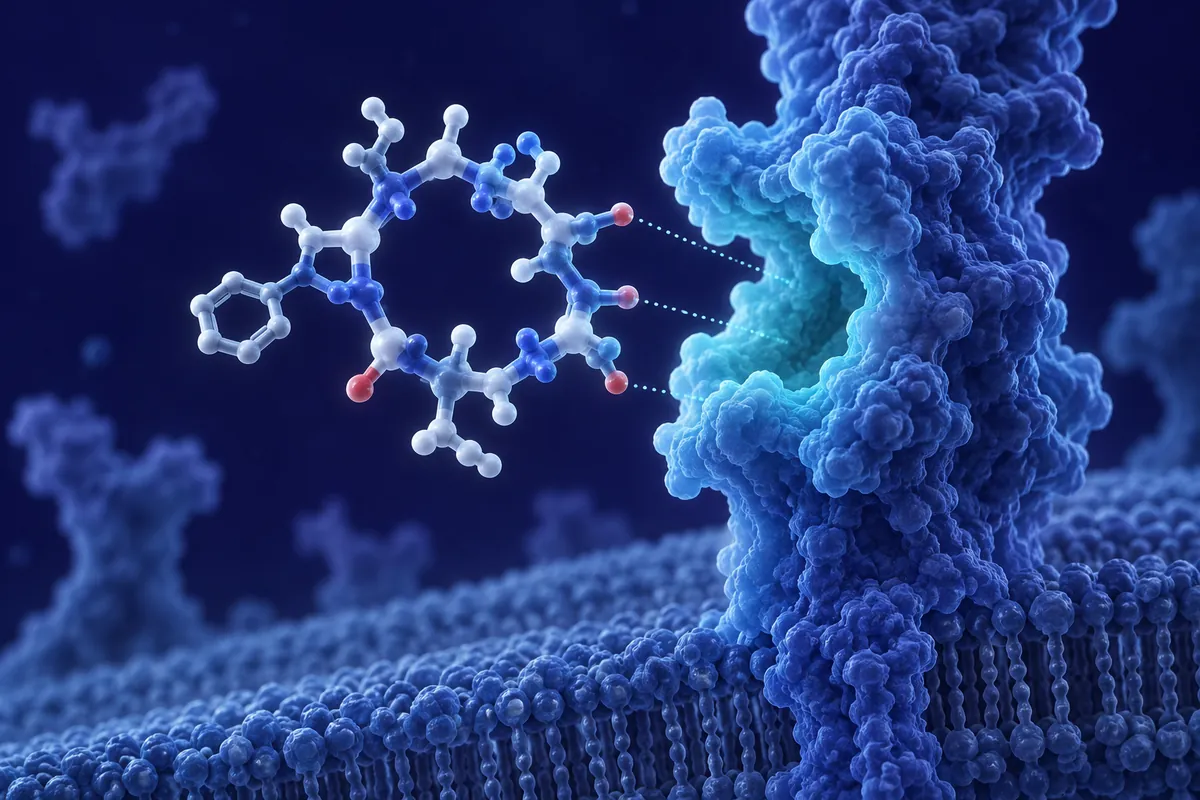
Angiotensin (1-7) signals through the Mas receptor, a G-protein-coupled receptor identified as the Ang(1-7) receptor by Robson Santos and colleagues at the Federal University of Minas Gerais in Brazil. Mas activation triggers intracellular cascades fundamentally different from AT1 signaling: phospholipase A2 activation, Akt/PKB phosphorylation, and nitric oxide synthase stimulation.
The downstream effects read like a mirror image of AT1 receptor activation. Where angiotensin II via AT1 causes vasoconstriction, Ang(1-7) via Mas causes vasodilation. Where AT1 promotes cardiac hypertrophy, Mas opposes it. Where AT1 drives fibroblast proliferation and collagen deposition, Mas signaling reduces fibrosis. This functional antagonism operates at the receptor level, within individual cells that often co-express both AT1 and Mas : making the local ratio of angiotensin II to Ang(1-7) a critical determinant of tissue responses.
Cardiovascular Research Applications
The cardiovascular research on Ang(1-7) is extensive. In isolated heart preparations, Ang(1-7) produces coronary vasodilation through endothelium-dependent mechanisms involving nitric oxide and prostaglandin release. In pressure-overload cardiac hypertrophy models (created by aortic banding), chronic Ang(1-7) infusion reduced left ventricular mass, decreased interstitial fibrosis, and preserved systolic function compared to vehicle-treated controls.
The anti-fibrotic effect is particularly well-documented. In cardiac fibroblasts cultured in vitro, Ang(1-7) inhibits collagen synthesis induced by angiotensin II or TGF-β. The mechanism involves Mas-mediated suppression of Smad2/3 phosphorylation : the central signaling pathway through which TGF-β drives extracellular matrix deposition. This pathway-specific inhibition explains why Ang(1-7) reduces pathological fibrosis without blocking the normal wound-healing functions of TGF-β signaling.
In vascular biology, Ang(1-7) opposes the proliferative and inflammatory effects of angiotensin II on smooth muscle cells and endothelial cells. In balloon injury models of vascular remodeling, local Ang(1-7) delivery reduced neointimal hyperplasia : the excessive smooth muscle cell proliferation that narrows blood vessels after mechanical injury. The anti-proliferative effect involves Mas-mediated inhibition of the MAPK/ERK pathway, reducing cell cycle progression in vascular smooth muscle.
Renal Protective Mechanisms
The kidney is both a major source and target of Ang(1-7). Intrarenal Ang(1-7) production via ACE2 occurs in proximal tubular cells, podocytes, and collecting duct principal cells. In renal research models, Ang(1-7) promotes natriuresis (sodium excretion), opposes the sodium-retaining effects of angiotensin II, and protects against glomerular damage in experimental settings.
In models of diabetic nephropathy, chronic Ang(1-7) infusion reduced proteinuria, decreased glomerular fibrosis, and preserved podocyte architecture. These protective effects were abolished in Mas-knockout animals, confirming receptor-specific mediation. The renal effects complement the cardiovascular actions, reinforcing the concept that the ACE2/Ang(1-7)/Mas axis provides systemic counter-regulation against pathological RAS overactivation.
Anti-Inflammatory Properties
Beyond hemodynamics and fibrosis, Ang(1-7) modulates inflammatory processes. In macrophage cultures, Ang(1-7) reduces pro-inflammatory cytokine production (TNF-α, IL-6) and shifts macrophage polarization from M1 (pro-inflammatory) toward M2 (resolution-promoting) phenotypes. In rodent models of lung inflammation, Ang(1-7) administration attenuated neutrophil infiltration, reduced alveolar damage, and improved gas exchange parameters.
The anti-inflammatory mechanism involves Mas-mediated inhibition of NF-κB nuclear translocation : the same transcription factor targeted by α-MSH through melanocortin receptors. That two structurally unrelated peptides converge on NF-κB suppression through different receptor systems highlights the biological importance of controlling this inflammatory master switch and suggests potential for combinatorial research approaches.
Neurological Research
ACE2 and Mas are expressed in multiple brain regions, and central Ang(1-7) signaling influences autonomic cardiovascular control, cognitive function, and neuroinflammation. In the rostral ventrolateral medulla, Ang(1-7) reduces sympathetic outflow : the opposite of angiotensin II’s sympathoexcitatory effect in the same region. In hippocampal slice preparations, Ang(1-7) enhances long-term potentiation (LTP), a cellular correlate of learning and memory.
Neurodegenerative research models have also shown protective effects. In amyloid-β-treated hippocampal neuron cultures, Ang(1-7) reduced oxidative stress markers and preserved cell viability. Whether these in vitro findings translate to intact brain circuits remains under investigation, but the consistent protective direction of Ang(1-7) signaling across tissues suggests a general counter-regulatory function that extends into the CNS.
The ACE2 Connection
ACE2’s dual role : as both the enzyme generating protective Ang(1-7) and a viral entry receptor : brought the entire counter-regulatory RAS axis into unprecedented public awareness. From a peptide research perspective, the key insight is that ACE2 activity determines the balance between angiotensin II (harmful excess) and Ang(1-7) (protective). Understanding how to shift this balance pharmacologically : through ACE2 activators, recombinant Ang(1-7) analogs, or Mas receptor agonists : remains an active and well-funded area of cardiovascular and pulmonary research.
Disclaimer: This content is intended for research purposes only and is not meant to constitute medical advice.
This educational material discusses laboratory research concepts only. Loti Labs products are intended strictly for research and development use and are not for human consumption.