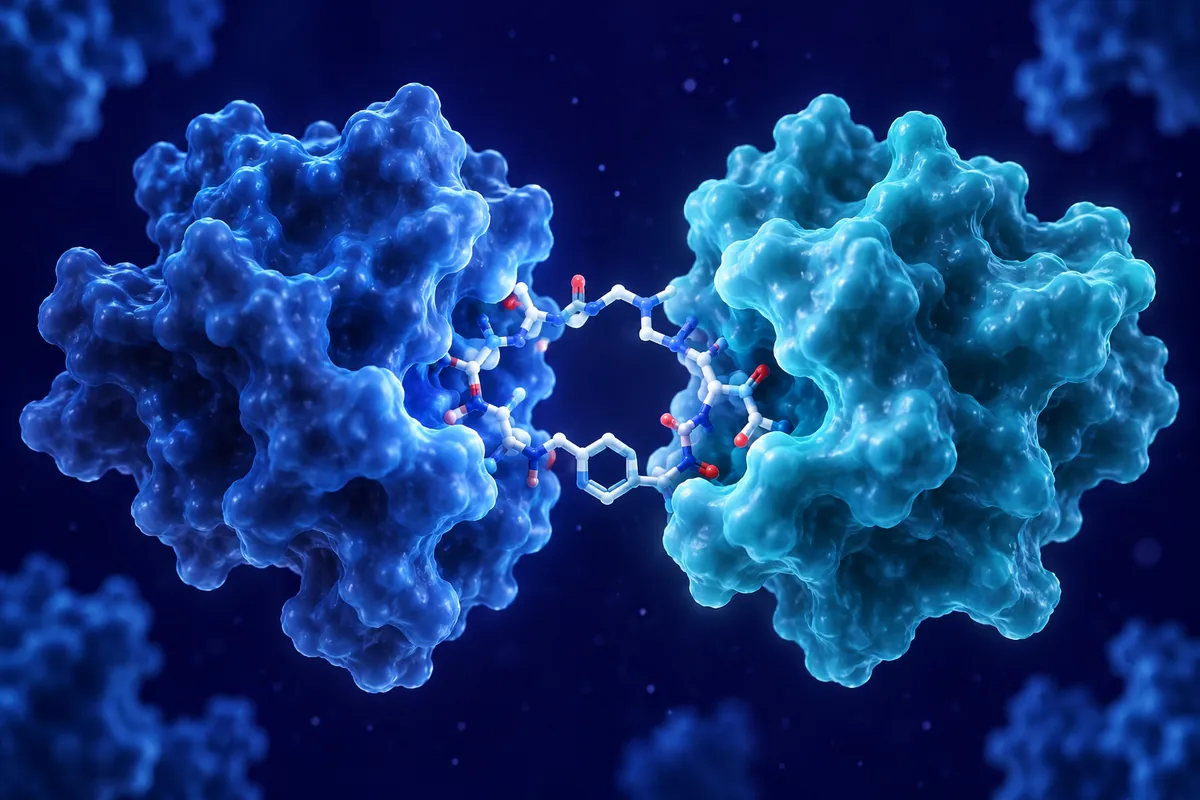
Most peptide drug discovery starts from a known ligand and optimizes it. mRNA display flips that logic entirely: it builds a random library so vast : commonly exceeding a trillion distinct sequences : that functional binders can be found without any prior structural hypothesis at all. The RaPID system, short for Random non-standard Peptide Integrated Discovery, has become the most widely used implementation of this approach, and it has produced macrocyclic peptide binders against targets long considered difficult, including cell-surface receptor tyrosine kinases that resist conventional peptide or antibody engagement.
The Core Trick: Reprogramming the Genetic Code
Standard ribosomal translation is locked to twenty proteinogenic amino acids, charged onto tRNAs by their cognate synthetases. RaPID gets around this constraint using flexizymes : small ribozymes discovered by Hiroaki Suga’s group that can charge tRNAs with essentially any acyl group, including non-canonical amino acids, D-amino acids, and N-methylated residues, independent of natural aminoacyl-tRNA synthetase specificity. Because flexizymes don’t recognize amino acid side chains the way synthetases do, they can load a tRNA with an N-chloroacetyl-D-tyrosine or similarly exotic monomer, which the ribosome will then incorporate at the initiator position during in vitro translation. That single innovation is what allows RaPID libraries to move beyond the twenty-amino-acid alphabet that constrains phage display and yeast display.
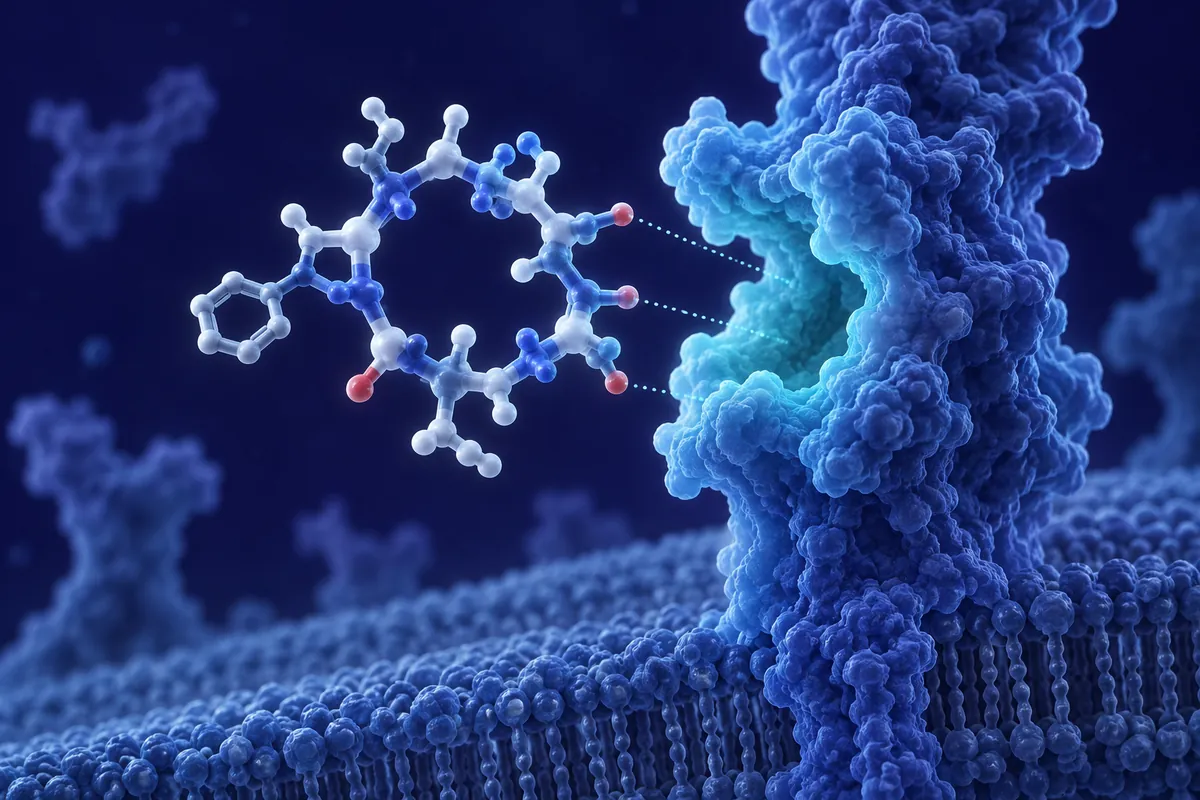
The macrocyclization step usually happens spontaneously: an N-terminal chloroacetyl or similarly reactive group cyclizes intramolecularly with a downstream cysteine thiol once translation is complete, locking the peptide into a ring. Macrocycles have real pharmacological advantages over linear peptides : the constrained backbone reduces conformational entropy, which often improves binding affinity, and it also removes free N- and C-termini that exopeptidases would otherwise target, giving these molecules meaningfully improved proteolytic stability in serum compared to linear analogs.
Library Construction and In Vitro Selection
Because mRNA display is a fully cell-free, in vitro process, library size isn’t constrained by transformation efficiency the way phage or yeast display libraries are. Researchers can generate randomized DNA templates encoding, say, twelve hypervariable codon positions, transcribe them into mRNA, and covalently link each mRNA molecule to a puromycin linker at its 3′ end. When ribosomes translate that mRNA, puromycin enters the ribosomal A site and covalently fuses to the nascent peptide, creating a stable one-to-one genotype-phenotype linkage : the peptide is physically tethered to the mRNA that encoded it. That linkage is what makes selection and subsequent reverse-transcription PCR recovery possible after each round.
A typical selection round looks like this: the translated peptide-mRNA-puromycin conjugates are incubated with an immobilized target protein, unbound material is washed away, bound conjugates are eluted, and the associated mRNA is reverse-transcribed and PCR-amplified to seed the next round’s library. Iterating this process five to eight times progressively enriches for high-affinity binders while diluting out non-binding sequences. Deep sequencing of the enriched pool after the final round reveals convergent motifs : clusters of related sequences sharing a common binding scaffold : which is usually the signal that a genuine hit has emerged rather than a PCR artifact or sticky nonspecific binder.
RaPID-ExCells: Selecting Directly on Living Cells
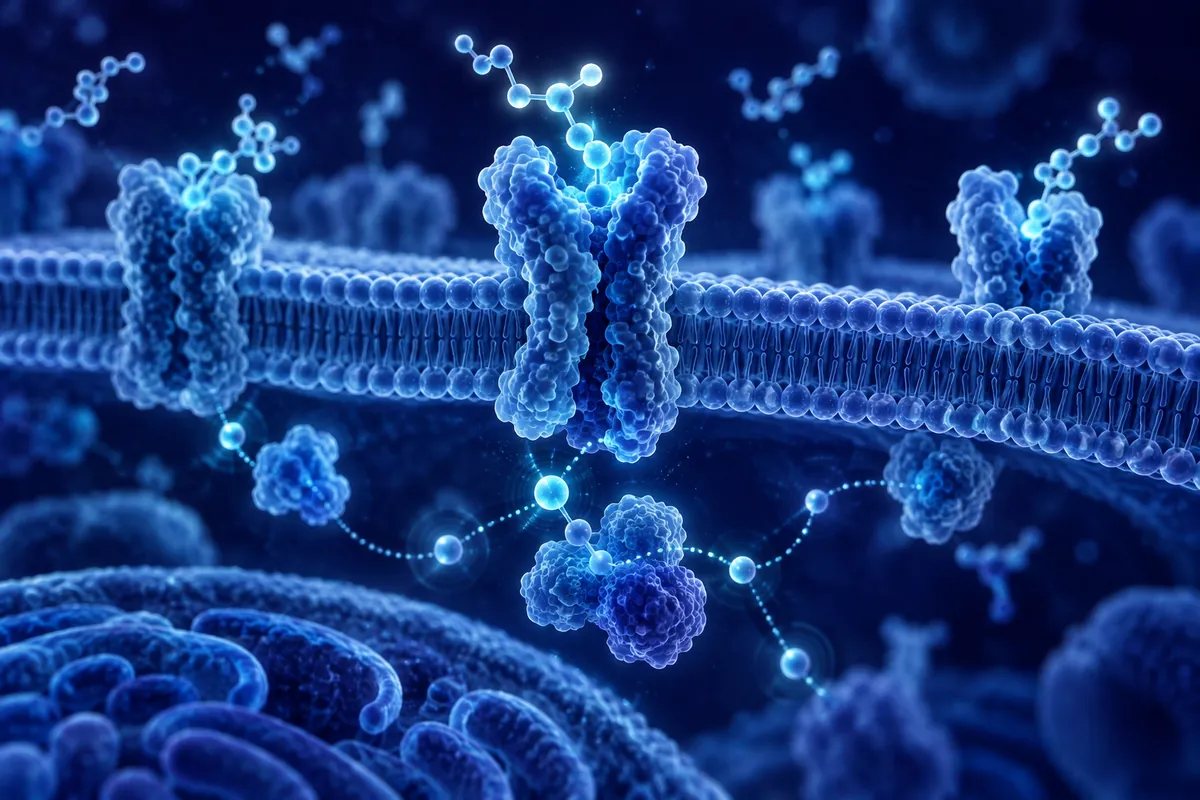
A key limitation of classic RaPID selections is that purified recombinant target protein doesn’t always fold or present the same way it does embedded in a native membrane, especially for multi-pass receptors and receptor tyrosine kinases with large extracellular domains. RaPID-ExCells addresses this by running selection rounds against intact cells expressing the receptor of interest on their surface, rather than against a purified ectodomain immobilized on a plate. This preserves native glycosylation, oligomeric state, and membrane context throughout selection : variables that are notoriously hard to reconstitute with recombinant protein alone. Counter-selection against parental cells lacking the target receptor helps remove peptides that bind generic cell-surface features rather than the receptor of interest specifically.
Worked Example: A De Novo Insulin Receptor Agonist Macrocycle
One of the most cited applications of this platform is the discovery of macrocyclic peptides that bind the insulin receptor’s extracellular domain and act as partial or full agonists : molecules with no structural relationship to insulin itself, selected purely from a random library against the isolated receptor ectodomain or receptor-expressing cells. Researchers characterized these hits using surface plasmon resonance to quantify binding kinetics, and functional cell-based assays measuring receptor autophosphorylation and downstream AKT phosphorylation in cultured cell lines expressing the human insulin receptor, to confirm the macrocycles were genuine agonists rather than simple binders. Crystallographic and cryo-EM structural work subsequently showed these de novo macrocycles engage a distinct epitope on the receptor’s leucine-rich repeat domain, a binding mode entirely different from where insulin itself docks : a striking demonstration that mRNA display can discover functional agonist chemotypes with no evolutionary relationship to the receptor’s natural ligand.
Where the Selection-to-Lead Pipeline Goes From Here
What happens after a hit macrocycle is identified? Affinity maturation rounds using biased libraries built around the enriched consensus motif, alanine-scanning mutagenesis to map which residues are essential for binding, and medicinal chemistry follow-up to improve metabolic stability are the standard next steps. Does a cell-culture-validated agonist macrocycle behave the same way in a rodent model? That’s exactly the kind of translational question in vivo pharmacokinetic and pharmacodynamic studies in mice or non-human primates are designed to answer, and it remains an active area of investigation across the macrocyclic peptide field rather than a solved problem. The broader promise of mRNA display isn’t any single hit : it’s the demonstration that functional macrocycles against genuinely difficult receptor targets can be found without a rational design starting point at all.
Disclaimer: This content is intended for research purposes only and is not meant to constitute medical advice.
This educational material discusses laboratory research concepts only. Loti Labs products are intended strictly for research and development use and are not for human consumption.