The Brain’s Most Abundant Neuropeptide
Neuropeptide Y (NPY) is a 36-amino-acid peptide that holds a remarkable distinction: it is the most abundant neuropeptide in the mammalian central nervous system. First isolated from porcine brain in 1982 by Kaare Tatemoto, NPY belongs to the pancreatic polypeptide family alongside peptide YY (PYY) and pancreatic polypeptide (PP). Its conservation across vertebrate species : from lampreys to primates : signals a fundamental biological importance spanning hundreds of millions of years of evolution.
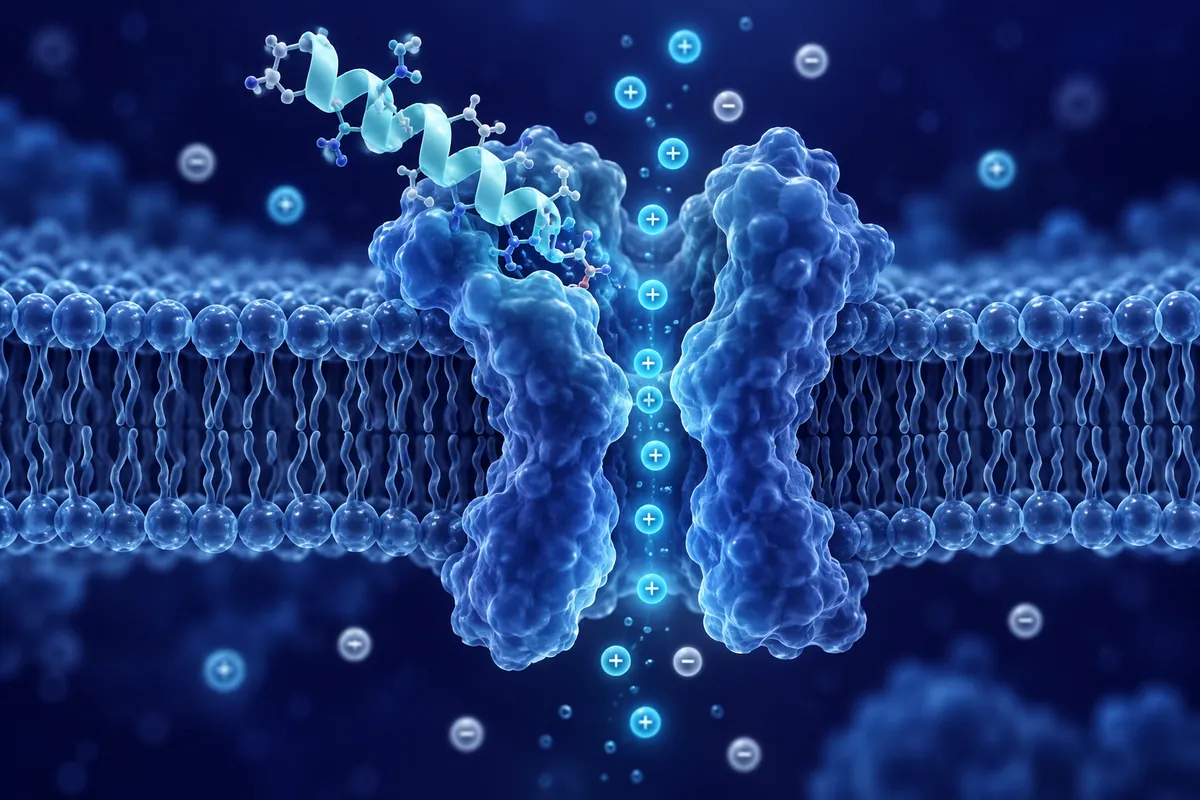
NPY acts through a family of G-protein-coupled receptors designated Y1 through Y6 (though Y3 and Y6 are not well characterized in humans).
Ask any neuroscience researcher about NPY, and feeding behavior comes up first.
This orexigenic drive operates through Y1 and Y5 receptors. NPY-expressing neurons in the arcuate nucleus respond to low leptin and high ghrelin signals by releasing NPY, which then stimulates feeding circuits in the paraventricular nucleus and lateral hypothalamus.
Chronic NPY overexpression in rodent hypothalamus produces sustained hyperphagia and adiposity. Conversely, selective ablation of arcuate NPY/AgRP neurons causes rapid, severe anorexia : so severe that adult mice stop eating entirely. This lethal consequence underscores that the NPY feeding circuit is not merely modulatory. It is essential.
Here is where NPY research takes an unexpected turn. Despite being a powerful hunger signal, NPY also functions as an endogenous anxiolytic.
The receptor pharmacology shifts in this context. Anxiolytic effects are mediated primarily through Y1 receptors, while Y2 receptors : which function as presynaptic autoreceptors : modulate NPY release itself.
NPY is co-released with norepinephrine from sympathetic nerve terminals throughout the cardiovascular system. This potentiation effect is substantial : NPY alone produces modest vasoconstriction, but when combined with norepinephrine, the contractile response exceeds what either agent achieves independently.
Beyond acute vasoconstriction, NPY influences vascular remodeling.
NPY is expressed in the hippocampal dentate gyrus, one of the two brain regions where adult neurogenesis persists throughout life. Y1 receptor activation on neural progenitor cells stimulates proliferation, while subsequent differentiation into mature neurons involves Y2 receptor signaling. This two-step model : proliferation via Y1, differentiation via Y2 : has been demonstrated in both in vitro neurosphere cultures and in vivo BrdU-labeling studies in mice.
Immune cells express NPY receptors, adding another dimension to its biology. Y1 receptor activation on macrophages modulates cytokine production, while NPY influences T-helper cell polarization.
This neuroimmune crosstalk : sympathetic nerves releasing NPY directly onto immune cells in lymphoid organs : represents a physical connection between the nervous and immune systems that researchers continue to map with increasing spatial resolution using single-cell transcriptomics and tissue-clearing microscopy.
Research Tools and Receptor Pharmacology
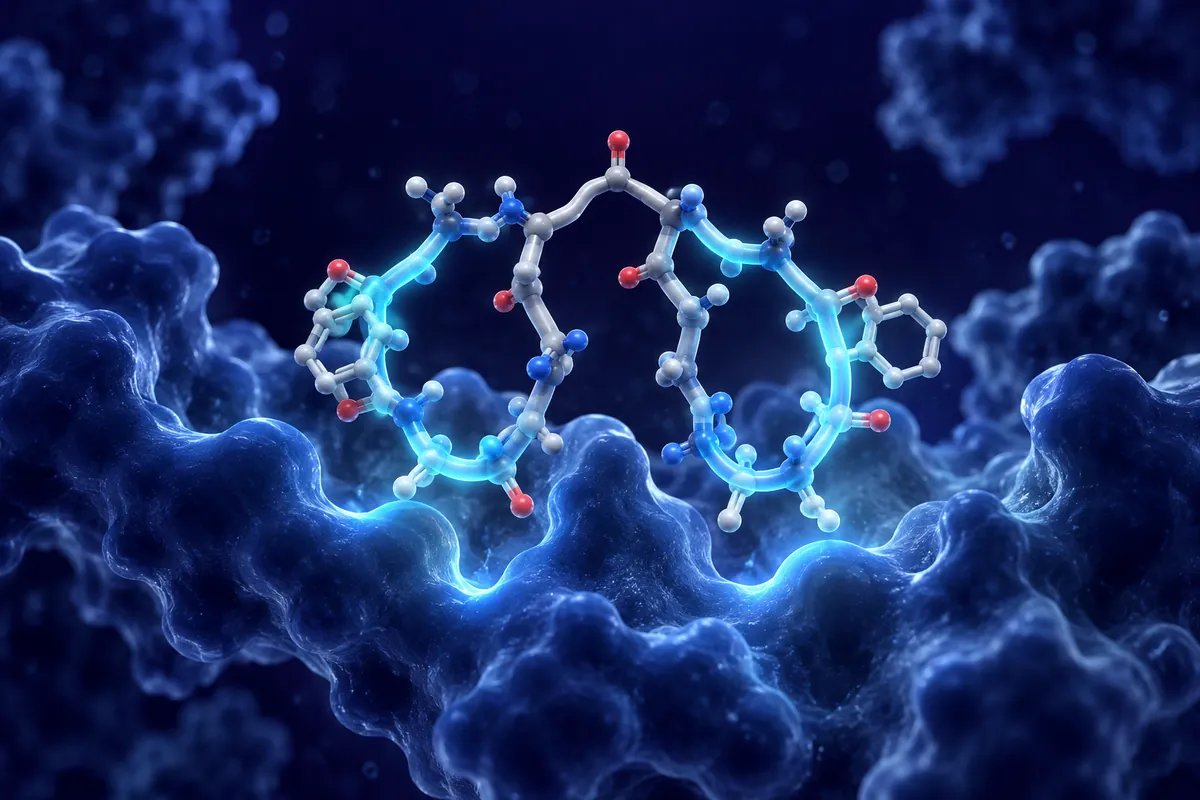
The availability of receptor-selective agonists and antagonists has been critical for dissecting NPY’s functions. BIBP3226 (Y1-selective antagonist), BIIE0246 (Y2-selective antagonist), and selective agonists like [Leu31,Pro34]-NPY (Y1-preferring) allow researchers to isolate receptor-specific effects in complex tissue preparations. These pharmacological tools, combined with receptor-knockout animal models, have transformed NPY from a broadly active peptide into a system where individual receptor contributions can be parsed with precision.
Disclaimer: This content is intended for research purposes only and is not meant to constitute medical advice.
This educational material discusses laboratory research concepts only. Loti Labs products are intended strictly for research and development use and are not for human consumption.