
Buy 2 get 1 FREE and Double points are live! | Coupon codes are disabled for this sale Dismiss
Skip to contentRESEARCH USE ONLY: All products are intended for research use only as defined by the FDA. Not for use in diagnostic procedures, human use, or veterinary use.
12,682 Reviews
Products are of the utmost purity and concentration… Shipping is VERY fast. Customer service is professional and very responsive.
| Weight | 0.008125 lbs |
|---|
⚠️ Disclaimer: THIS PRODUCT, SOLD BY LOTI LABS, IS INTENDED AS A RESEARCH CHEMICAL ONLY.
This designation allows the use of this chemical strictly for in-vitro laboratory testing and experimentation. No other uses or purposes are permitted. All information provided on this website is for educational purposes and has been compiled from multiple sources believed to be accurate. Human or animal use of this product is strictly forbidden by law. This product is not a drug, food or cosmetic and may not be misbranded, mislabeled or misused as such. Anyone not adhering to these terms will be blacklisted and forbidden from purchasing.
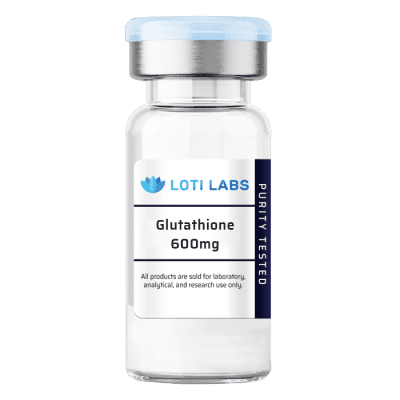
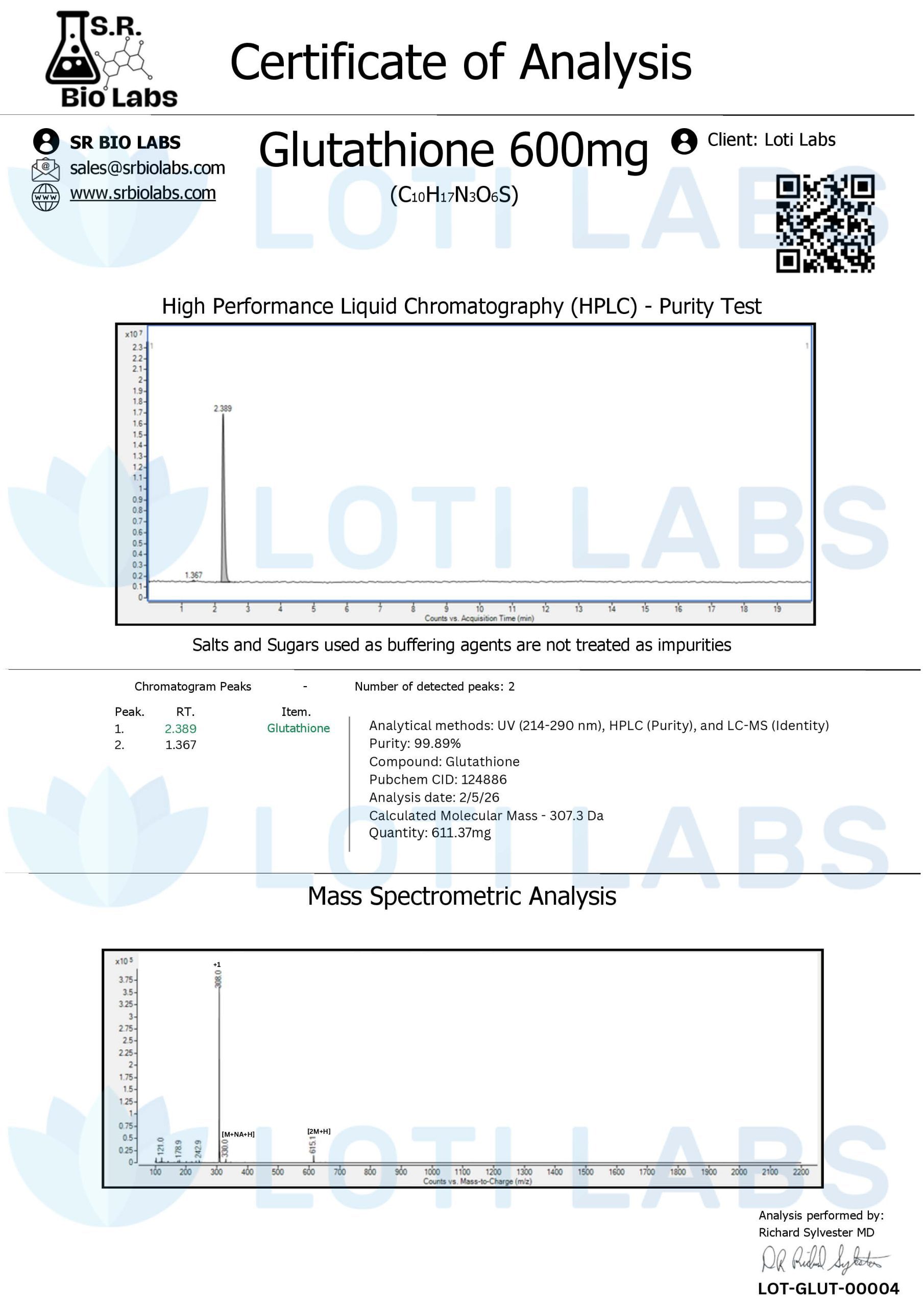
When examining glutathione in research contexts, it’s important to consider what laboratory studies suggest about this compound. Let’s examine what makes glutathione a substance of interest in research settings and the findings that make it noteworthy.
In research settings, glutathione presents as a tripeptide compound. It comprises three amino acids: cysteine, glycine, and glutamine.
Each method presents distinct experimental considerations. It’s essential to note that the products available from Loti Labs are strictly for research purposes only, not intended for any other use, including compounds like liposomal glutathione and toniiq glutathione.
Laboratory investigations suggest glutathione may influence various biological parameters through multiple mechanisms. This research potential has positioned glutathione as a compound of significant interest in the scientific community.
These laboratory findings, while preliminary, offer valuable insights into potential research applications.
The compounds available through Loti Labs are exclusively intended for research applications. The observations discussed here derive primarily from animal-model studies and should be interpreted within appropriate scientific context.
However, it’s critically important to recognize these observations derive exclusively from animal models and should not be extrapolated beyond the research context without comprehensive further investigation.
It’s essential to note that the compounds provided by Loti Labs are strictly for research purposes and not intended for human use.
These findings highlight research possibilities, though further controlled studies are needed to confirm these experimental observations.
The compounds offered by Loti Labs are exclusively for research purposes and not intended for human use.
The compounds provided by Loti Labs are strictly for research purposes and not intended for human use.
The compounds offered by Loti Labs are strictly for research purposes only. The scientific observations discussed here derive exclusively from animal studies, and additional research is necessary to fully elucidate the role of glutathione precursors in various biological systems.
In laboratory settings, NAC has been observed to contribute to glutathione levels by providing cysteine, one of three amino acids necessary for glutathione formation.
Research indicates that glycine, cysteine, and glutamic acid collectively form the tripeptide structure of glutathione. These amino acids are typically derived from protein sources in experimental models, highlighting the potential importance of protein availability in research settings examining glutathione synthesis.
It’s important to clarify that the compounds provided by Loti Labs are exclusively intended for research applications.
These scientific observations stem from animal studies conducted in controlled laboratory environments, and continued research is needed to expand our understanding of NAC’s role in glutathione synthesis pathways and broader biochemical functions.
Animal-based research has yielded fascinating insights into glutathione’s potential properties and effects.
These findings point to intriguing research directions regarding glutathione’s role in maintaining biological equilibrium. However, it’s crucial to approach these results with appropriate scientific caution, recognizing they derive from controlled animal studies rather than definitive conclusions.
The compounds provided by Loti Labs are exclusively for research purposes. The scientific observations presented here come from animal studies conducted under controlled conditions, and further
However, it’s critical to emphasize that these findings stem exclusively from animal models and should not be extrapolated beyond the research context without further rigorous investigation.
The research and laboratory investigations discussed highlight potential applications of glutathione in experimental contexts. However, it remains imperative to conduct further research, particularly well-designed controlled trials, to fully comprehend the mechanisms and effects of this compound. The substances discussed are intended exclusively for research purposes, and the observations mentioned derive solely from animal studies conducted in controlled laboratory environments.
In conclusion, glutathione presents intriguing possibilities as a vital molecule for biochemical research. Let this exploration inspire further scientific inquiry into the potential of glutathione in research settings, always maintaining commitment to rigorous scientific methodology and evidence-based conclusions.
 Every batch tested. No fillers. No guesswork. At Loti Labs, we’re more than just a supplier — we’re your partner in achieving breakthrough results. With 14+ years of proven expertise, we deliver a boutique experience built on premium quality, fast fulfillment, and client-first service.
Each product is thoroughly tested and verified to meet the highest industry standards, ensuring accuracy and reliability for your research.
Our experienced team is here to assist with inquiries, and special requests, providing responsive, human support at every step.
Orders placed before cutoff times are processed with urgency and shipped rapidly, so your research never slows down.
$47.99 - $59.99
You save
$26.39 - $32.99
You save
$39.99 - $49.99
You save
$23.99 - $29.99
You save
$19.99 - $24.99
You save
$39.99 - $49.99
You save
$39.99 - $49.99
You save
$71.99 - $89.99
You save
Support when you need it. Perks when you want them.
Talk to a real person or sign up for early access to new compounds.
To browse Loti Labs:
Please log in or create an account.
Loti Labs products are for laboratory research use only and never for human or veterinary use. By logging in or creating an account you certify that you are a qualified researcher and will use these products solely for purposes outlined in our terms and conditions.
✉️ Verification Code Sent
We've sent a 6-digit verification code to:
Questions? Contact us at [email protected]